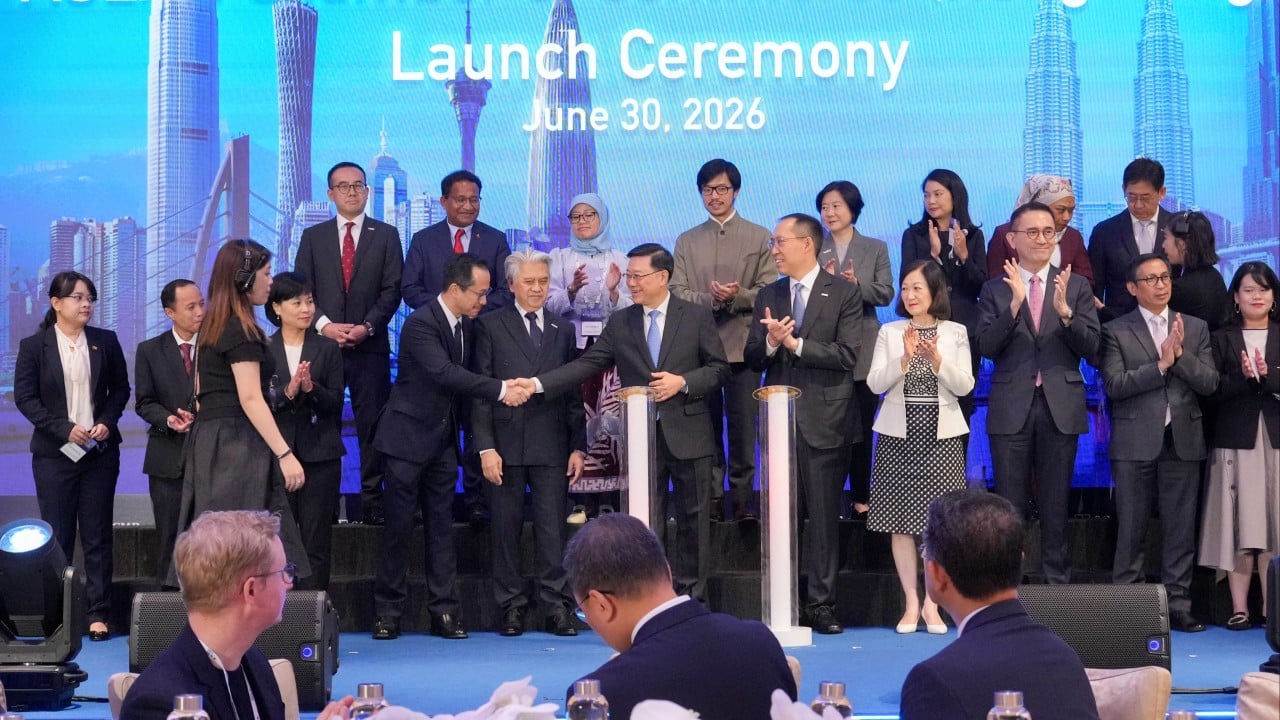
The launch of the new ASEAN Chamber of Commerce in Hong Kong arrives at a moment of profound economic realignment. On paper, the initiative answers a long-felt need to connect the financial hub with the fast-growing economies of Southeast Asia. In reality, the move represents a calculated, urgent defensive maneuver. Facing stalling Western capital inflows and shifting trade dynamics, Hong Kong is aggressively courting its southern neighbors to maintain its status as an international gateway.
The strategy is straightforward. By positioning itself as the primary conduit between mainland China and the Association of Southeast Asian Nations, Hong Kong hopes to secure a fresh pipeline of capital, talent, and corporate listings. Yet, underneath the celebratory ribbon-cutting ceremonies lies a more complex web of geopolitical pressures, institutional inertia, and fierce regional competition that will determine whether this new chamber becomes an engine of growth or merely an echo chamber for political box-checking.
The Forced Reorientation of Corporate Capital
For decades, the city looked East and West. Wall Street investment banks and European conglomerates used Central as their launchpad into mainland China, while Chinese state-owned enterprises utilized the local bourse to capture global dollars. That specific machinery has slowed. Tariffs, sanctions, and a broader fracturing of supply chains have forced a structural rewrite of global trade routes.
The numbers tell the story. Trade between China and ASEAN has exploded, hitting historic highs as manufacturers relocate operations to Vietnam, Malaysia, and Indonesia to mitigate geopolitical exposure. This trade does not automatically flow through Hong Kong. Direct shipping routes, improved mainland port infrastructure, and the rise of digital customs platforms mean that cargo frequently bypasses the city entirely.
To remain relevant, the financial center must establish itself as the command-and-control node for these supply chains. It needs to be the place where the financing is structured, where the intellectual property is held, and where legal disputes are settled. The new chamber is a recognition that these relationships cannot be left to chance. It is an active attempt to formalize networks that have historically been fragmented and dominated by Singapore.
The Shadow of Singapore and the Battle for Regional Dominance
Any discussion of Hong Kong engagement with Southeast Asia must confront the elephant in the room. Singapore has spent the last two decades positioning itself as the de facto capital of Southeast Asian corporate expansion. It is geographically embedded in the region, shares deep cultural and linguistic ties with ASEAN business elites, and boasts a regulatory environment that has captured the lion's share of regional family offices.
Hong Kong is entering this arena from a position of disadvantage. Southeast Asian tycoons are famously relationship-driven. They rely on decades of trust, family ties, and face-to-face interactions. A newly minted chamber of commerce cannot manufacture these connections overnight.
Furthermore, the value proposition for an ASEAN company choosing Hong Kong over Singapore is narrow. If an Indonesian conglomerate wants to expand into Thailand or the Philippines, Singapore is the logical financial base. Hong Kong only wins when the objective is direct, deep access to mainland China or when a company requires the immense liquidity of the Hong Kong Stock Exchange.
The chamber must therefore avoid trying to match Singapore at its own game. Instead, it must hyper-focus on cross-border flows that explicitly require the Greater Bay Area framework. That requires moving beyond high-level networking events and focusing on the grinding work of regulatory harmonization and tax treaty optimization.
The Structural Bottlenecks Beyond the Rhetoric
Chambers of commerce love to talk about connectivity. They rarely talk about the plumbing. For the new ASEAN Chamber to deliver tangible benefits, it must address several entrenched structural hurdles that currently inhibit seamless bilateral investment.
Capital Controls and Currency Risk
While the Chinese yuan is increasingly used in regional trade settlement, the US dollar remains the dominant currency for investment across Southeast Asia. Hong Kong peg to the US dollar is a major asset, providing stability that mainland cities cannot offer. However, moving capital out of mainland China via Hong Kong into ASEAN projects remains tightly regulated.
Mainland enterprises looking to invest in Malaysian infrastructure or Vietnamese electronics factories face stringent capital export approvals. If the new chamber cannot establish fast-track mechanisms or dedicated investment corridors with mainland regulators, its ability to channel Chinese capital into ASEAN will remain bottlenecked by bureaucracy.
The Talent Deficit and Cultural Friction
A financial hub is only as good as its human capital. For generations, Hong Kong professional services sector—its lawyers, accountants, and investment bankers—grew up specializing in Western or mainland Chinese markets. Very few local firms possess deep, native expertise in the idiosyncratic legal frameworks of Indonesia, the political risks of Myanmar, or the complex tax codes of the Philippines.
Building this expertise takes years. The city needs a rapid influx of Southeast Asian professionals who understand both their home markets and the nuances of doing business in China. Currently, strict immigration policies and high living costs act as a deterrent for mid-level regional talent, who often find Singapore or even Kuala Lumpur more hospitable.
Demystifying the Listing Pipeline
A core objective of this new business alliance is to revive Hong Kong flagging initial public offering market. The exchange has actively courted international listings, altering its rules to attract dual-class shares and specialist technology companies. The hope is that major Southeast Asian tech unicorns and industrial giants will choose to list in Hong Kong to tap into mainland Chinese wealth via the Stock Connect program.
It is an uphill battle. Historically, international companies listed in Hong Kong have suffered from low liquidity and depressed valuations compared to their mainland counterparts. Chinese investors tend to buy brands they know. A consumer tech platform that is a household name in Jakarta or Manila means very little to a retail investor in Shanghai.
To overcome this, the chamber will need to act as a permanent educational bridge, helping ASEAN issuers build profiles among Greater Bay Area asset managers long before they attempt to float on the exchange. Without that groundwork, international listings will remain a statistical anomaly rather than a reliable trend.
The Real Test of the New Alliance
The establishment of the ASEAN Chamber of Commerce is not a victory in itself; it is merely an admission of a shifting reality. The success of this initiative will not be measured by the number of gala dinners held or memoranda of understanding signed. It will be measured by hard data: the volume of cross-border investments cleared, the number of Southeast Asian enterprises establishing regional headquarters in the city, and the diversification of the local stock exchange.
Hong Kong can no longer rely on its historical reputation as the effortless default option for global business. It must actively sell its utility to a region that has plenty of other options. The new chamber must operate less like a traditional networking club and more like a hard-nosed trade development agency, identifying specific regulatory friction points and using its political weight to eliminate them.
The economic center of gravity has shifted south. Hong Kong is trying to hitch its wagon to that momentum before its traditional Western linkages fray any further. It is a race against time, and the city cannot afford to let bureaucracy get in the way of execution.