Cold. That is the first word that comes to mind when I think about the Baltic Sea in late September. Not a brisk autumn chill you shake off with a heavier coat, but a damp, mineral weight that settles straight into your bones and refuses to leave.
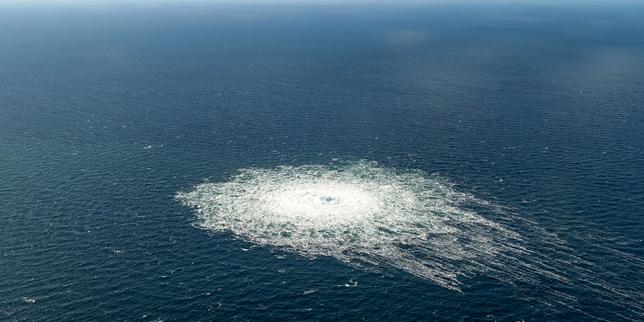
I have stood on cold northern piers watching dark water slap against concrete pilings while gulls screamed overhead. Nothing down there looks dramatic from a distance. Yet in September 2022, seismographs across northern Europe registered sharp underwater blasts near Bornholm, and violent plumes of methane began boiling up through the surface of the Nord Stream pipelines.
Years later, the echoes of those explosions have traveled from dark seafloors into quiet German courtrooms. A former Ukrainian officer stands before German judges, accused of involvement in the sabotage of the Nord Stream gas pipelines.
Paper. That is how a global shockwave eventually gets weighed. Piles of translated transcripts, forensic diving logs, satellite pings, charter records, and legal briefs sit on oak tables while judges decide what can be proved beyond a reasonable doubt.
Honestly, when I read wire summaries about a former Ukrainian officer facing German judges over Nord Stream, part of me feels a familiar skepticism. Big geopolitical mysteries rarely arrive with neat bows. Often, they arrive messy, contested, and buried under layers of deniability.
The Seafloor Where Everything Changed
To understand why a German courtroom is wrestling with this case, start with the pipes themselves. Nord Stream 1 and Nord Stream 2 were twin sets of massive steel pipelines built to carry natural gas from Russia across the Baltic Sea directly to Germany.
Thick concrete coatings wrapped heavy steel walls built to hold gas under extreme pressure. For years, politicians argued over whether those pipes tied Europe too tightly to Russian energy. Critics warned of strategic leverage. Supporters saw cheap fuel and industrial stability.
Then came the explosions in September 2022. Four leaks appeared across the Nord Stream system. Even though Nord Stream 2 had never entered commercial service and Nord Stream 1 flows had already been halted, the physical destruction of the infrastructure sent shockwaves through energy markets and security agencies alike.
Seismologists recorded magnitude-scale underwater tremors around the blasts. Divers who later inspected the seabed found torn steel, buckled concrete, and craters carved into the ocean floor.
Consider what happens next: a crime scene sits eighty meters down in cold, dark, shifting water, while investigators race against currents, time, and competing intelligence narratives.
A Hypothetical Sailor on a Cold Deck
To feel the human tension inside an investigation like this, picture a hypothetical crew member—let us call him Taras—standing on the wet deck of a chartered sailing yacht somewhere in the Baltic in early autumn. This character and scene are hypothetical, created to illustrate the human and operational realities investigators examine in maritime sabotage cases.
Taras is not a movie superspy. He is tired, salt-crusted, and cold. His fingers ache around wet halyards as gray chop slaps the hull. Every radio transmission feels risky. Every port call carries the quiet dread that a harbor master, customs officer, or coast guard patrol might ask one question too many.
On paper, a small vessel moving across busy northern waters looks ordinary. Pleasure craft and workboats cross shipping lanes constantly. Yet deep diving with heavy explosives in cold water requires tight planning, precise timing, specialized gear, and nerves that do not snap when something goes wrong at depth.
Even in a hypothetical reconstruction, the contrast is stark. On one side stands a person risking freedom or life in freezing conditions. On the other stands a multi-billion-dollar piece of energy infrastructure that reshaped European politics for over a decade.
Why Germany Holds the Gavel
Why does a German court take center stage when the blasts happened in international or economic waters near Denmark and Sweden?
Jurisdiction in transnational cases often follows harm, infrastructure links, and investigative leads. Germany was the western landing point of the Nord Stream pipelines. German prosecutors opened major investigations into the blasts, issuing European arrest warrants and pursuing suspects linked to alleged sabotage networks.
When a former Ukrainian officer appears before judges in Germany, the proceeding is not just about one individual. It tests how national courts handle allegations tied to covert wartime or irregular operations.
Think of the court as a fine-mesh sieve. Intelligence agencies look for patterns, motives, and big-picture threats. Prosecutors and judges have a much stricter job: connect specific acts, movements, communications, and evidence to a named person under German law.
What happens when war blurs normal rules? That question hangs heavy over every hearing.
Facts, Rumors, and Fog
Anyone following the Nord Stream sabotage investigation has seen how quickly certainty turns into fog. Within days of the blasts, theories multiplied. Some pointed toward state actors with deep-sea submarines and naval drones. Others pointed toward smaller cells operating from chartered boats.
Investigators in multiple countries examined vessel routes, rental contracts, mobile phone footprints, and explosive residues. Over time, German authorities focused heavily on suspects allegedly connected to a sabotage group involving Ukrainian nationals, including a former officer brought before the legal system.
Still, public reporting and official statements leave sharp questions open. Was a suspect acting under state direction, with unofficial backing, or as part of a broader network? How much can prosecutors prove about direct participation versus logistical support?
Admitting uncertainty is not weakness. In complex cross-border cases, pretending we know every motive before a verdict is reached only feeds noise.
The Invisible Stakes Beneath the Water
Why should someone sitting thousands of miles away—or reading a morning news brief over coffee—care about a former Ukrainian officer standing before German judges?
Because undersea infrastructure is the quiet nervous system of modern life. Gas pipelines, power interconnectors, and subsea fiber-optic cables carry the energy and data that keep factories running, homes warm, and hospitals connected.
- Energy security: Physical attacks on major pipelines show that critical energy routes are vulnerable even in waters patrolled by modern navies.
- Legal accountability: Bringing a suspect before judges tests whether sabotage during geopolitical conflict can be prosecuted through ordinary criminal courts.
- Diplomatic strain: Every court filing and arrest ripples across alliances, testing trust between partners supporting Ukraine and navigating European security.
A metaphor helps clarify how fragile these links are. Imagine the global economy as a house lit by hidden copper wires under the floorboards. Most days, you flip a switch and light floods the room without a second thought. Only when a wire is cut in the dark do you realize how much depends on something out of sight. This comparison is a metaphor for hidden infrastructure dependency.
Inside the Courtroom Crucible
Picture the courtroom itself. Fluorescent lights hum softly above dark wood benches. Interpreters speak in low, steady voices, translating testimony and legal arguments so no nuance slips past defense counsel or the bench.
The defendant sits under the watchful eyes of security officers and lawyers. Outside, cameras wait for a brief statement or a nod from an attorney. Inside, everything slows down to procedure.
Charges are read. Evidence motions are argued. Pre-trial detention, extradition rules, witness credibility, and chain-of-custody records take center stage. There are no dramatic speeches like on television—just careful, methodical pressure as each side tests where the evidence holds and where it frays.
For the accused, the stakes are personal and immediate: years in prison, separation from family, and a name permanently tied to one of the most consequential mysteries of the war in Europe. For the judges, the stakes are institutional: upholding fair trial standards in a case charged with intense political emotion.
What This Moment Reveals About Our Era
Look closely at what happens when a former Ukrainian officer faces German judges over Nord Stream, and you see the defining tension of our time. Wars are no longer fought only across trenches and frontlines. They spill onto seafloors, into shipping registries, across borders, and into civilian courts years later.
Governments must protect underwater cables and pipelines that were often built in an era that assumed peace. Courts must judge actions born of fierce geopolitical conflict using laws written for calmer times.
And ordinary citizens are left to weigh competing truths carefully—refusing to swallow every rumor whole, yet refusing to look away when the rules of security and justice are tested so openly.
Out in the Baltic, the water still rolls gray and cold over torn steel and quiet sand, keeping its deepest secrets to itself while a gavel falls in Germany.