Every time a darling of the theater community gets optioned for a Hollywood adaptation, the same predictable chorus of cheers erupts. The latest victim of this industry-wide delusion is Anaïs Mitchell’s Tony-winning masterpiece, Hadestown.
The trades are buzzing. Fans are already casting their dream Orpheus and Eurydice on social media. The collective consensus is clear: bringing this beloved, folk-infused retelling of the Orpheus myth to the silver screen is a victory. For an alternative look, check out: this related article.
It is not. It is a creative death sentence.
The theatrical medium operates on a completely different set of physics than cinema. What makes Hadestown an unforgettable, transcendent experience on a Broadway stage is the exact reason it will fall completely flat in a movie theater. Hollywood is about to spend tens of millions of dollars to strip-mine the soul out of one of the most unique theatrical achievements of the century, and the industry is clapping its hands on the way to the slaughterhouse. Similar insight on this matter has been shared by GQ.
The Trap of Cinematic Literalism
Cinema is a literal medium. Even at its most surreal, the camera demands a level of physical reality that theater actively rejects.
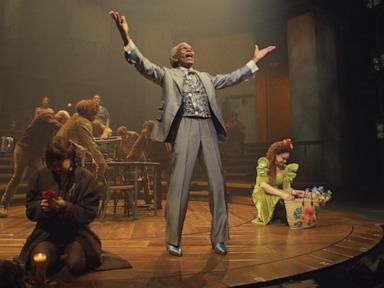
In the Walter Kerr Theatre, the world of Hadestown is constructed out of wood, iron, light, and smoke. The set does not change. The transition from the warm, bohemian world of the surface to the cold, industrial depths of the underworld is achieved entirely through lighting, a descending center-stage elevator, and the imagination of the audience.
When Orpheus sings "Wait for Me" and the swinging lanterns begin to sway over the audience, the theater expands. It is a shared, communal leap of faith. The audience agrees to believe that a bare stage is a sprawling, dangerous industrial wasteland because the performers tell them it is.
Now, imagine that same sequence under the lens of a Hollywood director.
A camera cannot rely on the audience’s imagination; it must show the world. This leaves the creative team with two equally disastrous choices:
- The CGI Wasteland: They build a digital, hyper-realistic underground city. We see the literal smokestacks, the literal ironworks, and the literal assembly lines of Hadestown. The abstract, poetic nightmare of Hadestown becomes a generic dystopian film set, resembling a discarded draft of a Young Adult sci-fi adaptation.
- The Stagey Soundstage: They attempt to preserve the theatricality by filming on obvious, stylized sets. This approach, famously used in the 2012 film adaptation of Les Misérables and the catastrophic 2019 adaptation of Cats, creates a jarring uncanny valley. The audience is constantly reminded of the artificiality of the environment, pulling them out of the emotional reality of the story.
By forcing a story built on poetic abstraction into the concrete frame of a camera lens, you do not expand the world. You shrink it. You replace the infinite possibilities of the human imagination with a fixed, rendered image.
The Financial Graveyard of Stage to Screen
Let us set aside the artistic arguments for a moment and look at the cold, hard economic data. The belief that a hit Broadway musical is a safe bet for a Hollywood studio is a myth that should have been buried a decade ago.
The recent history of musical adaptations is a graveyard of massive write-downs and box office disasters.
| Film Title | Production Budget | Worldwide Box Office |
|---|---|---|
| West Side Story (2021) | $100 Million | $76 Million |
| In the Heights (2021) | $55 Million | $45 Million |
| Dear Evan Hansen (2021) | $28 Million | $19 Million |
| Cats (2019) | $95 Million | $75 Million |
| The Color Purple (2023) | $100 Million | $67 Million |
Even Steven Spielberg, arguably the most celebrated director in cinematic history, could not make a critically acclaimed, flawless adaptation of West Side Story profitable.
The theater audience is a highly concentrated, passionate niche. But that passion does not scale to the multiplex. Hadestown is a massive hit on Broadway, playing to a theater of roughly 900 people a night. To recoup a modest $60 million movie budget, a film needs to attract millions of viewers globally.
To chase that massive audience, studios inevitably sanitize the material. They smooth over the rough edges, cast bankable movie stars who cannot sing the complex score, and pasteurize the unique sonic identity of the piece to appeal to general audiences. The very elements that made the show a cult hit are the first things thrown overboard to appease the mass market.
The Death of the Acoustic Soul
Hadestown is not a traditional musical; it is a folk opera. It began its life as a DIY concept album by Anaïs Mitchell, toured in a school bus through Vermont, and slowly grew into its current form. Its musical DNA is rooted in indie-folk, New Orleans jazz, and Americana.
The orchestration relies on a seven-piece band that sits on stage, fully visible to the audience. The trombone, the violin, the acoustic guitar, and the double bass are characters in their own right. The music breathes. It is raw, acoustic, and intimate.
Hollywood does not do intimate.
When a studio gets its hands on a score like this, the immediate instinct is to scale up. They hire a 60-piece orchestra to drown the delicate, syncopated jazz rhythms in generic, sweeping cinematic strings. They clean up the vocals with heavy pitch-correction, stripping the gravel out of Hades’ bass and the delicate, cracked vulnerability out of Orpheus’s falsetto.
Imagine a heavily autotuned, pop-synthesized version of "Why We Build the Wall." The raw, terrifying political resonance of that song—originally sung with the raspy, menacing baritone of Patrick Page—will be utterly neutered by a studio executive terrified of alienating a single demographic.
The Rachel Chavkin Factor
You cannot talk about the success of Hadestown without talking about its director, Rachel Chavkin. Her staging is the engine of the show.
Chavkin understands that theater is about tension, space, and movement. She utilizes a concentric revolving stage to simulate the endless, exhausting march of the workers and the long, grueling journey of Orpheus and Eurydice. When the revolve spins, it creates a physical sensation of distance and struggle that the audience feels in their chests.
A film director cannot replicate this. In a movie, if characters need to walk a long way, the director simply cuts to a different location, or uses a tracking shot. The physical struggle of the actors, fighting against the rotation of the stage just feet away from the front row, is completely lost.
The central theatrical device of the show—the descent into the underworld—is achieved by a circular elevator in the middle of the stage that slowly sinks into the floor, emitting a blinding blast of light and cold air. It is a simple, brilliant piece of stagecraft that relies on the physical constraints of the theater building itself.
In a film, a character descending into hell is just an actor stepping into an elevator. The magic is gone, replaced by routine cinematic grammar.
The Misguided Quest for Accessibility
The most common defense of these adaptations is that they "democratize" the art form. Broadway tickets are prohibitively expensive, and a movie allows people who cannot afford a trip to New York or a touring show ticket to experience the story.
This is a noble sentiment, but it is fundamentally flawed.
A butchered, flattened, soulless film adaptation is not "delivering Hadestown to the masses." It is delivering a pale, distorted imitation of it. It is like trying to experience the Grand Canyon by looking at a postcard.
If accessibility is the goal, the solution is not a Hollywood adaptation. The solution is a high-quality, multi-camera capture of the stage production—a "proshot."
When Disney released the filmed stage version of Hamilton on Disney+, it was a massive cultural event. It preserved the staging, the original cast, the choreography, and the specific theatrical energy of the show. It allowed millions of people to see the show exactly as it was intended to be seen.
Yet, Hollywood refuses to learn this lesson. They continue to believe that the stage version is merely a "rough draft" that needs to be "fixed" by cinematic realism.
The Casting Trap
Let us address the elephant in the room: the inevitable casting disaster.
Hadestown requires exceptional, highly specific vocal talents. The role of Orpheus demands a pristine, soaring falsetto that can carry the weight of a song that can change the seasons. Hades requires a true, deep bass-baritone that can rattle the floorboards. Hermes requires a charismatic, bluesy storyteller with impeccable rhythmic timing.
Hollywood casting directors do not look for the best vocalists; they look for the biggest names.
We have seen this tragedy play out repeatedly. We watched Russell Crowe struggle through Les Misérables. We watched a cast of incredibly talented pop stars and actors drown in the digital fur of Cats.
When the Hadestown movie casting is announced, prepare yourselves for a handsome, mid-tier Hollywood actor who took three months of vocal coaching trying to squeak out the high notes of "Epic III." Prepare for a popular pop starlet trying to inject contemporary radio runs into the haunting, folk-simplicity of "Flowers."
The vocal demands of this score are too high for the typical Hollywood talent pool. But the financial demands of a major film release make casting unknown Broadway veterans a massive risk that studios are rarely willing to take.
Stop celebrating the announcement of the Hadestown movie. It is not an elevation of the material; it is a fundamental misunderstanding of what makes the piece work. Some stories are meant to live in the shadows, the wood, and the shared imagination of a dark room. When you drag them out into the harsh, literal light of the Hollywood camera, they do not shine. They evaporate.