The headlines are screaming about failure. "Chinese firm shuts Gwadar plant." "Workers laid off." "Economic blow to Pakistan." The mainstream media is treating the recent suspension of operations at the Hangeng Agricultural Group’s facility in Gwadar as a sudden disaster or a sign of geopolitical retreat. They are looking at the scoreboard and missing the entire game.
This isn't a failure of Chinese ambition. It is a masterclass in pragmatic capital preservation.
For years, the consensus has been that the China-Pakistan Economic Corridor (CPEC) is an unstoppable juggernaut of infrastructure. But I have spent enough time analyzing emerging market logistics to know that "infrastructure" is often just a polite word for a money pit when the underlying "soft" systems are broken. The closure of a single processing plant isn't the end of an era; it’s a necessary correction.
If you think this is about a lack of commitment, you don't understand how cold, hard business works in high-risk zones.
The Myth of the "Strategic Asset"
The media loves the word "strategic." If a project loses enough money, they call it a "strategic long-term investment" to make it sound less like a dumpster fire. Gwadar has been the poster child for this linguistic gymnastics.
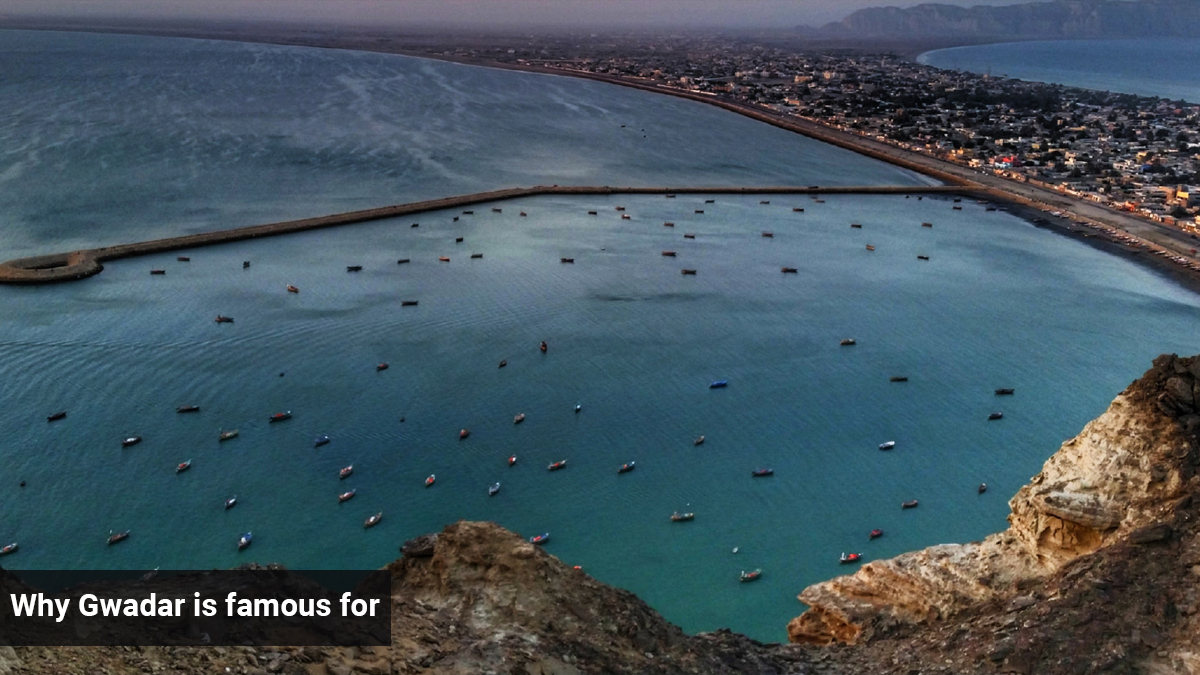
The narrative suggests that because Gwadar is a deep-sea port, any business attached to it is destined for greatness. That is total nonsense. A port is just a hole in the water if you can’t get goods to it or out of it without being shaken down by bureaucratic inertia or hampered by a lack of basic utilities.
Hangeng Agricultural Group cited "lack of facilities" and "unfavorable conditions" for their exit. Let’s translate that from corporate-speak: The power doesn't stay on, the water doesn't flow, and the security costs are eating the margins alive.
Most analysts are asking: "How can Pakistan fix this?"
The real question is: "Why should anyone stay while it’s broken?"
Staying in a losing position just to save face is a loser's move. China’s private and state-backed firms are becoming increasingly disciplined. They are realizing that "Iron Brotherhood" doesn't pay the electricity bill. By shutting down, Hangeng isn't retreating; they are signaling that the era of blank checks is over.
Security is an Operating Cost, Not a Political Variable
Everyone talks about the security situation in Balochistan as a "challenge." I’ve seen companies blow millions trying to "secure" facilities in hostile environments, and here is the truth nobody admits: If your security budget exceeds your R&D budget, you aren't running a business; you’re running a private militia.
The recent targeting of Chinese interests in Pakistan isn't just a news headline. It is a massive, recurring tax on every widget produced in Gwadar. When a firm like Hangeng lays off workers and pulls the plug, they are performing a clinical assessment of Risk-Adjusted Return on Capital (RAROC).
If the cost of keeping your staff alive and your trucks moving starts to cannibalize your profit, the "strategic" value of the location drops to zero. The "lazy consensus" says China will just keep pouring money in to maintain regional influence. Logic says China will pivot to regions where they don't have to build a fortress around every warehouse.
The Utility Trap: Why Hardware Fails Without Software
We have spent a decade obsessing over the "hardware" of CPEC—the roads, the bridges, the berths. But the "software"—the regulatory framework, the reliable energy grid, the tax consistency—is nonexistent.
Imagine a scenario where you build a state-of-the-art data center in the middle of a desert but forget to secure a water source for cooling. That is Gwadar in a nutshell. You can have the deepest port in the world, but if the processing plants inland can’t get 24/7 power, they are just expensive sheds.
- The Power Gap: Gwadar has historically relied on electricity imports from Iran, which are famously unreliable.
- The Water Crisis: Desalination projects have been plagued by delays.
- The Policy Pivot: Pakistan’s shifting tax incentives for Special Economic Zones (SEZs) make long-term financial modeling a nightmare.
People ask, "When will Gwadar become the next Dubai?"
The answer: Never, as long as the basic "software" of governance is bug-ridden.
Efficiency Over Ego
The closure of the Hangeng plant is actually a healthy sign for the global economy. It proves that even in projects with massive political weight, economic gravity still exists.
In the old days of the Belt and Road Initiative (BRI), a firm might have been forced to stay open at a loss just to maintain the appearance of success. Now, we are seeing the "Professionalization of the BRI." Chinese firms are starting to act like Western multinationals—they are looking at the bottom line and walking away from bad deals.
This is a wake-up call for the Pakistani government. For too long, officials have assumed that because China needs the route to the Arabian Sea, China will subsidize inefficiency forever. That bluff has been called.
The exit of Hangeng is a tactical retreat. It’s a message: "Fix the environment, or we take our capital elsewhere." This isn't a "blow" to the economy; it’s a market signal. Markets don't care about brotherhood; they care about yields.
Dismantling the "Debt Trap" Narrative
While we are at it, let's kill the "debt trap" myth that usually follows these stories. Critics claim China uses these failures to seize land. In reality, China doesn't want to "seize" a non-functioning plant in a high-conflict zone. They want the plant to work so they can get a return on investment.
A shut-down plant is a liability for China, not an asset. It represents stranded capital. The idea that this is some grand plan to colonize Gwadar via bankruptcy is a fantasy for people who don't understand how expensive it is to manage a failing port. China wants a functioning trade hub, not a collection of empty buildings.
Stop Asking "When Will it Reopen?"
If you are a business leader or an investor, you are asking the wrong question if you're focused on the reopening of this specific plant. The real question is: "Where is the capital going instead?"
Capital is like water; it finds the path of least resistance. Currently, that path is leading toward Southeast Asian markets like Vietnam and Indonesia, where the infrastructure is actually functional and the security risks are manageable.
Gwadar is currently a high-resistance environment.
The Hard Truth for Pakistan
Pakistan’s leadership often treats CPEC as a "get out of jail free" card for their economic woes. They expect the sheer gravity of Chinese investment to pull them into prosperity. But the Hangeng exit proves that gravity works both ways. If you create an environment where a simple agricultural processing plant can't survive, you won't attract the high-tech manufacturing you crave.
The "unconventional advice" for the region? Stop building new things. Fix the things you already built. Ensure the existing plants have water and power before you break ground on the next "mega-project."
Why This is Good for China
By allowing these firms to close, Beijing is actually strengthening its long-term position. It is weeding out the weak projects and forcing the host country to take responsibility.
If China bailed out every failing plant in Gwadar, they would be incentivizing failure. By letting them shut down, they are applying the only pressure that works: the threat of capital flight. It’s a brutal, necessary evolution of their global investment strategy.
The era of "building for the sake of building" is dead. We are now in the era of "operating for the sake of profit." If you can't deliver the profit, the lights go out.
Don't mourn the closure of the Gwadar plant. Study it. It’s the sound of the world’s second-largest economy finally getting serious about its ROI.
Pakistan can either fix the pipes or watch the rest of the investors follow Hangeng out the door. The choice isn't China's anymore. It's yours.
The next move isn't a new loan. It's a new transformer and a secure supply chain. Anything else is just theater.
The "Iron Brotherhood" just hit the wall of economic reality. And reality always wins.
Stop looking for a political explanation for a math problem.
_