Stand on the bluffs of the Mendocino coast on a clear autumn morning, and the Pacific Ocean looks like a sheet of hammered indigo. Below the surface, however, a quiet ecological ghost town used to sit in total darkness.
For years, divers who descended into these cold northern waters did not find the waving, emerald canopies of giant kelp that once choked the shallows. They found something else. They found an army.
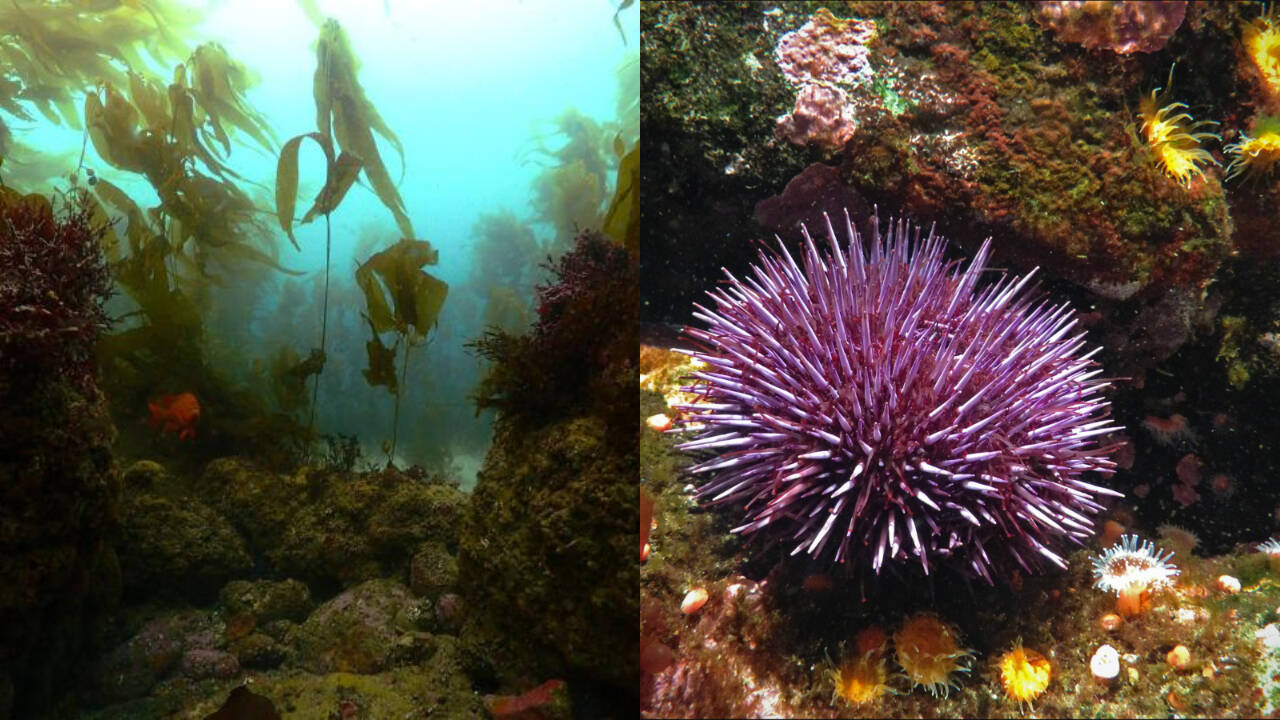
Millions of purple sea urchins had overrun the rocky reefs, stripping the sea floor bare. They ate every blade of kelp within reach, then clung to the rock face, starving and waiting, turning vibrant underwater forests into barren, calcified moonscapes known as urchin barrens.
The scale of the disaster was invisible to anyone standing on the shore. But beneath the waves, an entire ecosystem had collapsed.
Then came the intervention.
Over the course of intense, grueling conservation efforts, teams removed millions of those ravenous urchins from targeted zones along the California coast. The method was blunt. It was exhausting. And it was desperately necessary.
The result? Fifty-five acres of kelp forest returned.
Fifty-five acres might sound small on a map of the vast Pacific. But in biological terms, it is the difference between a desert and an oasis. It is the sudden return of sanctuary for fish, abalone, and marine mammals. It is proof that nature, when given a fighting chance to heal from human-induced imbalances, knows exactly how to bounce back.
The Anatomy of an Undrewater Collapse
To understand how California waters reached this breaking point, you have to look backward.
Nature relies on checks and balances. For generations, the coastal waters of Northern and Central California maintained a delicate equilibrium. Giant kelp (Macrocystis pyrifera) grew at astonishing rates—sometimes up to two feet a day—creating dense underwater towers that sheltered rockfish, abalone, and sea otters.
Then, a cascade of ecological shocks hit the coast.
First came sea star wasting disease, a mysterious plague that wiped out millions of sunflower sea stars along the West Coast. These large, multi-armed predators were the primary hunters of purple sea urchins. With the sea stars gone, the urchins lost their main check.
Second, a massive marine heatwave—dubbed "The Blob"—warmed the Pacific waters from 2014 to 2016. Warm water starved kelp of the nutrients it needed to survive, while simultaneously supercharging urchin reproduction.
It was a nightmare scenario. The urchins exploded in population density, turning into a marching carpet of spiky armor. They mowed down the remaining kelp forests with terrifying speed. Once the kelp was gone, the urchins did not die off. Instead, they entered a state of suspended animation, huddled together in densities of up to one hundred per square meter, scraping the rocks clean of any microscopic kelp spore trying to take root.
An urchin barren is essentially an ecological desert. Fish leave. Abalone starve, because they too rely on drift kelp for food. The ocean loses its breath.
Inside the Hard Labor of Restoration
Fixing a broken ecosystem is not like flipping a switch. It requires sweat, cold water, and relentless physical labor.
Consider what happens on a typical morning for the dive teams working to restore these reefs. The air temperature is forty degrees. The water is forty-eight. The swell is surging against jagged granite teeth just beneath the surface. Divers drop into the gloom wearing thick drysuits, weighted down with steel tanks and specialized removal tools.
They swim down into the urchin barrens. The density is staggering. In some places, the sea floor is a writhing carpet of purple spines.
Using specialized hand tools, the divers systematically clear designated patches of reef. Every single urchin must be accounted for. It is grueling, repetitive work that strains shoulders, tests air consumption, and demands absolute mental focus in freezing, low-visibility currents.
Why remove them instead of waiting for a natural predator to return? Because waiting meant extinction for the remaining ecosystem. Without intervention, the barrens would persist indefinitely. The urchins can survive for years on virtually nothing, scraping the rock bare and preventing any new kelp spores from settling.
By physically clearing patches of the reef, conservationists created islands of opportunity. They gave the spores a foothold.
The Return of the Canopy
Nature is resilient, but she sometimes needs a cleared path.
As soon as divers removed the dense blanket of urchins from those targeted test sites, something miraculous happened. Within months, microscopic kelp spores—dormant in the water column or locked in the rock—sensed the absence of grazing pressure. They attached. They germinated.
They raced upward toward the light.
A single kelp plant creates a three-dimensional habitat. Its holdfasts anchor it to the stone, creating caves for crabs and small fish. Its long stipes reach toward the surface, while its gas-bladder-supported blades form a thick, floating canopy at the water's top.
As those fifty-five acres of kelp forest returned, the local biology underwent an immediate transformation.
Schools of rockfish materialized out of the blue water, darting between the golden columns. Harbor seals began patrolling the edges of the canopy, hunting for the fish that now called the forest home. Red abalone, once starved and huddled in corners, found drifting kelp blades falling like manna from above.
The water quality itself shifted. Dense kelp forests absorb carbon dioxide, buffer wave energy against the coastline, and produce vast quantities of oxygen. Bringing back the kelp wasn't just about saving a plant; it was about stabilizing the coastal engine of life.
The Broader Horizon
The success across those fifty-five acres proves that localized marine restoration works. But scientists and conservationists are the first to admit that the battle is far from over.
The California coastline spans over eight hundred miles. Millions upon millions of urchins still blanket reefs from Mendocino down to Big Sur. Climate change continues to warm the Pacific, creating unpredictable thermal stress that threatens future kelp recruitment.
Yet, despair is an unproductive strategy.
What the fifty-five-acre milestone demonstrates is agency. We are not mere spectators to ecological collapse. Armed with science, determination, and a willingness to get into the freezing water and do the hard physical work, communities and researchers can turn the tide.
Every square foot of kelp recovered is a victory against the barrens. Every returning fish is a vote of confidence for the future of the ocean.
Next time you look out over the Pacific from a windy cliffside, think about what is happening just out of sight beneath the waves. Down there, in the cold green water, the forest is fighting its way back to the light. And with a little help, it just might win.