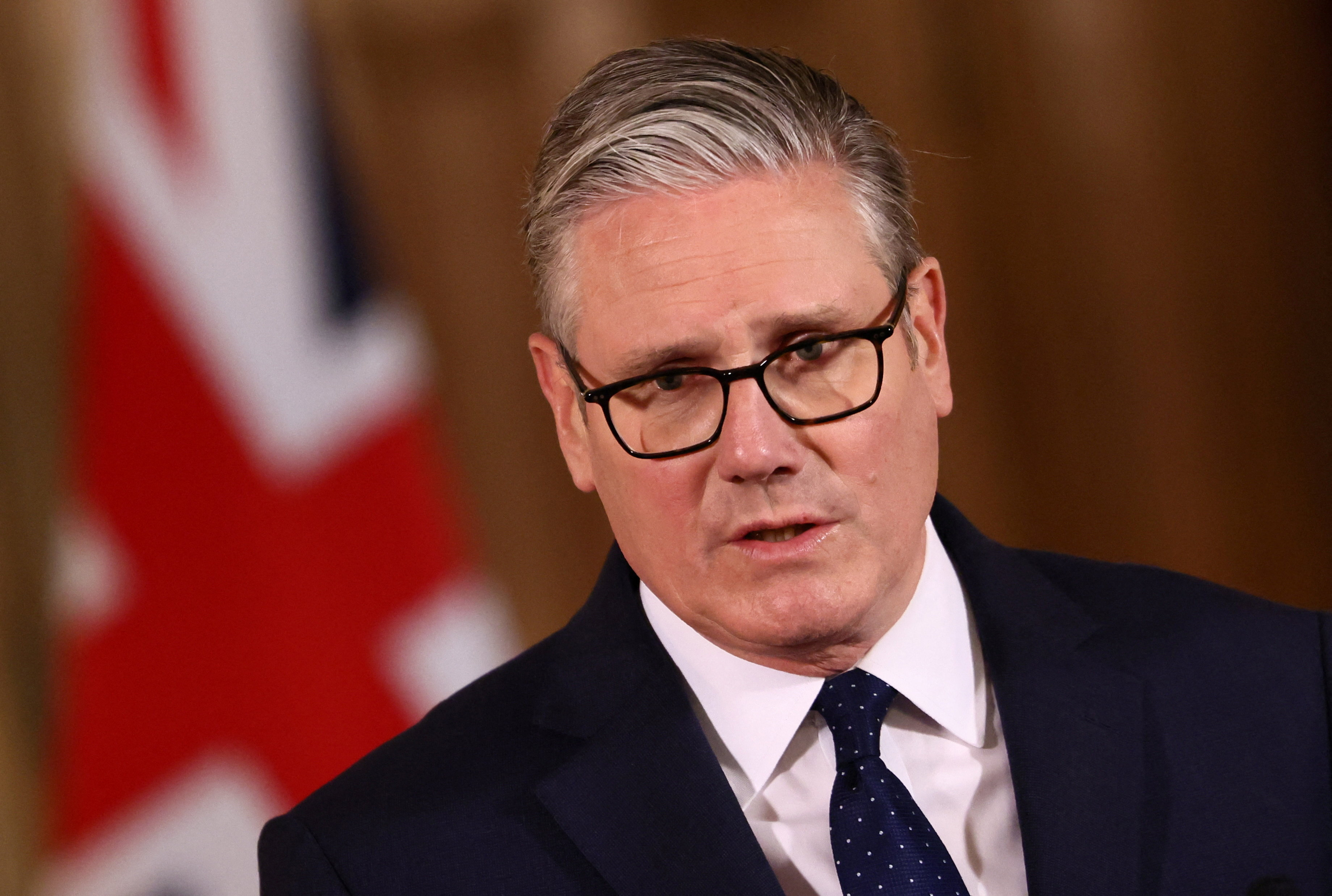
The Westminster press gallery is currently obsessed with a fiction. You see it in every Sunday supplement and every frantic "breaking" analysis: the inevitable list of heirs apparent. They name-check Rachel Reeves, Andy Burnham, or perhaps a wild card like Wes Streeting. They treat the British Premiership like a corporate succession plan where the board is just waiting for the next quarterly earnings miss to swap out the CEO.
This is fundamentally wrong. It ignores the brutal mechanics of the UK’s parliamentary system and the specific, iron-fisted way Keir Starmer has rebuilt the Labour Party. Recently making waves in related news: BRICS Is Not an Alliance and the US Dollar Does Not Care About Your Speech.
Most political "experts" are looking at the wrong data. They look at approval ratings and Twitter (X) vitriol. I’ve watched governments rise and fall for two decades, and I can tell you that approval ratings are a lagging indicator. The only metric that matters for a Prime Minister’s survival is the size of their majority and the degree of internal discipline. Starmer possesses both in surplus. To talk about "who replaces him" in the next four years isn't just premature—it’s a misunderstanding of how power is currently held in Britain.
The Myth of the Waiting Successor
The standard narrative suggests that Rachel Reeves is the "natural" successor because she holds the purse strings. This is a classic category error. Historically, the Chancellor is rarely the person who succeeds a sitting PM from the same party unless that PM leaves voluntarily or there is a total catastrophic collapse of the front bench. More details regarding the matter are explored by Al Jazeera.
Think about the dynamics:
- The Chancellor as Lightning Rod: The Treasury is where dreams go to die. Every unpopular decision—from tax hikes to benefit freezes—bears the Chancellor’s signature. By the time a vacancy opens, the Chancellor is usually the most disliked person in the room.
- The "Safety" Candidate Fallacy: The media loves to pitch Andy Burnham as the "King over the Water." He has the common touch; he has the Manchester power base. But Burnham is outside the tent. Westminster is a closed shop. You do not lead the Labour Party from a mayor’s office in the North.
The idea that there is a queue of ready-made leaders waiting to pounce is a fantasy designed to sell newspapers. In reality, the "successors" are currently more terrified of a reshuffle than they are hungry for the top job.
Discipline Is Not a Bug It Is the System
The "industry insider" consensus is that Starmer is "boring" or "uninspired." This misses the point entirely. His lack of flamboyance is his greatest defensive asset. Unlike Boris Johnson, whose personality was a massive target, Starmer is a blank wall. You can’t find a handle to pull him down because there is no cult of personality to deconstruct.
He has spent years purging the internal opposition. The NEC (National Executive Committee) is packed with loyalists. The selection process for MPs was curated with the precision of a watchmaker. This isn't the fractious, warring Labour Party of the 1980s or the 2010s. This is a disciplined, almost paramilitary political organization.
When people ask "Who replaces Starmer?", they assume a coup is possible. It isn't. To trigger a leadership challenge in the modern Labour Party requires a level of coordinated rebellion that simply does not exist among the current crop of MPs. They are mostly new, mostly indebted to the central office for their seats, and mostly terrified of losing the whip.
The Burnham Delusion and the Regional Trap
Let’s dismantle the Andy Burnham obsession. The "People Also Ask" sections of search engines are filled with queries about whether the Mayor of Greater Manchester can return to Parliament to take the crown.
Here is the cold, hard truth: the path from regional mayor to Prime Minister is a cul-de-sac.
- No Seat, No Power: You cannot be the leader of the party without being an MP.
- The By-election Risk: For Burnham to return, a loyalist would have to step down. Starmer’s team would never allow a "safe" seat to be gifted to a rival.
- The Outsider Stigma: Westminster insiders view regional mayors as administrators, not national leaders.
The media pushes Burnham because he provides "good copy" and a populist contrast to Starmer’s legalistic tone. But in the corridors of power, Burnham is a distant satellite, not a looming planet.
Why the "First 100 Days" Panic is Meaningless
We’ve seen the headlines. "Starmer’s Honeymoon Over," "Labour Declines in Polls." The contrarian view—the one backed by historical precedent—is that this is exactly where a strong government wants to be.
If you are popular in your first year, you aren't doing the hard work. Real power is exercised by spending political capital early. You front-load the pain—the planning reforms that upset the Nimbys, the tough fiscal rules, the unpopular diplomatic pivots—so that you can reap the rewards in year four.
The pundits calling for a "visionary" replacement are essentially asking for a cheerleader. Starmer is a liquidator. He is liquidating the legacy of the previous fourteen years of chaos. You don't replace a liquidator until the debts are cleared.
The Silent Threat Nobody Is Talking About
If Starmer is replaced, it won't be by a "Big Beast." It will be by a "Grey Suit" you’ve barely noticed yet.
The real danger to a sitting PM isn't the person shouting on the front bench; it’s the quiet efficient Minister who manages their department without making mistakes. In the current cabinet, everyone is looking at the stars, but they should be looking at the foundation.
Names like Bridget Phillipson or even Shriti Vadera (in a peerage scenario) are the types of names that actually move the needle in a crisis. But even then, we are talking about a 2029 or 2030 conversation.
The Institutional Stability Argument
The UK has just emerged from a period of unprecedented volatility. Five Prime Ministers in eight years. The British state—the Civil Service, the City of London, the security services—is exhausted. There is an institutional "allergic reaction" to the idea of more leadership churn.
The people who actually run the country (not the ones who talk about it on TV) want Starmer to stay for a full decade. They want the boredom. They want the predictability. The "successor" talk is a hobby for political junkies, but it has zero currency in the places where decisions are actually made.
If you’re betting on a leadership change, you’re betting against the collective will of the British establishment to maintain a quiet life. That is a losing bet.
Stop Asking Who is Next
The question "Who could replace Keir Starmer" is a flawed premise. It assumes he is a temporary placeholder. It assumes the Labour Party is still a chaotic mess of factions. It assumes approval ratings matter in a five-year cycle with a massive majority.
None of these things are true.
Starmer has built a fortress, not a tent. He has removed the ladders. He has drained the moat. The people being touted as his "replacements" are actually his subordinates, and they know it. They are operating in a system where loyalty is the only currency that buys a future.
The next Prime Minister of the United Kingdom will be Keir Starmer, again, after the next election. Anyone telling you otherwise is selling you a narrative because the truth—that we are in for a long, stable, and "boring" period of single-leader dominance—doesn't generate enough clicks.
The vacancy isn't coming. Get used to the silence.