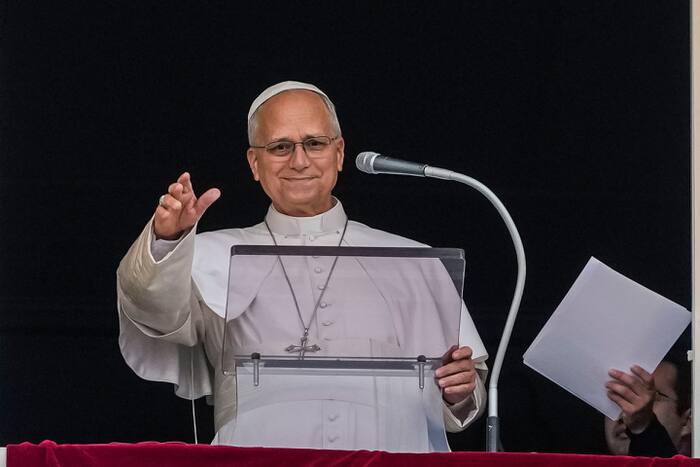
A pope steps onto a balcony, waves to a crowd, and says he is "gradually resuming duties" after cancer surgery. The headlines write themselves. Warmth. Resilience. Courage. Inspiration.
That narrative is lazy. Worse, it is misleading.
When a leader at the top of a global institution undergoes oncological surgery and announces a phased return to public life, the standard media reflex is to treat the schedule as proof of recovery. If the calendar fills up slowly, the story goes, the body is healing cleanly and the institution is steady. Yet anyone who has watched high-stakes organizations manage executive illness knows how quickly a comforting timetable can turn into a trap. A public appearance is not a clinical clearance. A lighter workload is not an immune shield. And a "gradual" return often confuses visibility with readiness.
I have spent years advising institutions and high-pressure leaders through leadership transitions, crisis communications, and severe health disruptions. I have seen boards and executives blow millions of dollars—and burn through years of credibility—by treating a phased calendar as a substitute for candid medical governance. When people at the top try to prove strength by showing up early, everyone beneath them starts editing bad news before it ever reaches the room.
To understand why the usual coverage misses the mark, we have to separate two distinct concepts that commentators routinely mash together: convalescence and oncological remission. Convalescence is the immediate recovery window after an operation—wounds closing, anesthesia clearing, basic stamina returning. Remission—whether clinical or pathological—refers to the measurable reduction or absence of signs of cancer following treatment. A person can feel well enough to greet a crowd in St. Peter's Square weeks after surgery while still facing post-operative fatigue, ongoing adjuvant therapy decisions, infection risks, or pending pathology evaluations. Treating a return to the window as the finish line gets the biology backward.
The Wrong Question Everyone Keeps Asking
Most coverage frames this moment around a single question: How quickly can the pontiff return to full duties?
That is the wrong question. It assumes that "full duties" in the papacy is a fixed, healthy baseline that simply needs a few weeks to reload. In reality, the modern papacy is an endurance test wrapped in a diplomatic machinery that never sleeps. Every public blessing carries travel stress, crowd exposure, emotional strain, and security logistics. Every private audience involves decisions with doctrinal, financial, or geopolitical weight.
A sharper question is this: What does "gradual" actually protect—the patient's recovery, or the institution's desire not to confront frailty?
History shows that institutions rarely struggle because a leader takes time off. They struggle when a leader tries to ration energy in public while pretending nothing fundamental has changed. Think about John Paul II in his later years. The devotion was genuine, and the endurance was real, yet the gap between physical capacity and ceremonial expectation created immense strain across the Roman Curia and the wider Church. Benedict XVI's 2013 resignation broke a centuries-old taboo precisely because he recognized that physical and mental stamina required for the office cannot be willed into existence indefinitely.
Imagine a scenario where a leader post-surgery agrees to cut public appearances in half on paper, yet still sits through three-hour briefings, absorbs stressful personnel disputes, and travels early because crowds expect a familiar face. On paper, the schedule looks "gradual." Physiologically, the stress response is still running hot. Cortisol spikes, sleep fragments, and recovery stalls—not because the surgeon did poor work, but because the calendar still treats the leader as indestructible.
What People Actually Ask—And Why the Standard Answers Fail
When news breaks of a head of state or religious leader returning after cancer surgery, search behavior follows a predictable script. People want quick reassurance. Standard media answers usually offer platitudes that sound authoritative while dodging hard mechanics.
"Does resuming duties mean the cancer is cured?"
No, and equating a return to public duties with a "cure" is one of the most persistent misconceptions in health reporting. In oncology, clinicians rarely declare a solid tumor "cured" the moment it is excised. Even when surgery removes the primary visible mass, long-term outlook depends on tumor type, stage, margins, lymph node involvement, molecular profile, and whether further treatment such as chemotherapy, radiation, hormone therapy, or immunotherapy is warranted.
Returning to work or public appearances simply means the care team believes the immediate post-surgical risks—such as bleeding, wound complications, or acute deconditioning—are manageable enough for controlled activity. A leader can resume duties while still undergoing surveillance scans or waiting on downstream care plans. Anyone reading "gradually resuming duties" as "all clear" is inventing certainty that medicine does not grant.
"Why not step back completely until recovery is 100 percent finished?"
Because "100 percent finished" is often a moving target after cancer surgery, and total absence in a high-symbolism role creates its own vacuum. In an institution like the Catholic Church, where visible presence carries theological and unifying weight, disappearing entirely can fuel rumors faster than facts. A structured, limited return can reassure the faithful and steady internal operations—if the boundaries are real.
The catch is that "gradual" sounds disciplined while often functioning as a leaky dike. Without strict guardrails on duration, travel, decision load, and rest, a gradual return becomes a slide back into overwork. True protection requires hard stops, clear delegation, and a willingness to cancel events when fatigue or lab results dictate—even when thousands of people have already gathered in a square.
"Isn't staying active actually good for recovery?"
Controlled, light movement and purposeful routine can support recovery after many surgeries, helping prevent blood clots, preserve muscle tone, and lift mood. Oncologists and physical therapists regularly encourage graded activity tailored to the patient.
Yet there is a massive difference between a brisk walk in a quiet garden and standing before tens of thousands of people while managing cameras, acoustics, travel, and institutional expectations. Cognitive load and emotional stimulation burn real energy. Treating "staying active" as a blanket green light for public performance mistakes gentle rehabilitation for grueling exposure.
The Mechanics of Real Recovery vs. Performative Strength
In medicine and organizational leadership alike, experts like oncologist Siddhartha Mukherjee—author of The Emperor of All Maladies—have long emphasized how complex and unpredictable cancer treatment and recovery can be compared to neat linear stories. Similarly, leadership scholars and crisis managers such as Ronald Heifetz have pointed out that institutions often project calm continuity to avoid adaptive change, even when underlying conditions demand new habits.
When you look closely at how post-surgical comebacks succeed or falter, four mechanics matter far more than a cheerful wave from a balcony:
- Energy budgeting over hours logged. A two-hour block of high-stakes policy or emotional crowd interaction can drain more reserve than a quiet morning. Smart recovery tracks fatigue and cognitive sharpness, not just clock time.
- True delegation with real authority. If aides collect information but wait for a depleted leader to make every call, the workload is merely delayed, not reduced. Real continuity requires clear decision rights during recovery windows.
- Infection and immune vigilance. Post-operative healing—and any subsequent therapies—can leave a patient more vulnerable to respiratory or viral illnesses. High-density crowds and frequent travel are high-contact environments by definition.
- Candid communication norms. When an organization rewards stoicism above honesty, staff hide symptoms, downplay exhaustion, and spin setbacks. Transparency builds durable trust; theatrical toughness only holds until the next flare-up.
| Dimension | Lazy Consensus Narrative | Nuanced Reality |
|---|---|---|
| Return to public view | Proof of full readiness and momentum | Controlled activity within post-op limits |
| Post-cancer status | Implies problem solved or "cured" | Distinct from long-term surveillance or adjuvant care |
| Gradual schedule | Automatically safe and restorative | Only safe if paired with strict limits and delegation |
| Institutional risk | Appearing weak by slowing down | Pretending normal capacity when reserves are thin |
Practical Moves That Actually Work After Major Surgery
If you are leading a team, running an organization, or advising someone stepping back into demanding work after major surgery—whether in the Vatican, a boardroom, or a family business—sentimental optimism will not carry you through month two. You need operational discipline.
First, audit the calendar by cognitive and physical toll, not prestige. High-profile appearances often look impressive while costing enormous energy. Strip out low-leverage commitments first, cap meeting lengths, and build unscheduled recovery buffers around any public or high-stress event.
Second, publish and enforce hard stop rules. Decide in advance what triggers an immediate pause: poor sleep, lingering pain, elevated fatigue, travel strain, or clinical advice. Make backing out a normal protocol rather than a dramatic crisis.
Third, ring-fence decision bottlenecks. Identify the top five decisions that normally stall without the leader's sign-off, and empower trusted deputies to move them forward within clear boundaries while recovery continues.
Fourth, separate morale from medical milestones. You can honor a leader's faith, grit, and dedication without turning every public wave into a clinical verdict. Respecting reality is not cynicism; it is how you keep a good leader alive and effective for the long haul.
Where This Contrarian Stance Can Go Wrong
Push a contrarian argument too far, and you create a new distortion. The risk of viewing every gradual return with skepticism is over-reading vulnerability where genuine, steady healing is actually taking place. Surgeons do remove localized tumors cleanly. Bodies do bounce back. Plenty of people resume meaningful work after cancer surgery and go on to serve effectively for years.
There is also a real danger of armchair diagnosis. Outsiders do not have the patient's chart, pathology report, imaging, or daily clinical guidance. Treating a public appearance as proof of hidden collapse is just as sloppy as treating it as proof of complete cure.
The point is not to assume the worst. The point is to stop mistaking a wave in St. Peter's Square for medical certainty—or using a gradual schedule as an excuse to ignore real limits.
Watch the boundaries, not the applause.



