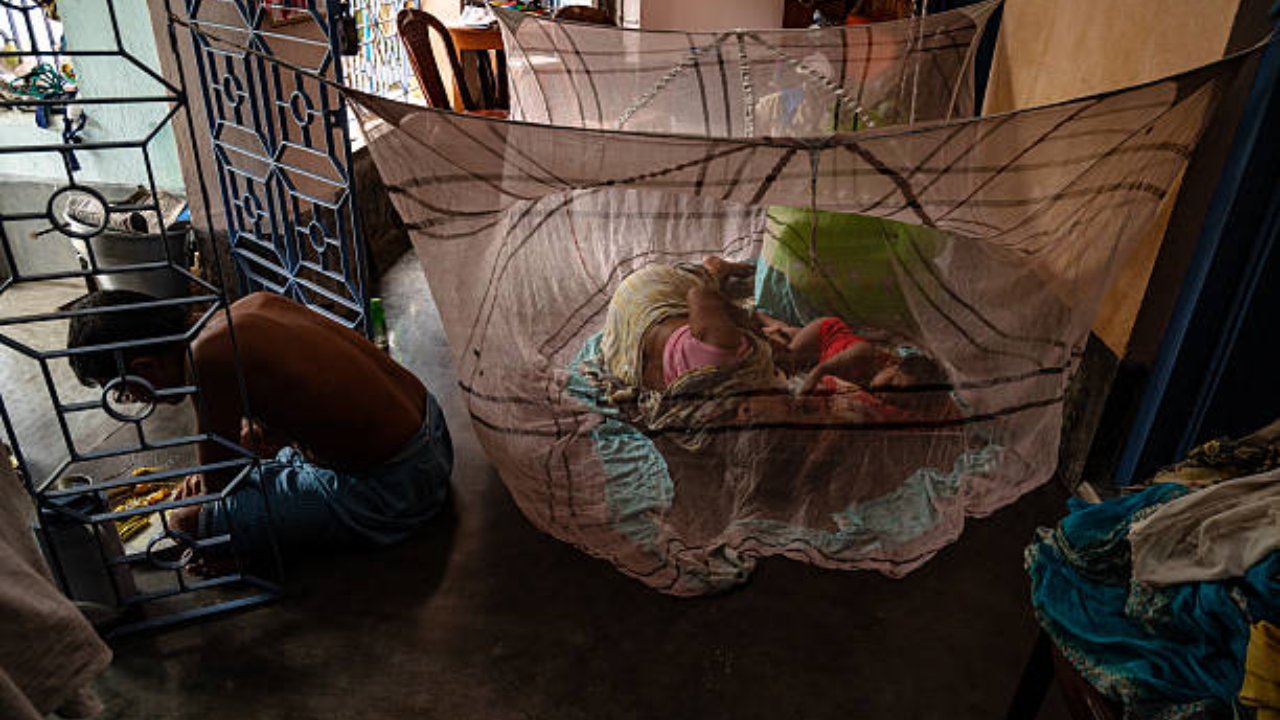
Good intentions don't automatically produce good results. When massive global health campaigns ship millions of resources across borders, the local reality on the ground often defies the grand design. Take the ongoing distribution of anti-malaria bed nets in sub-Saharan Africa. Backed by heavy hitters like the Bill & Melinda Gates Foundation, these initiatives have successfully prevented countless malaria cases and saved thousands of lives.
Yet, a major, unintended secondary crisis has unfolded quietly in the background. Across regions like the Cahora Bassa Delta in Mozambique and various East African coastal communities, thousands of these donated mosquito nets never actually make it over a bed. Instead, they head straight to the water.
People struggling with severe local food insecurity look at a fine-mesh net and see a lifeline for catching dinner. Unfortunately, that exact design feature meant to stop tiny mosquitoes turns out to be disastrously effective at trapping tiny aquatic life.
The Mechanics of an Ecological Trap
To understand why this practice hurts local ecosystems so badly, you have to look at the mesh itself. Mosquito netting features holes so small that insects cannot pass through. When local fishermen drag these nets through shallow riverbeds, estuaries, and vital breeding grounds, they aren't catching mature, plate-sized fish.
Instead, they catch juvenile fish smaller than a human finger. Studies published by marine and freshwater ecologists from institutions like Stockholm University have documented this exact phenomenon. Dragging fine mesh through critical nurseries wipes out entire generations of fish before they ever get a chance to reproduce.
In rich aquatic environments like the Zambezi Valley, these areas act as biological engines for the entire region. When you strip out the juveniles en masse, the adult population collapses soon after. What starts as a quick fix for an individual's immediate hunger turns into long-term ecological devastation.
Why Repurposing Happens
You can't talk about this problem without addressing the socio-economic reality. Western donors often assume uniform compliance. They hand out supplies expecting linear, predictable behavior. But poverty forces tough choices.
If a family faces immediate starvation, buying conventional, code-compliant fishing gear is completely out of the question. When free, durable, high-tensile netting lands in their hands in bulk, it becomes the most accessible tool for survival. People are pragmatic. When basic food security is missing, long-term conservation takes a backseat to filling an empty stomach today.
Furthermore, local perceptions of malaria risk don't always align with donor assumptions. Traditional communities often rely on smoky huts and natural deterrents that they trust implicitly. When outsiders show up offering a medical solution to a health threat that locals might manage differently, the physical asset gets reassigned to a utility that feels more urgent: putting food on the table.
The Broader Impact on Local Food Security
Irony defines this entire situation. The intervention is ostensibly designed to boost public health and stabilize communities. Yet, by inadvertently crashing local fisheries, the widespread misuse of bed nets threatens regional food supplies.
Communities that relied on sustainable, seasonal fishing for generations suddenly find their nets pulling up empty water. The collapse of a local fishery removes a primary source of cheap protein. Families trade one survival threat for another. They might avoid a bout of malaria this month, only to face chronic malnutrition next season because the local ecosystem can no longer sustain its natural fish population.
Researchers and conservationists have flagged this issue for years, pointing out that environmental health and human health are entirely intertwined. Ignoring what happens after a aid package gets dropped off leads straight to policy blind spots.
Rethinking Aid Delivery
Fixing this mess requires more than just shaking a finger at villagers for misusing donations. Donors and international health organizations need to evaluate the lifecycle of their aid.
When designing massive public health rollouts, stakeholders must factor in local economic pressures. If an aid item has a high secondary utility—like durable, tear-resistant mesh—it will almost certainly be repurposed in impoverished areas. Anticipating this behavior means pairing distribution campaigns with community education, alternative economic support, or providing actual sustainable fishing gear where appropriate.
Ignoring the downstream ecological effects of charity doesn't protect the charity; it just shifts the damage elsewhere. True progress demands looking at the whole picture, ensuring that saving lives in one category doesn't inadvertently starve communities in another.