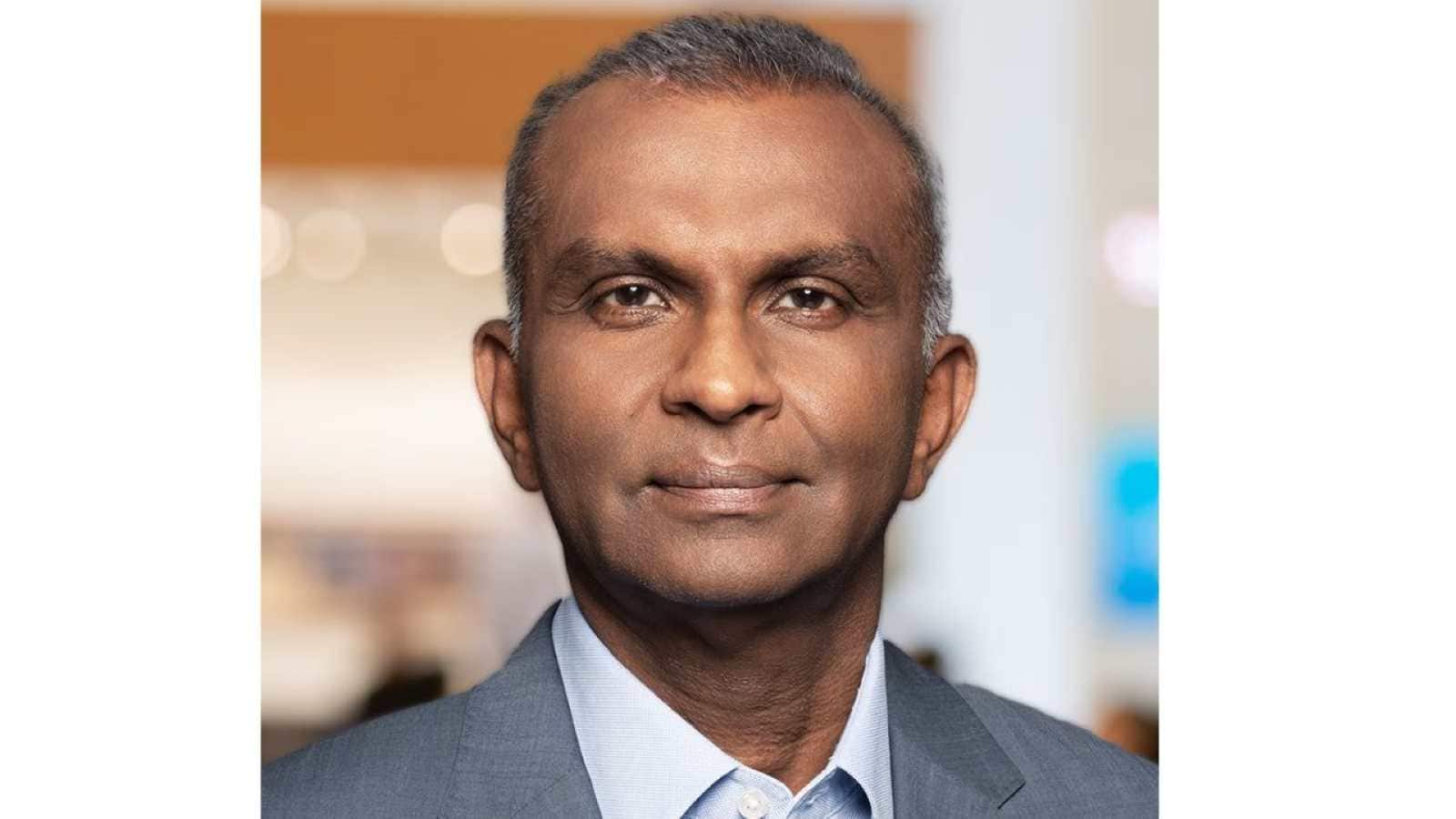
The air inside a corner office at 270 Park Avenue doesn't move like the air in the rest of Manhattan. It is filtered, pressurized, and heavy with the scent of expensive wool and the electric hum of Bloomberg terminals. In this rarefied atmosphere, loyalty is a currency, but power is the gold standard. When Viswas Raghavan, the man who had spent nearly three decades climbing the jagged glass peaks of JPMorgan Chase, was told his time had come to an end, the silence in the room must have been deafening.
He wasn't just another executive. He was the Head of Global Investment Banking. He was a protégé of Jamie Dimon. He was the architect of deals that moved tectonic plates in the global economy. And then, in the blink of an eye, he was an outsider.
Most people, when they lose a job after twenty-six years, update a resume and hope for a decent severance package. But in the stratosphere of high finance, a "departure" is rarely just an exit. It is a catalyst. For Citigroup and its CEO Jane Fraser, Raghavan’s sudden availability wasn't a scandal to avoid. It was a once-in-a-generation opportunity to buy a brain, a network, and a reputation for the price of a small island.
The Cost of a Clean Break
Wall Street operates on a system of "deferred compensation." It’s a gilded cage designed to ensure that the brightest minds don’t wander across the street to the competition. When Raghavan left JPMorgan, he walked away from tens of millions of dollars in unvested stock and bonuses—wealth that existed only on paper, contingent on him staying put.
This is where the math gets dizzying.
To lure him to Citigroup, Jane Fraser didn't just offer him a salary. She had to "make him whole." In the brutal terminology of corporate raiding, this meant Citi had to write a check to cover everything he was leaving behind at his old desk. The total package? Roughly $52 million.
Think about that number. It is more than the career earnings of a thousand teachers combined. It is a figure so large it ceases to be money and becomes a statement of intent. By paying this sum, Citigroup wasn't just hiring a new Head of Banking and Executive Vice Chair. They were signaling to the world that they are tired of being the underdog. They are willing to pay a premium to import the "JPMorgan way."
The Ghost in the Machine
To understand why a human being is worth $52 million to a bank, you have to look past the spreadsheets. Banking is, at its heart, a business of ghosts. It is built on the ghosts of past deals, the whispers of future mergers, and the invisible threads of trust that connect a CEO in London to a sovereign wealth fund in Singapore.
Raghavan is the keeper of those threads.
Born in India and educated in the UK, he possesses a specific kind of cultural fluidity that is essential in a globalized market. He doesn't just speak the language of finance; he speaks the language of the people who control it. At JPMorgan, he was known for a relentless, almost surgical focus on the client. He wasn't just selling a product; he was managing a relationship.
Consider a hypothetical scenario: A massive European tech firm is looking to go public. They have three banks pitching for the business. Two banks send teams of bright Ivy League graduates with impeccable slide decks. The third bank sends Viswas Raghavan. He doesn't need a deck. He knows the CEO’s predecessor. He knows the specific regulatory hurdle they hit five years ago. He knows who to call at the central bank.
That is the $52 million advantage. It is the shortcut. It is the ability to walk into a room and have the gravity shift in your direction because of the name on your business card and the history in your head.
A Tale of Two Cultures
The move is also a window into the soul of two very different institutions. JPMorgan is a fortress. It is the undisputed king of the hill, a machine so well-oiled that it can lose a top lieutenant and barely skip a beat. When they asked Raghavan to leave—reportedly due to tensions over his move to a rival—it was an assertion of dominance. No one, not even a star, is bigger than the fortress.
Citigroup, conversely, is a house under renovation. Jane Fraser is currently leading the most significant reorganization of the bank in decades. She is stripping away layers of bureaucracy, cutting thousands of jobs, and trying to prove to skeptical investors that Citi can be as lean and mean as its peers.
Hiring Raghavan is her boldest move yet. It is an admission that while you can cut your way to efficiency, you have to buy your way to growth.
Fraser is betting that Raghavan can take the chaotic, sprawling energy of Citi’s global network and sharpen it into a spear. She needs him to do more than manage; she needs him to colonize the market. She needs the JPMorgan DNA to splice into the Citi bloodstream.
The Loneliness of the Long-Term Executive
There is a human cost to these transitions that rarely makes it into the financial columns. Imagine spending twenty-six years—nearly three decades—building a life within one organization. You know the janitors, the junior analysts who are now managing directors, and the specific way the light hits your desk in December. You are part of the architecture.
Then, one morning, you are not.
The transition from JPMorgan to Citigroup wasn't just a change of commute; it was a total recalibration of identity. Raghavan went from being the hunter for the most powerful bank on earth to being the man tasked with taking that power away. There is a specific kind of coldness required for that shift. It requires a person to compartmentalize decades of loyalty and transform it into a competitive weapon.
This isn't just business. It's Shakespearean. It’s the trusted general crossing the border to lead the rival army, armed with the secrets of the palace he just left.
The Risk of the Pedestal
When you are paid $52 million before you even walk through the door, you are not a colleague. You are a messiah. And the problem with being a messiah is that the expectations are impossible.
Citigroup’s rank and file are currently navigating a "simplification" process that has left many looking over their shoulders. Into this environment walks a man whose sign-on bonus alone could fund entire departments. The pressure on Raghavan to deliver immediate, spectacular results is immense.
If he brings in a few massive IPOs or orchestrates a landmark merger within his first year, the $52 million will look like a bargain. It will be seen as the spark that ignited the new Citi. But if the culture resists him, or if the market turns sour, that number will become a millstone. It will be cited in every article about "executive excess" and "failed turnarounds."
He is walking a tightrope made of gold, stretched over a canyon of public scrutiny.
The New Map of Wall Street
We are witnessing a shift in how talent is valued in the post-pandemic world. It’s no longer enough to be a "good manager." Banks are looking for "rainmakers"—individuals who carry their own weather system with them.
The story of Viswas Raghavan is a reminder that in the highest echelons of society, the rules of the labor market don't apply. It is a world of leverage, where being "asked to leave" one of the most prestigious jobs on earth can actually be the most profitable thing that ever happens to you.
It tells us that experience is the only thing that can't be automated. AI can model a merger, but it can't sit across from a nervous founder in a hotel suite at 2:00 AM and convince them to sign the papers. It can't navigate the egos, the fears, and the legacies that drive the world's largest transactions.
As Raghavan settles into his new office at Citi, he is likely looking out over the same skyline he saw from JPMorgan. The buildings haven't changed. The streets are the same. But the view is entirely different. He is no longer protecting a legacy; he is trying to dismantle one.
The fifty-two million dollars is already spent. Now comes the hard part: proving he was worth every cent. The silence of the JPMorgan office has been replaced by the roar of a new challenge, and on Wall Street, the only thing louder than the sound of money is the sound of someone trying to take it all.
Raghavan stands at the window, a man who was once a pillar of the establishment, now the primary threat to its stability. He is a reminder that in the game of global finance, you are never truly settled. You are only ever between deals.