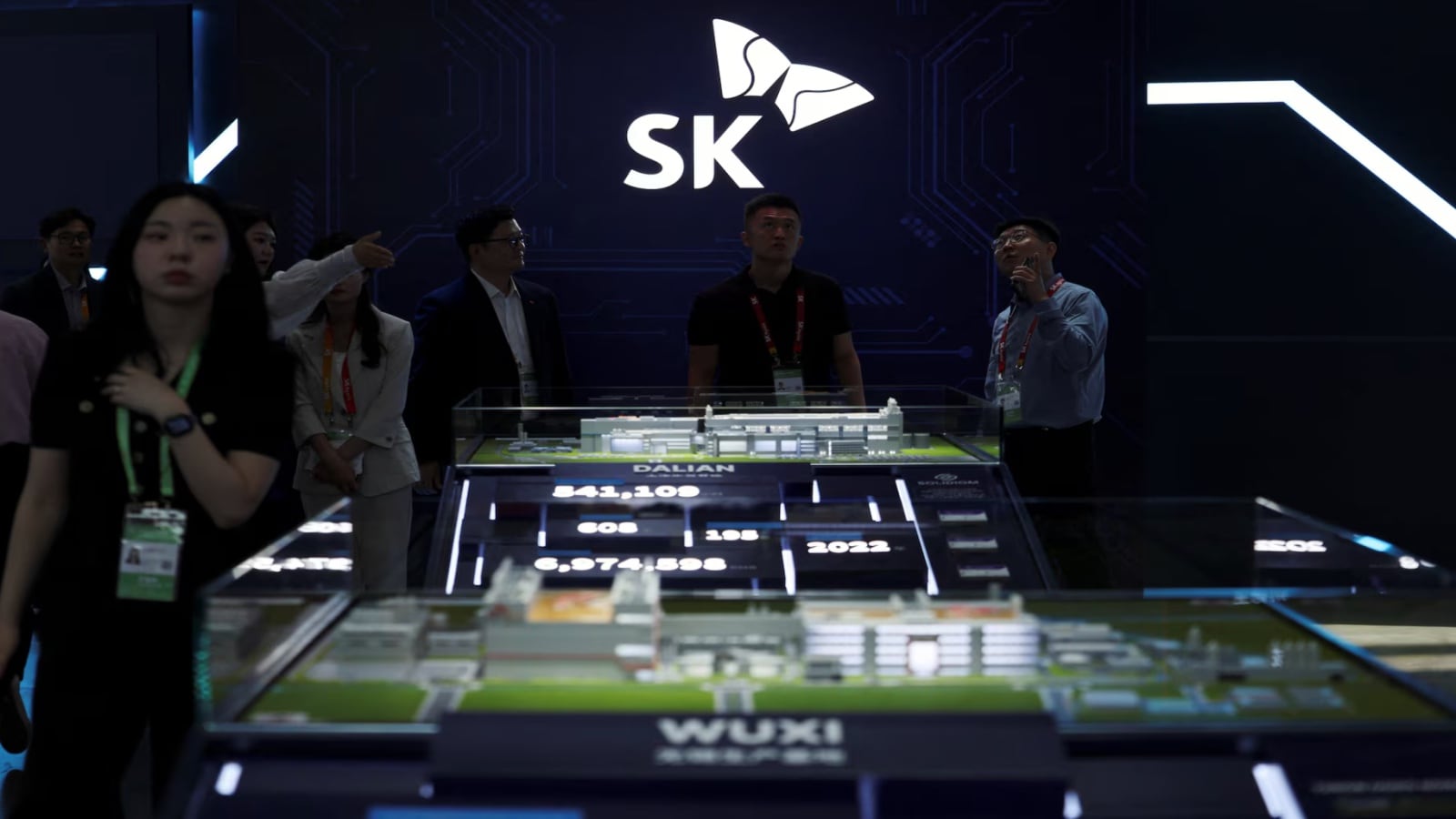
Wall Street just witnessed history, and it has nothing to do with Silicon Valley software apps. South Korean chip giant SK Hynix landed on the Nasdaq with a massive $26.5 billion American Depositary Receipt (ADR) offering. It stands as the largest-ever US listing by a foreign company, sliding right past Alibaba’s historic 2014 debut.
If you think this is just another secondary corporate listing, you're missing the bigger macroeconomic shift.
For years, global portfolio managers avoided Seoul-listed stocks due to the notorious "Korea Discount"—a persistent undervaluation caused by corporate governance quirks and geopolitical friction. By listing directly on the Nasdaq under the ticker SKHY, SK Hynix basically bypassed the local market constraints. They went straight to where the biggest tech valuations live.
The transaction was oversubscribed seven times over. Giant investment funds like Coatue and Baillie Gifford practically fought for allocations. The underlying reality driving this frenzy isn't just general artificial intelligence hype. It comes down to a brutal hardware monopoly that caught its closest competitors completely off guard.
The Risky Bet That Broken the Samsung Monopoly
To understand why investors valued this offering at $149 per ADR, look back to 2012. SK Group Chairman Chey Tae-won made the highly controversial decision to acquire a bankrupt, loss-making chipmaker called Hynix. Critics lambasted the acquisition. The memory chip sector was notorious for brutal, capital-destroying cyclical downturns.
Chey didn't listen. He poured tens of billions of dollars into research and development during market lows. The ultimate payoff of that gamble materialized over the last two years.
When Nvidia designed its dominant H100 and H200 AI architecture, it needed a very specific type of ultra-fast memory called High-Bandwidth Memory (HBM). Standard DRAM couldn't process data fast enough, creating a massive computing bottleneck. SK Hynix had spent a decade perfecting HBM technology while its larger rival, Samsung Electronics, focused elsewhere.
The Real Market Numbers
- HBM Market Share: SK Hynix controls roughly 57% of the global HBM market.
- Nvidia Integration: The company supplies the vast majority of premium HBM chips used in Nvidia’s top-tier AI accelerators.
- Financial Growth: First-quarter revenue nearly tripled year-on-year to 52.6 trillion won ($34.5 billion).
Samsung is still scrambling to pass qualification tests for its latest generation HBM3E chips. Meanwhile, SK Hynix has locked up the most lucrative hardware contracts in the world.
Erasing the Korea Discount in Real Time
Why list in New York if your stock is already up hundreds of percent in Seoul? The answer lies in structural valuation gaps.
Before this listing, SK Hynix traded at a meager 4.5 times forward earnings on the Kospi. Meanwhile, its smaller American competitor, Micron Technology, commanded a significant valuation premium despite holding less market share in the high-margin HBM segment.
SK Hynix vs. Micron Technology (Pre-Listing Valuation Comparison)
-----------------------------------------------------------------
Company         Global HBM Share    Forward P/E Multiple
SK Hynix        ~57%                4.5x
Micron          ~11%                Premium Multiple
US institutional rules often prevent large pension funds and index trackers from holding massive positions directly on the South Korean exchange. The friction of currency conversion, timezone gaps, and local regulatory filings keeps billions of dollars on the sidelines.
By offering 177.9 million ADRs (where 10 ADRs equal one common Seoul share), SK Hynix gave Wall Street a direct, dollar-denominated route into the AI memory theme. UBS even advised clients to buy the new ADRs while selling the domestic Korean stock, anticipating a massive re-rating as global money flows into the asset.
Massive Capex in a Highly Cyclical Sector
SK Hynix isn't letting this $26.5 billion cash injection sit in a bank account. Advanced semiconductor manufacturing requires staggering amounts of capital. The company plans to use the proceeds immediately to fund its massive Yongin semiconductor cluster in South Korea and purchase critical extreme ultraviolet (EUV) lithography scanners from the Netherlands' ASML.
Yet, sophisticated macro investors know this space carries inherent risks. The semiconductor market is historically hyper-cyclical. Memory prices can crater overnight when supply outstrips demand.
Some analysts argue that the industry is currently approaching the peak of this current cycle. We've already seen significant selling pressure hit Western Digital and Micron over fears of a potential slowdown in capital spending by big cloud providers. If tech giants pull back on AI data center construction, the immense manufacturing capacity SK Hynix is building could turn into an expensive liability.
Actionable Strategy for Global Tech Investors
For retail and institutional investors navigating this historic listing, the playbook requires looking beyond the initial media hype:
- Monitor the Arbitrage Gap: Keep a close eye on the price differential between the Seoul-listed common shares (000660) and the Nasdaq ADRs (SKHY). Large institutional desks will actively arbitrage any wide variance, but structural premiums on the US side may persist due to passive fund inflows.
- Watch Samsung Qualification Metrics: The biggest threat to the SK Hynix premium is Samsung successfully scaling its own HBM3E lines for Nvidia. Any news of Samsung passing major customer milestones will directly impact SK Hynix's pricing power.
- Track Capital Expenditure Run Rates: Follow the execution of the Yongin fab construction. Delays in power grid connections or water supply approvals from local authorities could slow down production timelines, giving competitors room to close the gap.
The corporate landscape shifted with this New York debut. SK Hynix proved that advanced hardware manufacturing holds the true leverage in the AI supply chain, forcing Wall Street to play by its rules.