The machinery of global environmental accountability is grinding through two distinct, high-stakes arenas that will dictate planetary survival for decades. In Washington, the United States Supreme Court has opened arguments on a blockbuster energy case that could determine whether fossil fuel giants face multi-billion dollar municipal lawsuits over climate disaster costs. Thousands of miles to the south, Brazil’s political fate hangs in the balance as a fierce presidential runoff pits environmental stabilization against the resurgence of populist right-wing governance.
These events are not isolated legal or political anomalies. They represent a synchronized collision between institutional authority and the mounting financial and ecological price of global heating.
The Jurisdictional Battlefield in Washington
The Supreme Court chamber smelled of old leather and tense anticipation as justices began weighing an aggressive push by major energy conglomerates to block state-level climate damage lawsuits. At the heart of the dispute is an action brought by local governments—such as Boulder, Colorado—demanding that fossil fuel corporations help pay the astronomical costs of mitigating climate-driven natural disasters.
The defense mounted by energy majors rests on a structural constitutional argument. Attorneys for the corporations argue that global climate change is an interstate and international phenomenon that cannot be sliced up and litigated state by state in local courtrooms. Allowing individual municipal juries to penalize energy companies for global emissions, they contend, creates an unconstitutional patchwork of state laws regulating foreign and interstate commerce.
This framing forces the high court into an uncomfortable philosophical and legal corner. If the justices rule that federal common law or statutory frameworks completely preempt local nuisance claims, it deals a crushing blow to municipal climate litigation nationwide. Cities and states attempting to recoup the costs of rising seas, infrastructure hardening, and extreme heat events would find their primary legal recourse foreclosed.
Conversely, a ruling empowering local jurisdictions opens the floodgates to a wave of tort litigation that could fundamentally alter the risk calculus of the fossil fuel industry. Legal experts tracking the docket note that the implications stretch far beyond carbon emissions. The court’s eventual verdict will establish a precedent for whether state courts can hold corporate actors liable for multi-state harms arising from emerging technologies and systemic industrial practices.
The Electoral Fault Line in South America
While Washington jurists dissect jurisdictional boundaries, the Brazilian electorate has pushed the Amazonian basin toward a stark political precipice. Following a fiercely contested first round of voting, the presidential election advanced to a high-stakes runoff between veteran incumbent Luiz Inácio Lula da Silva and Flávio Bolsonaro, representing the enduring political force of the nation's far-right movement.
The electoral map revealed a troubling reality for environmental advocates. Regions directly tied to intensive deforestation and agricultural expansion displayed powerful shifts toward conservative candidates, reflecting deep-seated economic anxieties and a widespread rejection of centralized federal controls. While Lula’s administration successfully curbed significant swaths of rainforest destruction during his tenure, the economic frustrations of working-class voters and the superior digital mobilization of the political right created a formidable electoral surge.
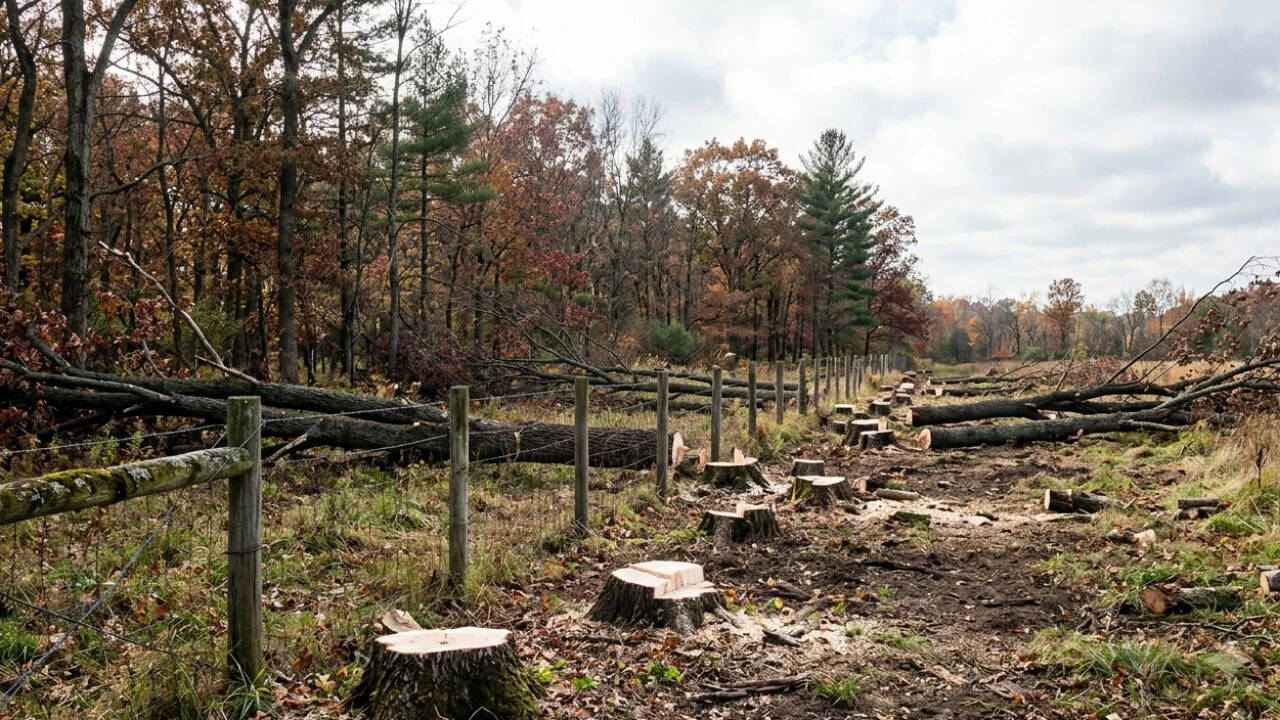
The implications for the global climate system are profound. The Amazon basin functions as one of the planet's most critical carbon sinks. Its stability depends entirely on federal enforcement of environmental protections, prosecution of illegal mining, and the defense of Indigenous territories. A victory for the Bolsonaro camp signals a potential rollback of these protections, threatening to accelerate the biome past irreversible ecological tipping points.
Furthermore, the Brazilian contest has become a proxy battle for hemispheric political alignment. The campaigns have mirrored broader ideological struggles across the Americas, where local economic discontent frequently clashes with international climate commitments.
The Convergence of Power and Consequence
Connecting these two disparate threads reveals a common underlying tension. Across both North and South America, traditional institutions of governance are struggling to process crises that transcend borders. The United States Supreme Court must decide whether a fragmented legal system can address a cumulative global threat, while Brazilian voters must determine whether national economic survival can be decoupled from environmental destruction.
Neither arena offers a clean, frictionless resolution. Legal remedies
The Supreme Court is Quietly Reshaping Climate Liability While Brazil Votes in the Shadow of Ecological Crisis
news, business
The docket at the United States Supreme Court rarely aligns neatly with global political tremors, yet two distinct collisions of power are currently rewriting the rules of environmental accountability. While legal scholars dissect the latest high-stakes litigation over corporate emissions and regulatory reach, South America’s largest democracy stands at an electoral crossroads that will determine whether the Amazon basin survives the next decade. These events are not isolated anomalies. They represent a fundamental shift in how modern economies confront ecological degradation, legal immunity, and political polarization.
The Courtroom Battlefield
For decades, major industrial polluters operated under a comfortable legal shield. That shield is fracturing. The Supreme Court's current docket features arguments regarding whether state courts can hold energy conglomerates liable under local nuisance laws for the planetary costs of fossil fuel extraction.
The defense strategy relies on federal preemption. Corporations argue that Congress and the Environmental Protection Agency hold exclusive domain over air quality and climate policy, rendering state-level lawsuits an unconstitutional encroachment on interstate commerce and foreign policy. Plaintiffs, meanwhile, frame the issue through the lens of traditional consumer fraud and property destruction. They point to internal corporate documents from decades past, proving executives understood the warming trajectory of their products while simultaneously funding public disinformation campaigns.
This litigation strategy borrows heavily from the tobacco playbook of the 1990s. When individual states began recovering Medicaid costs from cigarette makers, the industry's legislative fortress crumbled. Climate litigation aims for the same structural collapse. If energy companies lose the protection of federal preemption, they face a patchwork of fifty different state jurisdictions, each capable of levying massive judgments for rising sea walls, extreme heat mitigation, and wildfire recovery.
Yet, the legal mechanism remains flawed. Tort law is retrospective, designed to address discrete harms with identifiable perpetrators and victims. Global heating is an atmospheric commons problem. Attributing a specific percentage of a destructive hurricane to a specific barrel of crude oil extracted by a specific firm requires a chain of causation that traditional jurisprudence struggles to evaluate. The courts are being asked to act as surrogate legislatures, a role for which the judiciary is structurally unequipped.
The Brazilian Crucible
Simultaneously, thousands of miles south, Brazil's presidential runoff election presents a starkly different mechanism of environmental reckoning. The contest is less about courtroom theory and more about raw executive authority over the world's most critical carbon sink. The Amazon rainforest functions as the Earth's cooling system. When political leadership favors unchecked agribusiness expansion, mining cartels, and land grabbing, deforestation rates surge with immediate atmospheric consequences.
The electoral choice is stark. One faction views the rainforest as an underutilized economic asset, demanding rapid infrastructure development and deregulation to lift rural populations out of poverty through commodity export. The opposition coalition counters that destroying the forest permanently compromises national sovereignty, agricultural viability, and international trade agreements. European trade blocs are increasingly tying market access to strict supply chain traceability laws, meaning Brazilian beef and soy produced on illegally cleared land faces outright bans.
This creates an intense paradox for developing economies. Western nations industrialized centuries ago by burning cheap carbon, clearing native ecosystems, and externalizing environmental costs. Emerging powers now face severe financial and diplomatic penalties for pursuing that exact playbook. Brazilian voters are caught between immediate domestic survival economics and long-term planetary survival.
When a presidential campaign hinges on the management of an ecosystem of global significance, domestic politics ceases to be local. Foreign investors, international NGOs, and sovereign wealth funds monitor the ballot count with intense anxiety. A shift in executive power changes enforcement priorities overnight. Federal environmental protection agencies, starved of funding and personnel during populist administrations, either return to active enforcement or face complete dismantling.
The Economic Realities
Markets are beginning to price these legal and political realities into long-term capital allocation, regardless of judicial opinions or election outcomes. Insurance companies are quietly retreating from high-risk flood zones and wildfire-prone regions, making property coverage either prohibitively expensive or entirely unavailable. This private-sector rationing of risk functions as a more effective behavioral deterrent than any government regulation.
When a major insurer refuses to renew policies for commercial real estate in coastal municipalities, property values drop. When property values drop, municipal bond ratings follow. Local governments suddenly find themselves unable to finance the infrastructure required to withstand rising tides and extreme weather events. The financial system is internalizing ecological risk not out of moral awakening, but out of absolute actuarial necessity.
Similarly, institutional investors are demanding granular disclosures regarding Scope Three emissions—the indirect emissions generated by a company's supply chain and product usage. This transparency strips away corporate greenwashing. Shareholders can now audit whether a bank's net-zero public relations campaign matches its actual lending portfolio to fossil fuel developers.
The convergence of Supreme Court litigation and Brazilian electoral politics reveals the underlying stress fractures of the global economy. Institutions built for the twentieth century are attempting to govern a planetary crisis characterized by systemic feedback loops and delayed consequences. Courts can issue rulings, and voters can elect presidents, but the atmosphere remains indifferent to human jurisdiction. The true test of these systems will not be found in the eloquence of judicial opinions or the rhetoric of campaign trails, but in the brutal arithmetic of resource scarcity and capital flight over the next decade.