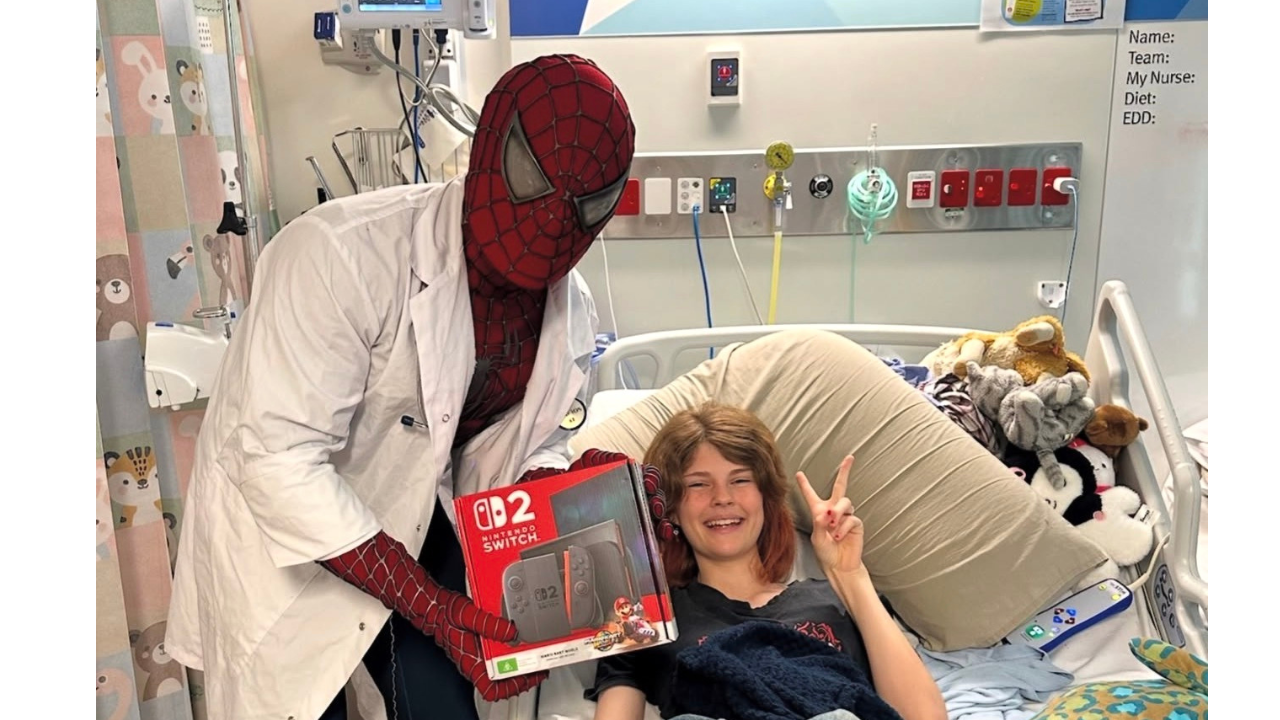
A medical student slips into a spandex Spider-Man suit, walks into an Australian pediatric ward, hands out Nintendo Switches, and the internet weeps tears of joy. The media eats it up. It is the ultimate feel-good headline. It tracks perfectly with our collective obsession with individual heroism.
It is also a profound distraction from what hospitalized children actually need.
We love the narrative of the lone savior. It allows us to ignore systemic failures. While cheering for a well-meaning student spending his own cash on electronics, we overlook a uncomfortable truth. Handing a screen to a isolated, traumatized child is often a failure of imagination and a cop-out for a healthcare system that underfunds genuine pediatric psychology and child-life therapy.
The consensus is lazy. It says entertainment equals healing. It does not.
The Dopamine Trap in the Pediatric Ward
Hospitalized children suffer from a distinct lack of control. Their bodies are failing them, their schedules are dictated by alarms, and unfamiliar adults probe them at all hours.
Enter the superhero with a gaming console.
On the surface, it looks like a win. The child stops crying. They plug into Mario Kart. The room goes quiet. Nurses can do their rounds without a fight. But let us look at the actual clinical mechanics of what is happening here.
Escapism is not the same as coping.
When a child activates a video game under high stress, they are utilizing a powerful tool of distraction. In short bursts—say, during an agonizing IV insertion or a spinal tap—distraction is an excellent clinical tool. Pediatric hospitals have used VR headsets and iPads for years to blunt acute pain.
But handing a permanent console to a long-term patient changes the dynamic entirely. It shifts from acute distraction to chronic avoidance.
The child is not processing their environment, their fears, or their illness. They are numbing themselves to it. When the screen turns off, the hospital room is still there, the illness is still there, and the emotional baseline remains entirely untouched. We are substituting genuine psychological resilience for a digital sedative.
The Displacement of Child Life Specialists
Every dollar, every volunteer hour, and every media cycle poured into high-profile gadget drops pushes the real heroes of pediatric care into the shadows.
Certified Child Life Specialists (CCLS) are the clinical backbone of pediatric emotional management. These professionals hold degrees in human growth, child development, and psychology. They do not just hand over a toy; they use therapeutic play to help a child process trauma. They use medical dolls to explain surgeries. They facilitate peer-to-peer interaction so children do not feel isolated.
They are also chronically underfunded and understaffed.
When philanthropists and well-meaning students focus exclusively on hardware, they create a lopsided environment. A hospital ward can have a Playstation in every room but still lack the budget for a full-time child life specialist to help a seven-year-old understand why they lost their hair to chemotherapy.
"The presence of a toy does not replace the presence of a trained professional who understands the developmental stages of trauma."
I have spent years analyzing how healthcare facilities allocate resources, and the pattern is predictable. Flashy, photogenic charity work attracts corporate donations and viral clicks. A stack of Nintendo Switches looks great on LinkedIn. Funding the salary of a pediatric therapist does not.
By celebrating the spectacle of the superhero deliverer, we validate the idea that pediatric mental health can be outsourced to gadgets and goodwill.
The Logistics of the Clean Room
Let us talk about the cold, hard reality of infection control. Pediatric oncology wards and intensive care units are sterile environments for a reason. Many of these children are neutropenic; their immune systems are completely compromised.
A plastic gaming console with textured grips, vents, and buttons is a logistical nightmare for infection control.
When a well-meaning volunteer brings external items into a hospital, they introduce variables. Who cleaned the box? Who handled the device before it entered the clean zone? While hospitals have rigorous protocols for sterilization, the influx of consumer electronics creates unnecessary vectors for pathogens.
Furthermore, screens are notoriously dirty. Studies consistently show that smartphones and tablets carry more bacteria than a toilet seat. In a high-stakes environment where a simple bacterial infection can be fatal, the uncritical introduction of consumer tech is a risk wrapped in a bow.
If we truly want to help these children, the delivery mechanism matters just as much as the object itself.
Rethinking the "People Also Ask" Premise
When people look at these stories, they ask variations of the same question: How can we get more toys to sick kids?
That is the wrong question. It assumes the primary deficit in a sick child's life is a lack of plastic goods. It is not. The primary deficits are autonomy, human connection, and developmental progression.
Instead of asking how to buy more consoles, we should ask: How do we build environments where children can maintain their development despite their illness?
Here is the brutal honesty: consumer electronics isolate patients. They sit in their beds, eyes glued to the screen, ignoring the family members sitting in the vinyl chair next to them. It reduces interaction at the exact moment connection is vital.
If we want to dismantle the flawed premise of toy-driven charity, we must look at what actually moves the needle in pediatric recovery:
- Architectural design: Wards designed with communal spaces that encourage safe, supervised peer interaction.
- Family-centered care funding: Providing financial support so parents do not have to leave their child's bedside to go to work. A parent’s presence does more for a child's cortisol levels than any video game ever could.
- Integrated arts and music therapy: Active creation rather than passive consumption. Writing a song or painting a mural forces a child to express internal anxiety, whereas a video game merely suppresses it.
The Cost of the Costume
There is another layer to this: the Spider-Man suit.
While toddlers might be thrilled by a visit from a comic book character, older children and teenagers often see through the performance. More importantly, it creates a bizarre power dynamic. The child is vulnerable, trapped in a gown, hooked to lines. The visitor is powerful, masked, and celebrated.
It centers the experience on the visitor, not the patient. The viral photos are always framed the same way: the hero standing tall, the child looking up from the bed.
This is ego-driven altruism. It satisfies our desire for a cinematic moment. True, impactful care is mundane. It is a therapist sitting quietly on the floor, listening to a child talk about their fear of dying. It is a nurse staying twenty minutes past their shift to hold a hand. It is not photogenic, it cannot be reduced to a 15-second reel, and it does not look good in a costume.
The Real Actionable Strategy for Donors
If you want to impact the lives of hospitalized children, step away from the electronics aisle. Stop funding the spectacle.
- Endow positions, not things. Call your local children's hospital foundation. Tell them you want your donation earmarked specifically for the salaries of Child Life Specialists, creative arts therapists, or social workers.
- Fund parental support. Donate to organizations that provide housing and meal vouchers for families of long-term patients. The emotional stability of the parent directly dictates the emotional stability of the child.
- Demand systemic accountability. Ask why public health systems rely on the charity of medical students in costumes to provide basic comfort items to patients.
We must stop treating pediatric wards like sets for feel-good news stories. The children inside them do not need a temporary escape into a digital world provided by a masked stranger. They need a healthcare system that recognizes their humanity, funds their psychological care, and supports their families through the darkest moments of their lives.
Turn off the screen. Strip off the mask. Fund the care.