The dust in the Brazilian interior has a specific weight. It clings to eyelashes, coats the tongue, and settles into the pores of clothes worn for days beneath an unforgiving sky. In the dry backlands of the northeast, water is not merely a resource. It is currency. It is survival. It is an anxiety that hums beneath every waking hour, a low-frequency dread that dictates when people wake, how far they walk, and whom they must trust.
Imagine walking four miles across cracked, sun-baked earth to reach a turbid reservoir shared with cattle and goats. Imagine lowering a plastic bucket into water the color of weak tea, watching leaves and sediment swirl around the rim. You know what lives in that liquid. Invisible armies of bacteria, parasites, and viruses waiting for an entry point. Every swallow carries a gamble. Do you risk dehydration today, or dysentery tomorrow? For millions, there is no real choice. Thirst brooks no philosophy.
Most people accept this as an unalterable law of geography. Poverty, they whisper, smells like stagnant mud and rusted tin.
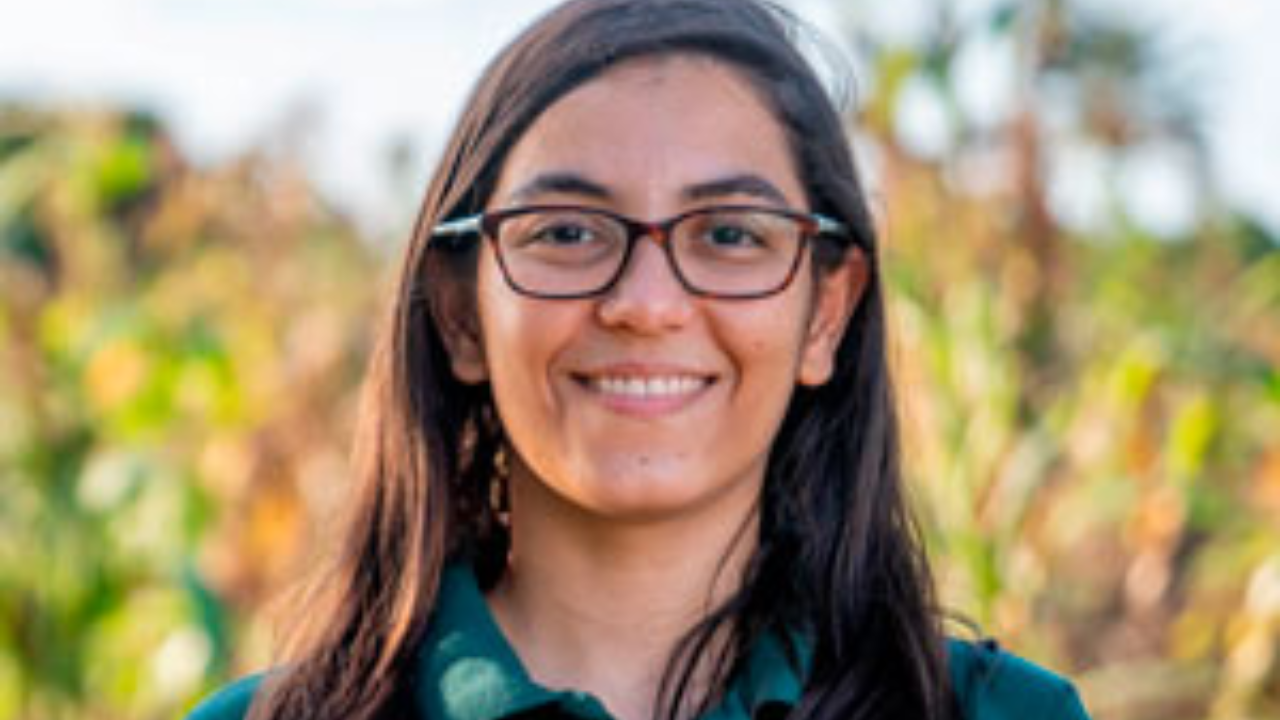
Anna Luísa Beserra refused to whisper.
She was fifteen years old when she began asking questions that adults had long since stopped answering. Growing up in Salvador, Bahia, she looked at science fairs not as academic hurdles or obligatory bulletin-board displays, but as arenas where real problems might actually be solved. While her peers built baking-soda volcanoes or wired simple circuits, Anna looked at the glaring, omnipresent beam of the tropical sun and saw an engine.
Not a solar panel feeding a lithium battery. Not a high-voltage grid spanning miles of wilderness. An engine of purification.
To understand the audacity of her vision, one must understand the physics of what she was trying to master. Sunlight is a dual-threat instrument. It delivers ultraviolet-A radiation alongside thermal energy. When contaminated water sits exposed to sunlight under specific conditions, those invisible UV rays penetrate bacterial cell walls, scrambling DNA strands and preventing replication. Simultaneously, the heat builds up, disabling vital enzymes within pathogens. Scientists called this solar water disinfection, or SODIS. It was a well-documented academic phenomenon backed by decades of research papers gathering dust in university libraries.
The catch was human behavior.
Telling a rural family to fill plastic soda bottles, lay them on a corrugated tin roof, and wait six hours for the sun to sterilize their drinking water sounds simple on paper. In reality, it was a mess. Bottles rolled off roofs and shattered. People forgot which bottles were clean and which were raw from the pond. Direct sunlight hitting degrading plastic risked leaching chemical additives into the water. Worst of all, there was no feedback mechanism. No green light, no indicator, no reassurance that the invisible killers had actually been vanquished. So people stopped doing it. They went back to drinking unboiled pond water, coughing through fevers, and accepting illness as part of the climate.
Anna did not invent ultraviolet light. She invented dignity.
She began tinkering in her bedroom, driven by an obsessive curiosity that baffled her teachers and energized her mentors. She wanted to bridge the chasm between a brilliant laboratory concept and a mud-brick home in the Sertão. Her solution was not a high-tech filtration membrane manufactured in a Swiss factory. It was an assembly of local materials, engineered with rigorous precision, designed to be intuitive to anyone who had never touched a computer.
She built a prototype. Then another. Then dozens more.
Her invention, which would later evolve into the enterprise known as Aqualux, was deceptively simple in appearance. It was a compact, durable container system engineered to optimize solar exposure while safeguarding water from external contamination. But the true genius lay in its interface. She incorporated a specialized thermal and chemical indicator that changed color only when the purification threshold had been safely crossed. No guessing. No calendar checks. Just a clear visual signal telling a mother: this water is safe for your child.
Consider what happens in a typical rural settlement when a system like this arrives.
Skepticism is the armor of the vulnerable. People who have been promised miracles by politicians, NGOs, and passing travelers learn to mistrust anything new. When Anna or her early collaborators introduced the device to families in remote communities, they did not encounter immediate gratitude. They encountered crossed arms and narrowed eyes.
An elder steps forward. He runs a calloused thumb over the casing. He asks the question that cuts through every marketing pitch: does it actually work?
They test it. They fill it with murky reservoir water. They set it in the blazing Bahian sun. They wait. When the indicator shifts, they pour a glass. They drink.
And nothing bad happens. In fact, weeks pass. The chronic stomachaches that kept children out of school begin to vanish. The local clinic notices a dip in gastrointestinal infections.
The shift is seismic. It happens quietly, kitchen by kitchen, porch by porch. Women who spent hours gathering firewood to boil water now spend those hours reading, working, or simply resting. The invisible weight of illness lifts from the household budget.
Science often suffers from an ivory-tower complex. We build magnificent machines that require sterile laboratories, expensive replacement filters, and technicians who fly in from distant capitals. When those machines break, the community returns to the old ways, abandoned in the shadow of rusting industrial monuments. True innovation, Anna realized early on, must be invisible. It must disappear into daily life until people forget it was ever invented.
By the time she was a university student, her project had outgrown school science fairs. Awards followed. International recognition bloomed. The United Nations acknowledged her contribution with prestigious youth environmental prizes. Young scientists around the globe looked at her trajectory and saw proof that age is not a waiting room for competence.
Yet the accolades missed the point.
The real metric of her work is not found in trophies, grant checks, or glossy magazine profiles. It is found in the silence of a mother watching her toddler drink a glass of water that no longer smells of earth and rot. It is found in the mathematics of health—fewer clinic visits, lower infant mortality, higher school attendance rates in drought-stricken regions.
Water is universal. So is human ingenuity, when stripped of arrogance.
We often imagine that saving the world requires catastrophic budgets and teams of grey-haired consultants huddled in glass skyscrapers. We look for complexity because simplicity makes us suspicious. If a solution is cheap, we wonder where the catch is. If it uses sunlight and common sense, we dismiss it as too humble to matter.
Anna proved us wrong.
She looked at the most abundant resource in her country—sunlight—and paired it with the most neglected people—those living on the margins of water security. She did not try to rewrite the laws of physics or reinvent the biosphere. She simply built a bridge between what nature offered for free and what humanity desperately lacked.
The sun rises every morning over the Brazilian backlands. It beats down with the same merciless intensity that parches the soil and wilts the crops. But now, in thousands of homes, that same light performs a quiet miracle inside a small, transparent box.
It kills the invisible enemy. It gives back time. It restores health.
There is a lesson here that extends far beyond water purification. We are surrounded by broken systems that we treat as permanent fixtures of human existence. We wait for saviors who never arrive, funding that never clears, policies that stall in committee rooms. We accept suffering as the default state of the world because imagining an alternative feels exhausting.
Then someone comes along and asks a brutally simple question.
Why are we making this so complicated?
Anna Luísa Beserra did not wait for permission to change her corner of the planet. She did not wait for a government grant or a corporate sponsorship. She started with a hypothesis, a bottle, and the sun.
Night falls across the Sertão. The temperature drops. The stars emerge in a brilliant, unbroken arc over the dry earth. Tomorrow, the sun will climb again. And as its first golden rays strike the roofs of remote homes, a small box will catch the light, turning a hazard into life, proving that sometimes the oldest, most overlooked truths are the ones that save us.