Silence.
That is the single heaviest thing you encounter when you stand at the edge of an active sacrificial pit in Sichuan, watching a team of conservators in white Tyvek suits lean over a block of damp, three-thousand-year-old mud. I have spent years around archaeological digs and archival vaults, and I can tell you that the popular movie version of discovery—all shouting, dust, and sudden golden glints—is a lie. Real discovery smells like wet clay and rust. It happens in agonizing, millimeter-by-millimeter quiet, mostly because the people holding the brushes know that a single careless breath could turn an irreplaceable piece of human history into gray powder.
For nearly a century, that silence has been the defining mystery of Sanxingdui.
Situated along the banks of the Jian River in southwestern China, the ancient Shu kingdom left behind some of the most arresting bronze work the human race has ever produced. Towering standing figures with impossibly elongated limbs. Gold-leaf masks with sharp, angular brows. Massive bronze eyes that bulge outward on cylindrical stalks, staring across three millennia with an expression that feels alien, hypnotic, and entirely unreadable.
Unreadable. Not just metaphorically, either. Literally.
While their contemporaries along the Yellow River—the Shang dynasty—were diligently carving thousands of oracle bone inscriptions onto turtle shells and ox scapulae, recording everything from royal toothaches to military campaigns, the people of Sanxingdui left us nothing. Not a single stone stele. Not one inscribed bronze vessel. No clay tablets. Nothing. For decades, historians and archaeologists looked at the towering metallurgical sophistication of the Shu people and drew a quiet, slightly patronizing conclusion. They were brilliant artisans, the consensus went, capable of casting bronze with astonishing precision, yet they had never developed a writing system. They were a civilization without a voice.
We got the story completely backward.
The problem wasn't that the people of Sanxingdui didn't write. The problem was that we were looking for their words on materials built to survive the weather, rather than the materials they actually trusted with their sacred truths.
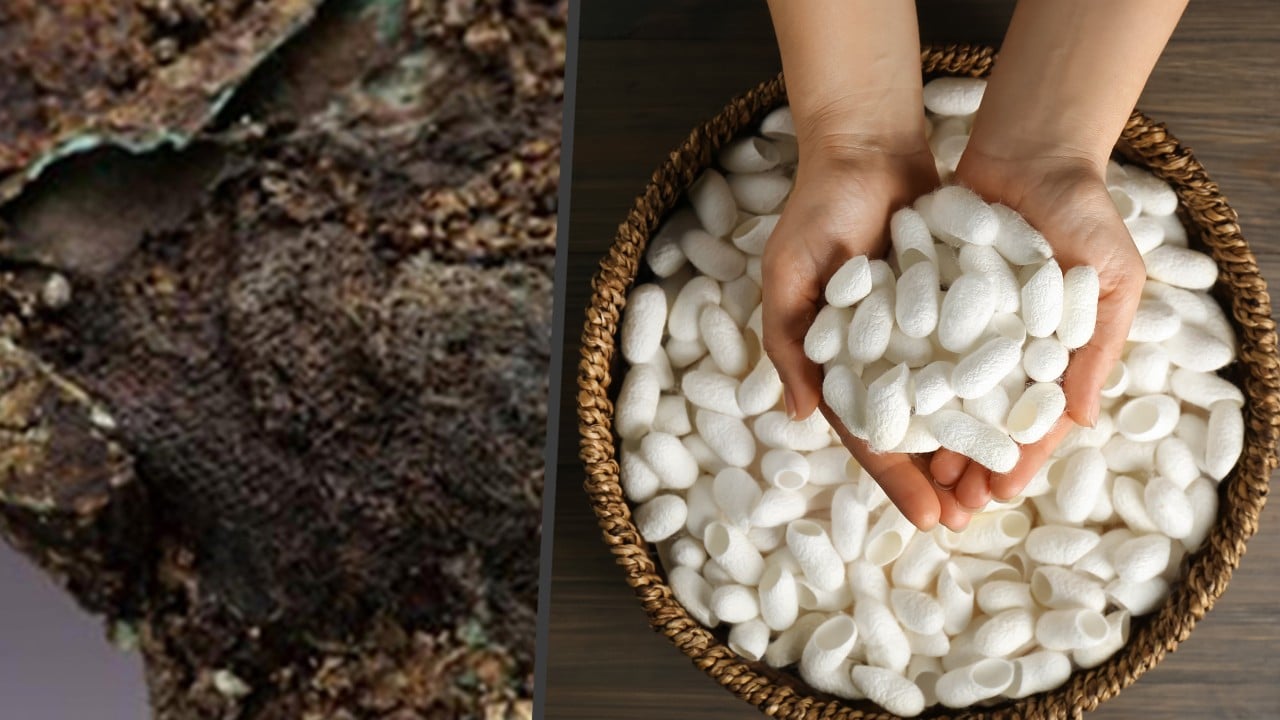
Recent breakthroughs in the sacrificial pits at Sanxingdui—specifically the identification of mineralized silk residues clinging to bronze artifacts—have blown a hole straight through the old academic certainty. Using advanced microscopy and protein analysis, researchers confirmed that intricate woven silk fabrics had been wrapped around sacred bronzes and buried in the pits more than 3,000 years ago. And where there is high-grade silk in a ritual context in ancient China, a staggering realization follows close behind. They didn't leave us without a voice because they couldn't write. They left us without a voice because they wrote on cloth, and the earth ate their library.
The Bias of Stone and Bone
To understand why this matters, you have to strip away our modern arrogance about permanence. We live in an era of cloud backups and silicon wafers, yet even we are terrible at preserving our own daily lives—ask anyone who has tried to open a floppy disk from 1998 or recover photos from a dead phone. Now, project that fragility backward three thousand years into the humid, acidic soil of the Sichuan Basin.
Archaeology suffers from what we call survivorship bias. Imagine—and let's be clear, this is a hypothetical thought experiment—that an alien civilization landed on Earth ten thousand years from now, long after fires, floods, and rot had consumed every paper book, wooden desk, and cotton shirt. If those aliens excavated a typical suburban neighborhood, they would find ceramic toilets, stainless steel forks, concrete foundations, and granite headstones. Looking at that collection, they might reasonably conclude that twenty-first-century humans were a mute species obsessed with plumbing and burial markers, completely unaware that we wrote millions of novels, love letters, and legal contracts on pulped wood.
That is precisely what happened to Sanxingdui.
When you walk through a museum gallery filled with Shang dynasty artifacts, you see bronze ritual vessels covered in crisp, cast characters, and cracked turtle plastrons etched with sharp, angular script. Bone and bronze are stubborn. They resist the microbes in the dirt. They survive floods, earthquakes, and centuries of shifting water tables. Because those materials survived, we equated survival with existence. We assumed that if a Bronze Age society possessed writing, they would inevitably carve it into something hard.
Consider what happens next when a culture chooses a different medium.
In the warm, fertile climate of the Chengdu Plain, sericulture—the cultivation of silkworms—was not a rare luxury reserved for distant trade routes. It was native, abundant, and deeply woven into the spiritual identity of the region. Even the legendary founder of the ancient Shu kingdom, Cancong, has a name that literally translates to "Silkworm Clump," and ancient folklore depicts him teaching his people how to raise the insects and reel the thread. To the people of Sanxingdui, silk wasn't just fabric. It was a living, shimmering material pulled from the miracle of metamorphosis. It was light, luminous, and infinitely receptive to mineral pigments and lacquer inks.
Why would a Shu priest painstakingly chip characters into a hard ox bone with a bronze stylus when he had bolts of smooth, luminous white silk right in front of him? You wouldn't. You would pick up a brush, dip it in cinnabar or carbon ink, and paint your prayers, your genealogies, and your royal decrees onto the finest medium your civilization knew how to make.
A Day in the Pit
Let's step away from the laboratory tables for a moment and construct a realistic, grounded scene—purely illustrative, based on the archaeological evidence pulled from Pits 3 through 8—to see what that ritual actually looked like.
Picture a high-ranking ritual specialist in Sanxingdui around 1200 BCE. The air is thick with the smell of woodsmoke, crushed herbs, and wet earth. Before him stands a towering bronze altar, freshly cast, gleaming like dark gold in the firelight. He isn't throwing trash into a hole in the ground; modern scholarship has long debunked the idea that these pits were mere garbage dumps. They were deliberate, ceremonial offerings—ritual burials of sacred objects, perhaps conducted during a moment of profound political crisis, ecological disaster, or dynastic transition.
Before the bronze figure is lowered into the freshly dug trench, attendants bring forward bolts of finely woven silk. Some of these textiles are plain tabbies; others feature complex weaves that require sophisticated looms. On the smooth, bright surface of these silk banners, scribes have painted rows of characters—perhaps invocations to the ancestors, records of the ritual's purpose, or the names of the clans offering the tribute.
The attendants carefully wrap the bronze vessels and ivory tusks in these inscribed silk shrouds, binding them tightly before laying them into the pit and setting fire to parts of the offering. Then, heavy layers of earth are shoveled over the top, sealing the chamber in darkness.
For three millennia, the soil goes to work.
While the bronze corrodes slowly, forming a green patina, the silk undergoes a quieter, almost total transformation. Moisture seeps down through the clay. Microorganisms consume the organic fibroin proteins of the thread. Within a few decades, the ink washes away or degrades into unrecognizable mineral dust. Within a few centuries, the cloth itself vanishes—except in the microscopic spaces where copper ions from the adjacent bronze objects leach into the fabric, replacing the organic fibers molecule by molecule in a process called mineralization.
The text disappears. The fabric becomes a ghost. And three thousand years later, human beings stand over the pit, holding the bronze object that the silk once wrapped, wondering why the people who made it never learned to write.
The Forensic Detective Work
I have watched conservators work with mineralized textiles, and I admit, the sheer patience required makes me feel slightly inadequate as a human being. You cannot pull this kind of evidence out of the ground with a trowel. If you scrape the green crust off a bronze artifact to make it look shiny for a museum display case, you destroy the very evidence that rewrites history.
In the past, that is exactly what happened. Early twentieth-century archaeology across the globe was obsessed with the pristine object. Dirt and corrosion were seen as enemies to be scrubbed away so the museum visitor could admire the clean metal underneath. Countless microscopic traces of ancient life—pollen grains, skin cells, wood splinters, and textile fibers—were brushed into dustbins in the name of restoration.
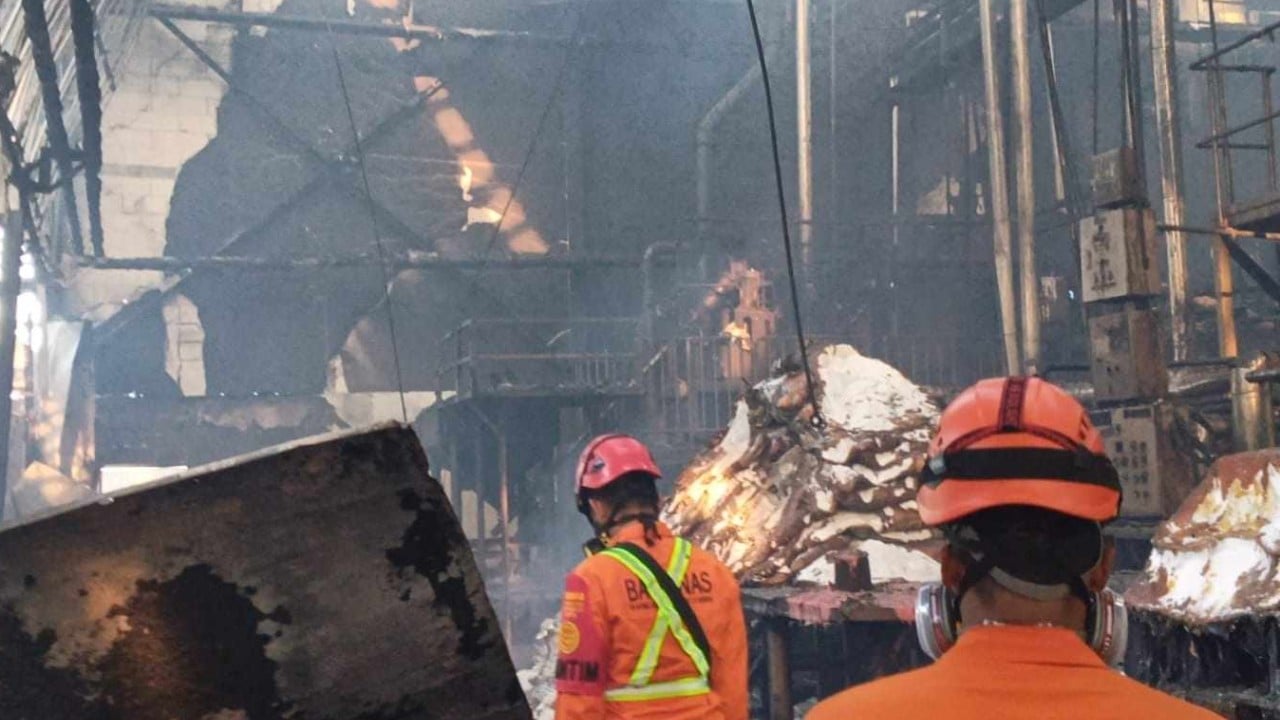
The modern teams working at Sanxingdui took the opposite approach. When they opened the newly discovered sacrificial pits starting in 2019 and 2020, they built climate-controlled glass cabins directly over the excavation trenches. They regulated the temperature and humidity in real time so the sudden exposure to air wouldn't shock the fragile organic remains into disintegrating.
When they lifted chunks of earth containing bronze vessels and jade blades, they didn't clean them on-site. They encased the entire mud block in plaster and moved it to a sterile laboratory. Under high-powered scanning electron microscopes and using immunological tests—the same basic antibody-antigen principles used in medical diagnostics—researchers began testing the crusty green patina clinging to the bronzes.
What they found stopped the room cold.
There, locked inside the corrosion layers on the surfaces of bronze artifacts from Pits 4 and 8, were unmistakable silk protein markers and fossilized weave structures. Not random threads, either. The cross-sections of the fibers showed the distinctive triangular geometry of domesticated silkworm silk (Bombyx mori), arranged in deliberate, uniform warp and weft patterns. In some cases, the silk had been folded in multiple layers before being pressed against the metal.
And here is the critical link that connects a microscopic thread to the question of literacy: the ancient Chinese character for "silk" and the historical development of writing in the region are deeply entangled with textile production. Even more directly, look at the early Chinese character ce (册)—meaning "book" or "volume"—which depicts strips of bamboo tied together with cords, alongside bo (帛), meaning "silk scroll." By the Warring States period and the Han dynasty, writing on silk (boshu) was already a prestigious, well-established tradition across China, used for sacred maps, astronomical charts, and philosophical treatises.
If the Shang dynasty in the north was already writing with brushes and ink on perishable bamboo and silk—which we know they were, because the oracle bone character for "writing brush" (yu, 聿) clearly shows a hand holding a bristle brush, and traces of brush-written cinnabar ink have been found on Shang jade and pottery—then Sanxingdui did not exist in a vacuum. The Shu people were in active trade and cultural contact with the Shang world. They imported Shang bronze styles and adapted them into something wildly original. It defies common sense to think they imported metallurgical techniques, jade-working methods, and ritual concepts, yet somehow missed the single most transformative administrative and spiritual tool of the Bronze Age: the brush and the written word.
They didn't miss it. They simply trusted their words to silk, bamboo, and wood—the exact materials that rot to nothing in the wet soil of Sichuan.
What We Lose When We Confuse Survival With Truth
There is a quiet, unsettling vulnerability in admitting how much of human history is built on guesswork. When I first started reading archaeological reports years ago, I expected certainty. I wanted definitive timelines, clean maps, and neat explanations for why ancient people did what they did. Instead, the deeper you go into the field, the more you realize that history is a jigsaw puzzle where ninety percent of the pieces were thrown into a fireplace before we ever walked into the room.
Think about what this realization does to our understanding of the ancient world.
For decades, the standard narrative of Chinese civilization—and indeed, of early global civilizations—was heavily tilted toward the regions with the driest climates or the hardest writing surfaces. Egypt gets immense credit for its administrative depth because the dry desert sands preserved papyrus scrolls in astonishing detail. Mesopotamia dominates our textbooks because wet clay baked in the sun turns into literal brick, preserving hundreds of thousands of cuneiform receipts, epics, and school exercises.
Meanwhile, civilizations that flourished in lush, wet river valleys—places like the Sichuan Basin, the Yangtze River delta, or the tropical lowlands of Mesoamerica and Southeast Asia—have consistently been underestimated. Because their paper, bark, bamboo, and silk rotted away, we labeled them "pre-literate" or "peripheral." We mistook an accident of chemistry and climate for a lack of human ingenuity.
Sanxingdui forces us to correct that bias. When you look at the bronze sacred trees standing nearly four meters tall, with their intricate castings of birds, dragons, and bells, you are not looking at the work of an isolated, ad-hoc group of craftsmen winging it by trial and error. Complex bronze casting on that scale requires supply chain logistics. It requires mining operations, tin and lead procurement across hundreds of miles, standardized measurements, specialized labor guilds, and ritual calendars. You do not coordinate an industrial-scale metallurgical enterprise and a multi-pit state ritual without a system of record-keeping and symbolic communication.
The silk traces found on the bronzes are the missing bridge. They show that the people of Sanxingdui possessed the exact canvas that early Chinese scribes favored for sacred and official texts. Even if the individual brushstrokes on those specific silk shrouds dissolved into the mud centuries ago, the presence of the silk itself removes the primary objection to Shu literacy. The medium was there. The brushes existed in the broader regional toolkit. The administrative necessity was undeniable.
The Weight of Unread Words
Still, we have to be honest about where the evidence stops. Science isn't wishful thinking, and finding silk on a bronze vessel is not the same thing as holding a readable Sanxingdui dictionary in our hands.
Right now, researchers are racing against time and chemistry. With new spectral imaging techniques—using infrared, ultraviolet, and multispectral photography—conservators can sometimes detect the faint chemical ghost of mineral inks like cinnabar (mercury sulfide) or carbon black on mineralized textile layers even after the organic pigment binder has vanished. Every square millimeter of the silk-encrusted bronzes pulled from Pits 3 through 8 is being scanned for those faint mineral signatures.
Maybe they will find a single character. Maybe they will find a row of glyphs painted in red cinnabar along the hem of a silk banner that wrapped a bronze mask. Or maybe the acidic groundwater of the Chengdu Plain did its work too thoroughly, leaving us only with the weave of the cloth and the certainty of what it once carried.
Even if we never recover a single legible word from Sanxingdui, the discovery has already changed how we look at those towering bronze faces.
When you stand in front of those massive, protruding bronze eyes today, you are no longer looking at a silent monument built by a civilization that never learned to speak across time. You are looking at the surviving skeleton of a much richer, softer, more vibrant world. Around those cold green bronzes once hung banners of bright white and crimson silk, heavy with painted prayers, names, and stories that the people of Shu believed were important enough to bury with their gods.
The earth took the ink, and it took the thread, leaving behind only the bronze bones and a microscopic trace of protein locked in rust. Yet that single thread is enough to remind us of a humbling truth: just because a voice has faded beyond the reach of our instruments does not mean the room was ever empty.