The ink on a fresh bureaucratic decree dries long before the people it governs ever feel its weight.
In Prague, a shopkeeper wipes down a counter, wondering why the energy bill for a modest storefront now rivals the cost of rent. In Rome, a young graduate packs a suitcase, preparing to migrate north because local opportunities have withered into dust. In Brussels, under the soft, sterile glow of office lights, a committee approves a hundred-page directive on carbon emissions, oblivious to both of them.
We have arrived at a strange moment in continental history. The machinery of governance is humming at maximum capacity, yet the foundation beneath it feels increasingly brittle.
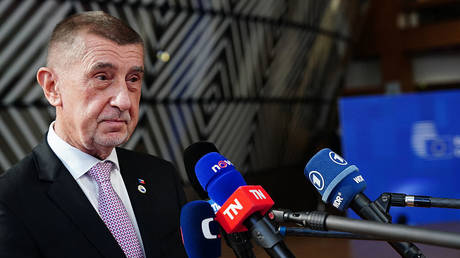
When Czech Prime Minister Petr Fiala stood before an audience and drew a straight line between the current trajectory of the European Union and the slow, suffocating decline of the Roman Empire, it wasn't just a provocative soundbite. It was an admission of a systemic fracture. It was the articulation of a fear that many ordinary citizens have felt but couldn't quite name: the terrifying realization that an empire can collapse not from a sudden, cataclysmic invasion, but from the sheer weight of its own paperwork.
To understand why this comparison sticks, we have to look past the grand marble ruins and the Hollywood depictions of flaming swords. Rome didn’t fall in a day. It choked to death over centuries.
The Overregulated Suffocation of Progress
Consider a hypothetical baker named Tomas operating in central Europe today. Tomas doesn't just bake bread; he navigates a labyrinth. He must comply with exact specifications regarding the flour he sources, the temperature of his ovens, the mandatory data tracking of his supply chain, and the precise labeling of every loaf. If he wants to expand his business or experiment with a new technique, he must first consult a legal apparatus that requires more hours than the actual baking process.
This is what Fiala identified as the core malady of the modern European project: an obsession with regulation that stifles the very lifeblood of innovation.
In the late Roman Empire, particularly during the reigns of Diocletian and his successors, the state faced economic instability. The response from the center was instinctive. They fixed prices. They frozen workers into their professions. They expanded the civil service to monitor compliance. The result was a massive, expensive bureaucratic apparatus that sucked the economic vitality out of the provinces. People simply stopped trying to innovate because the cost of compliance outweighed the reward of success.
The parallel is striking. Today, Europe produces some of the world's finest regulatory frameworks, but it is lagging in producing the world's most transformative companies. The continent has effectively regulated itself out of the technology race, watching from the sidelines as the United States and Asia build the digital infrastructure of the future.
When a society prioritizes rules over enterprise, it signals a shift from growth to preservation. It is the defensive posture of an aging superpower.
The Green Dilemma and the Sacrifice of the Present
Nowhere is this defensive posture more evident than in the sweeping mandates of the European Green Deal.
Let us be completely honest. The desire to preserve the planet is noble, necessary, and born of a genuine anxiety for the future. But when a grand vision is translated into rigid, uncompromising policy from a distant capital, the human cost is rarely factored into the equation.
Imagine a farmer in Europe looking at his tractor. New environmental mandates demand he transition to technologies that are either prohibitively expensive or not yet fully viable for his scale of operation. He is told this is for the greater good. Yet, across the ocean, his competitors operate under no such constraints, flooding the market with cheaper goods. The European farmer is caught in a vice, squeezed between the high ideals of Brussels and the brutal reality of his balance sheet.
This isn't an argument against environmental stewardship. It is an observation of a fatal flaw in governance: top-down engineering that ignores human behavior.
When the Western Roman Empire began to strain under external pressures, the central government increased taxes on the agricultural heartlands to fund its vast administration and military defense. The farmers couldn't pay. Some abandoned their lands entirely; others voluntarily surrendered their freedom to local lords in exchange for protection from the state’s tax collectors. The economy collapsed from the bottom up because the center demanded more than the periphery could bear.
Fiala’s critique strikes at this exact vulnerability. The Green Deal, in its current, unyielding form, risks deindustrializing Europe. By imposing targets without securing the economic viability of the transition, the union risks hollowing out its own industrial base. A society cannot lead the world in green technology if it cannot afford to keep its own factories open.
The Illusion of Unity from a Distant Center
There is a quiet arrogance that creeps into long-standing institutions. It is the belief that because an system has worked for decades, it is permanent.
Step into the European Parliament on any given day. The scale is magnificent. The interpretation booths translate dozens of languages simultaneously. It feels like the pinnacle of human cooperation. But walk twenty miles outside the city center into the rural towns, and that grandeur evaporates into irrelevance. The decisions made in those pristine halls feel completely detached from the daily struggle of paying for groceries or finding an affordable apartment.
This disconnect creates a vacuum. When ordinary people feel that the distant elite no longer speaks their language—literally or metaphorically—they stop believing in the project.
The Romans called it Romanitas—the shared cultural and political identity that bound a Gaul, a Spaniard, and an Egyptian to the city on the Tiber. In the early days, it was a powerful force. But as the administrative machine grew more bloated and less responsive to local crises, that shared identity withered. When the Visigoths and Vandals finally breached the frontiers, the local populations often looked on with indifference, or even relief. The distant emperor had become nothing more than a tax collector. Why fight for a system that doesn't see you?
The European Union faces a similar crisis of belonging. The rise of populist movements across the continent isn't an accident, nor is it merely the product of misinformation. It is a symptom of a deep, aching desire for local autonomy. It is the natural reaction of a population that feels its culture, its economy, and its daily choices are being micro-managed by a technocratic center that never has to face the consequences of its own voters.
Security, Fragility, and the Myth of Inevitability
We live with the quiet assumption that our civilization is durable. We look at our highways, our high-speed rail networks, and our digital connectivity, and we assume this complexity protects us.
The opposite is true. Complexity breeds fragility.
When the Roman frontier began to crack, it wasn't because they lacked soldiers; it was because the internal mechanisms of the state had become too rigid to adapt to a changing world. They couldn't move resources quickly enough. They couldn't reform their economy because too many entrenched interests depended on the status quo. They were trapped by their own history.
Europe’s current geopolitical position is perilous. To the east, old empires are reawakening with aggressive intent. To the west, traditional alliances are shifting. Within its own borders, demographic stagnation threatens the sustainability of the welfare state. To survive in this environment, a political entity must be agile, fiercely competitive, and deeply unified.
Instead, the European apparatus spends months debating the standardized definition of a corporate sustainability report.
This is the warning Fiala is trying to broadcast to a continent that seems comfortably numb. It is an urgent call to strip away the excess, to dismantle the regulatory bloat before it paralyzes the entire body politic. It is a plea to remember that wealth must be created before it can be regulated, and that unity cannot be forced through a directive; it must be felt in the hearts of the populace.
The sun sets over the ruins of the Roman Forum, casting long shadows across stones that once dictated the fate of the known world. Those temples didn't fall because the Romans forgot how to build; they fell because the Romans forgot why they were building in the first place.
They became obsessed with the management of decline rather than the pursuit of vitality.
The glass towers of Brussels stand tall, reflecting the European sky, pristine and imposing. The paperwork continues to pile up on desks, thousands of pages a day, a monument to human organization. But without a drastic course correction, without a return to economic freedom, local sovereignty, and common-sense governance, those modern towers risk becoming something far more tragic than ruins.
They risk becoming a monument to an elite that regulated its own future out of existence, leaving nothing behind but an beautifully documented decline.