At seventy-five, a man expects the quiet hum of a well-earned twilight. He expects the weight of decades to finally slip off his shoulders, replaced by the gentle clink of porcelain teacups and the slow, predictable turning of seasons. He does not expect the midnight knock. He does not expect the cold, sterile glare of a disciplinary committee room, nor the sudden, terrifying realization that the empire he spent forty years building has turned its steel-toed boots toward his own front door.
Gone. For another view, consider: this related article.
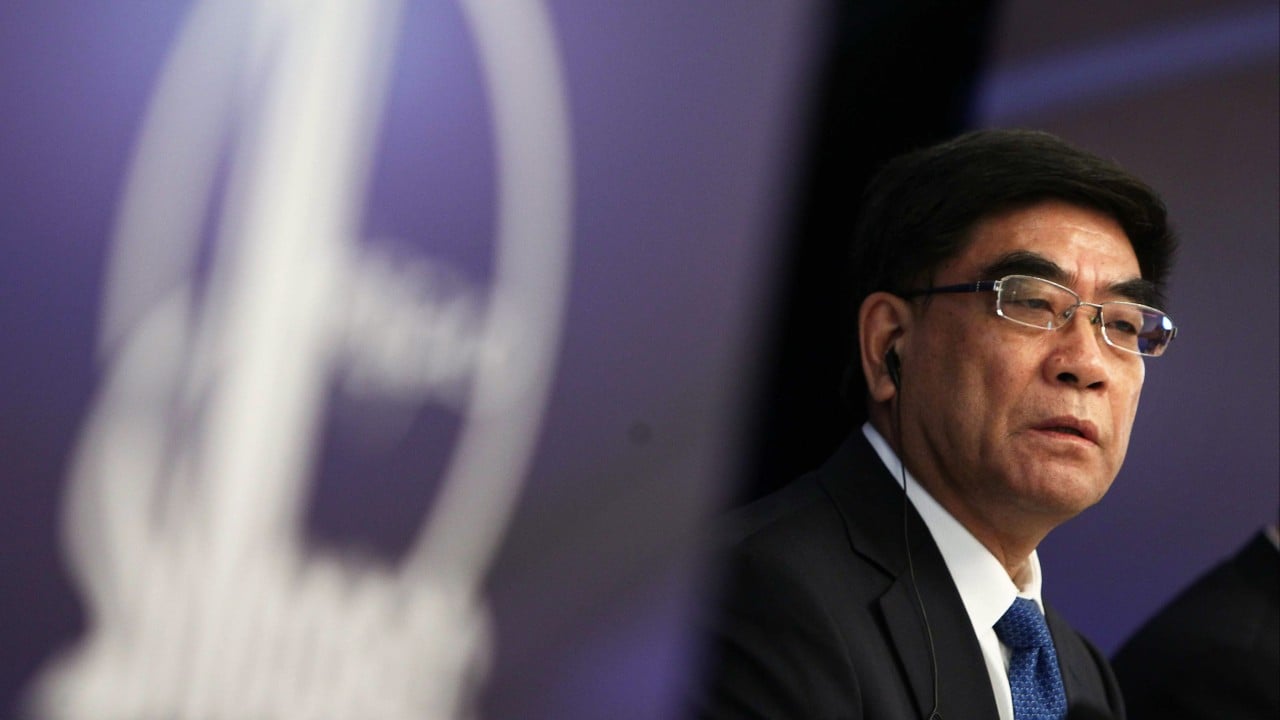
In a single, surgical announcement from Beijing’s anti-corruption watchdogs, Fu Chengyu—the towering architect of China’s modern oil strategy, the man who once commanded both CNOOC and Sinopec—was placed under investigation for severe violations of discipline and law. To the casual observer scanning financial tickers in London or New York, it looks like another routine entry in a decade-long ledger of political housecleaning. A headline. A blip. A brief tremor in the Asian markets before traders turn back to their coffee.
But if you have ever stood on the rusted deck of a drilling rig in the South China Sea, smelling the thick, metallic tang of crude oil mixing with salt spray, you know that nothing about Fu Chengyu is routine. Similar coverage on the subject has been provided by Forbes.
I spent fifteen years tracking the arteries of Asian energy markets, sitting in windowless hotel lobbies from Houston to Hong Kong, watching how deals are actually made when the cameras are turned off. I remember the quiet awe that used to ripple through a room whenever Fu’s name was mentioned. He wasn't just another gray-suited bureaucrat reading from a party script. He spoke fluent English, earned a master’s degree in petroleum engineering from the University of Southern California, and understood the ruthless grammar of Western capitalism better than almost anyone in Beijing. When he walked into a boardroom, he didn't ask for permission to sit at the table; he acted as though he already owned the building.
To understand why his downfall at seventy-five sends a chill down the spine of every executive in Beijing, we have to look past the dry legalisms of the Central Commission for Discipline Inspection. We have to look at the invisible architecture of power, trust, and fear that keeps the world’s second-largest economy running.
The Architecture of an Empire
Consider a hypothetical engineer—let’s call him Wei—who joined Sinopec in the late nineteen-nineties. At the time, China’s state-owned energy giants were lumbering, inefficient beasts, bloated with redundant staff and starved of modern technology. Then came men like Fu Chengyu. Under Fu’s stewardship at China National Offshore Oil Corporation (CNOOC) and later as chairman of Sinopec, these companies transformed from domestic utilities into ferocious global predators.
Wei watched his company suddenly bid billions for Canadian oil sands, negotiate complex joint ventures in West Africa, and list shares on the New York Stock Exchange. For Wei, and for millions of workers like him, Fu wasn't just a boss. He was proof that China could play the global game and win. He was the bridge between the rigid, ideological world of state planning and the fluid, high-stakes reality of international finance.
Think of a state-owned enterprise like a massive, deep-sea oil tanker. It takes miles of open water just to turn the rudder, and its hull is built to withstand crushing pressure from the outside. For decades, the captains of these tankers operated under an unspoken social contract: deliver growth, secure the nation’s energy lifelines, expand China’s footprint abroad, and the state will shield you from the storms. Retirement, when it finally arrived—as it did for Fu in 2015—was supposed to be a safe harbor.
The investigation into Fu Chengyu shatters that harbor into splinters.
When Beijing reaches back across more than a decade of retirement to pull a seventy-five-year-old titan into the interrogation room, it is sending a message that transcends one man’s alleged greed. It is announcing that the statute of limitations on loyalty and past performance has been permanently revoked. There is no safe harbor anymore.
The Anatomy of a Decade-Long Reckoning
Why now? That is the question whispering through the corridors of Beijing’s financial district, heavy with confusion and quiet dread. Fu stepped down from Sinopec in May 2015. In the fast-moving, hyper-competitive arena of global energy, eleven years is an eternity. The oil fields he acquired have been drilled, depleted, or renegotiated. The executives he mentored have either climbed to the top of the pyramid themselves or faded into obscurity.
To grasp the logic behind such a delayed strike, you have to understand how anti-corruption campaigns actually function within closed political systems. They are rarely about sudden discoveries of stolen cash hidden under a mattress. Instead, they are geological. Pressure builds slowly beneath the surface over years, fault lines shift during seemingly unrelated investigations, and eventually, the ground gives way.
In the energy sector, corruption isn't a single transaction; it is an ecosystem. When a state-owned giant spends twenty billion dollars acquiring an overseas asset or constructing a sprawling petrochemical complex, money flows through thousands of tributaries—subcontractors, logistics firms, local fixers, consulting shell companies, and financing intermediaries. Each tributary creates a paper trail, and each paper trail is tethered to a human being.
When a mid-level executive at a regional subsidiary is detained today, investigators don't just ask what he stole last year. They ask who signed off on his promotion in 2012. They ask which consulting firm won the no-bid contract during the big restructuring in 2014. Over years of relentless, methodical digging, the map of favors and kickbacks slowly resolves into a high-definition portrait, leading inevitably back to the corner office at the top of the tower.
The Paralysis of the Corner Office
Let’s return to our hypothetical engineer, Wei, who is now a senior vice president at a major state energy firm. Imagine sitting at his desk tomorrow morning. On his screen is a proposal for a risky, multi-billion-dollar green hydrogen joint venture in the Middle East. The economics are promising, the technology is sound, and the geopolitical timing is ideal. Five years ago, Wei would have championed the deal, leaning on his intuition and personal relationships to push it through the bureaucracy.
Today, Wei looks at the signature line on that contract and sees a pair of handcuffs.
This is the invisible cost of perpetual purges that rarely makes it into the financial press. On paper, rooting out graft makes markets cleaner, fairer, and more efficient. In the short term, it satisfies a deep public hunger for accountability when ordinary citizens see high-ranking officials living like emperors while preaching austerity. I have felt that visceral anger myself, watching officials step out of black sedans in bespoke suits while refinery workers scrubbed toxic sludge for modest wages. The rot was real, and pretending otherwise would be dishonest.
Yet, when the cure becomes permanent and retroactive, it induces a kind of institutional paralysis. If a decision made in good faith during the heat of a global bidding war in 2013 can be reinterpreted as criminal negligence or collusion in 2026, the rational choice for any ambitious executive is to do nothing at all.
Why take a bold bet on deep-water exploration when a dry well might trigger an audit? Why negotiate aggressively with foreign partners when any concession could be framed as selling out state assets? The very qualities that made Fu Chengyu legendary—his willingness to take audacious risks on the global stage, such as CNOOC’s controversial, ultimately thwarted 2005 bid for the American oil giant Unocal—are precisely the traits that now look like liabilities.
The Ghosts of Unocal and Nexen
To truly feel the weight of this moment, you have to remember the summer of 2005. Fu Chengyu was at the helm of CNOOC, and he did something that stunned Washington and Wall Street alike: he launched an unsolicited $18.5 billion all-cash bid for Unocal, outbidding Chevron.
I remember the sheer electricity of those weeks. For the first time, a Chinese company wasn't just buying raw materials; it was trying to buy an American energy icon outright. Political panic erupted on Capitol Hill. Lawmakers warned of national security threats, hearings were convened, and Fu eventually had to withdraw the offer under intense political pressure.
He didn't retreat. He learned.
Eight years later, in 2013, Fu orchestrated CNOOC’s $15.1 billion acquisition of Canadian oil and gas producer Nexen—at the time, China’s largest-ever overseas corporate takeover. He had studied the failures of Unocal, hired the best Western advisors, navigated regulatory minefields in Ottawa and Washington, and pulled off a deal that reshaped the global energy map.
That was the paradox of Fu Chengyu. He was simultaneously a fierce defender of Chinese state interests and a master practitioner of Western-style dealmaking. He was celebrated at international conferences in Davos and Houston as the acceptable, modern face of Chinese capitalism.
Seeing that same face reduced to a two-line disciplinary notice forces a painful reckoning for anyone who has ever believed in the inevitability of global economic integration. For twenty years, the dominant assumption in Western boardrooms was that as Chinese executives earned MBAs, listed their companies on foreign exchanges, and adopted international accounting standards, their institutions would gradually converge with Western norms.
Fu Chengyu was the living embodiment of that thesis. His fall is a stark reminder that regardless of how fluent an executive is in the language of Wall Street, inside China’s state-owned enterprises, political discipline remains the ultimate gravity. You can orbit as high as you want, for as long as you want, so long as the boosters fire. The moment the engines cut out, gravity pulls you straight back to earth.
What Happens When Trust Evaporates
Consider what happens next inside the sprawling bureaucracy of Sinopec and CNOOC. Right now, hundreds of current and retired executives are mentally auditing their entire careers. They are remembering every dinner attended, every gift accepted, every relative hired by a contractor, and every signature placed on a rush order during a typhoon in the South China Sea.
Fear is an extraordinarily effective short-term motivator. It stops theft cold. Nobody dares skim from a procurement budget when the ghosts of seventy-five-year-old chairmen are being dragged into the light.
But fear cannot build a refinery. Fear cannot innovate in battery chemistry, negotiate a delicate liquefied natural gas contract in Qatar, or inspire a twenty-four-year-old petroleum engineer to spend six months on an isolated offshore platform. Those things require trust. They require the psychological safety to make a mistake, to experiment, and to lead without constantly looking over one’s shoulder.
I still remember the last time I saw a senior Chinese energy executive speak off the record at a small gathering in Singapore a few years ago. He was tired, his hair thinning, his voice barely rising above the clatter of silverware. Someone asked him what his biggest challenge was—oil price volatility, the green energy transition, or Western sanctions. He stared into his glass of water for a long moment before answering. "The hardest part," he said quietly, "is convincing my best people to sign their names on a piece of paper."
That sentence has haunted me ever since. Because an economy isn't powered by oil, coal, or solar panels. At its most fundamental level, an economy is powered by human beings willing to take responsibility for the future.
The Cold Steel of the Refinery
Tonight, across the coastal provinces of China, the great refineries of Sinopec are still burning bright against the dark sky. Miles of silver pipes twist like giant serpents through the industrial haze, carrying crude oil through catalytic crackers and distillation towers, turning thick, black earth-blood into the fuel that moves ships, planes, and trucks across the globe.
The machines don't care who sits in the chairman’s office, or who sits in an interrogation room in Beijing. The valves open, the gauges needle upward, and the flare stacks burn orange against the clouds.
Yet somewhere inside those vast complexes, a young manager is holding a pen over a document, hesitating for a fraction of a second longer than he did yesterday. He is thinking about a seventy-five-year-old man who once stood at the very summit of this world, who spoke the language of emperors and bankers alike, and who discovered, at the very end of his life, that the fortress he built had no exit doors.