Silence.
In the high mountain passes of Khyber Pakhtunkhwa, where the air tastes of woodsmoke and crushed limestone, silence is rarely a sign of peace. Usually, it means someone is listening.
Consider a hypothetical night along the Durand Line, the jagged, 1,600-mile scar separating Afghanistan and Pakistan. Picture a man named Tariq—not a real person, though there are ten thousand men just like him—standing beside a stalled freight truck loaded with pomegranates from Kandahar. Above him, the Hindu Kush peaks cut black triangles out of a bruised violet sky. Five miles to the west lies Afghan soil, governed by the Taliban. Five miles to the east lies a Pakistani frontier outpost made of sandbags and corrugated tin. Tariq checks his watch, then checks the ridgeline. He isn't looking for customs officers. He is listening for the low, mechanical hum of a night-vision drone, or the crunch of boots belonging to fighters who treat an international border like a chalk line in the rain.
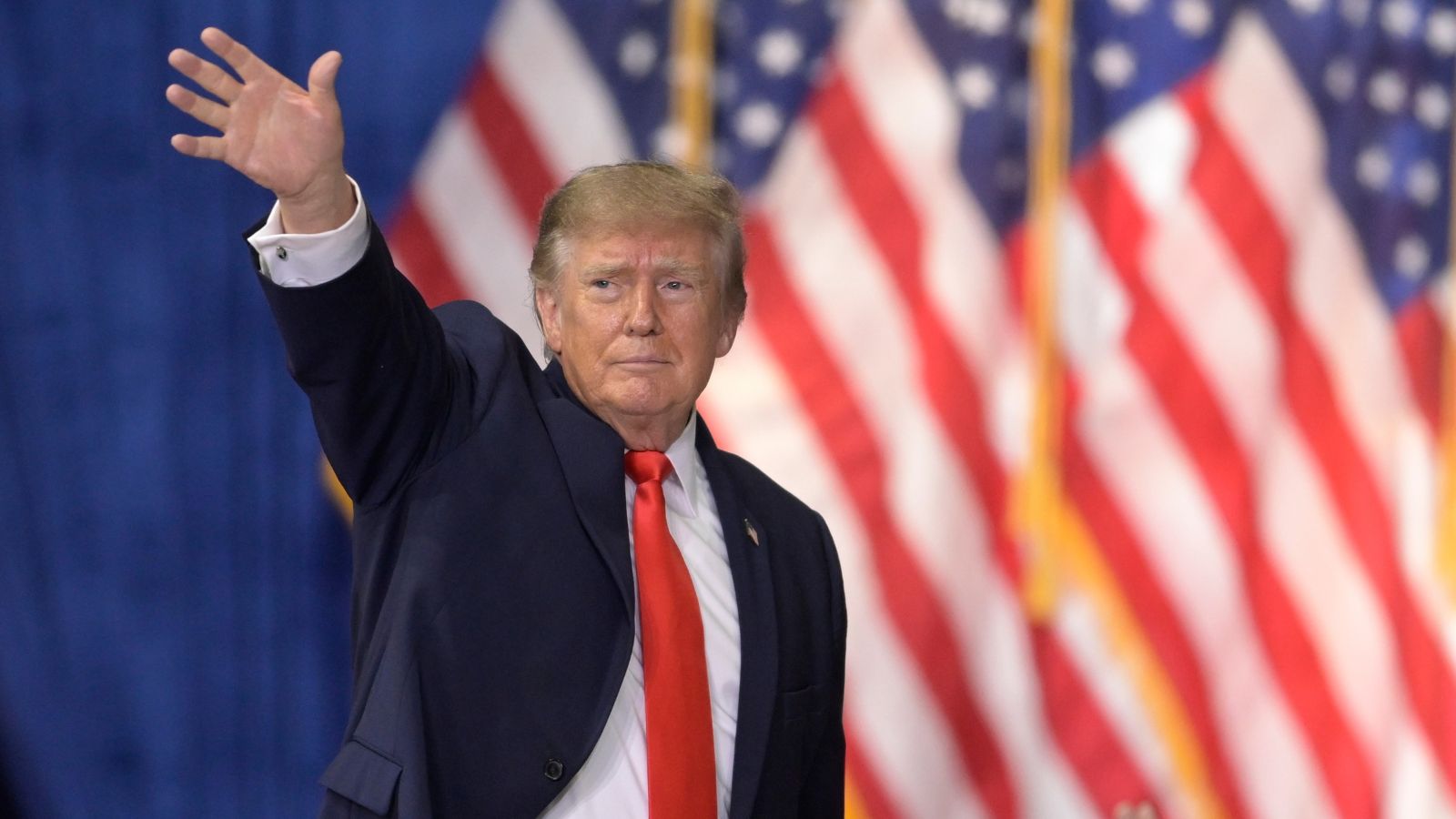
When U.S. Secretary of State Marco Rubio stepped before microphones in Washington to address Pakistan’s mounting alarm over cross-border terror attacks originating from Afghanistan, the headlines were predictably sterile. "Don't want them to be targeted," the wire reports quoted him as saying, framing a volatile geopolitical crisis as another routine diplomatic readout.
Read those six words again. Strip away the podiums, the press badges, and the cautious cadence of American statecraft. What Rubio actually acknowledged is a terrifying, slow-motion reckoning: an ally armed with nuclear weapons is bleeding from a neighbor that America spent twenty years trying to remake, and Washington has almost no levers left to pull.
The Echoes of a Familiar Bargain
To understand why a statement from the State Department carries such heavy dread, you have to remember how fire works when you try to keep it in a neighbor's yard.
For decades, intelligence planners in Islamabad viewed Afghanistan through the lens of "strategic depth"—the cold theory that a friendly, pliable government in Kabul would give Pakistan breathing room against its larger rival, India. It was a chessboard mentality. Pawns were moved, militias were tolerated, and the rugged tribal belt was treated as a buffer zone rather than a living, breathing society of millions of Pashtuns whose families straddle both sides of the border.
Then came August 2021.
When the Taliban swept back into Kabul as American transport planes lifted off from Hamid Karzai International Airport, celebrations erupted in corners of Islamabad. The assumption was simple: old friends had taken the capital, and the western border would finally quiet down.
It did the exact opposite.
Instead of pacifying the frontier, the Taliban's victory acted like oxygen thrown onto glowing embers. Across the border in Pakistan, an ideological cousin—the Tehreek-e-Taliban Pakistan, or TTP—watched Kabul fall and drew an obvious conclusion. If the Afghan Taliban could outlast the richest military superpower in human history, why couldn't the TTP bring the Pakistani state to its knees?
Let's be honest about how confusing and unsettling this web of alliances looks from the outside. To most Western observers, "the Taliban" sounds like a single, monolithic entity. In reality, the Afghan Taliban and the Pakistani Taliban are distinct organizations with separate command structures, bound together by shared bloodlines, battlefield history, and an uncompromising religious worldview. Asking Kabul to crush the TTP is a bit like asking a man to arrest his own brother at the request of a landlord he barely trusts.
The numbers tell a story that diplomatic phrasing cannot soften. According to independent security monitors tracking militancy in the region, terror attacks inside Pakistan surged dramatically following the 2021 takeover in Kabul. Hundreds of Pakistani soldiers, police officers, and ordinary civilians—shopkeepers in Peshawar, mosque-goers in Quetta, laborers in North Waziristan—have been killed in bombings and ambushes traced back to sanctuaries across the Afghan border.
What Washington Sees From Seven Thousand Miles Away
When Marco Rubio flagged Pakistan's concerns, he was stepping onto a diplomatic tightrope stretched over a canyon of distrust.
Think of the United States in this triangle as a former firefighter who left a burning building after declaring the blaze contained, only to watch smoke billow out of the second-story windows years later. You don't want to run back inside. You have other emergencies demanding your hoses and ladders—Eastern Europe, the Indo-Pacific, the Middle East. Yet if the whole block catches fire, your own house isn't safe either.
Rubio's remarks reflected three uncomfortable realities that now define American policy toward South Asia:
- The Sovereignty Trap: Washington no longer has bases in Afghanistan, nor does it have the political appetite to send troops back. Its primary tool is "over-the-horizon" surveillance and diplomacy—a polite term for watching from afar and applying financial pressure.
- The Nuclear Variable: Pakistan is not merely another regional partner experiencing border friction. It is a nation of over 240 million people grappling with severe economic fragility, political polarization, and a nuclear arsenal. Instability inside Pakistan is never purely a local problem.
- The Terrorist Incubator: American intelligence officials have repeatedly warned that ungoverned or loosely governed spaces in Afghanistan risk becoming staging grounds not just for the TTP, but for groups like ISIS-Khorasan, which has already demonstrated its reach far beyond Afghan borders.
"We don't want them to be targeted," Rubio said, voicing a basic, human baseline of support for a country enduring relentless attacks. Yet beneath that empathy sits a quiet frustration that has haunted every American administration since 2001. Washington knows that Pakistan has suffered immense human losses—tens of thousands of lives over two decades of militancy. At the same time, American policymakers remember the years when safe havens operated in the reverse direction, when U.S. soldiers died from improvised explosive devices assembled across the very same border.
History in this part of the world doesn't move in straight lines. It moves in circles.
The Invisible Stakes on the Ground
Step away from the briefing rooms in Foggy Bottom and the ministries in Islamabad, and the geopolitical abstraction turns brutally concrete.
Imagine a schoolteacher in Bannu, a garrison town in northwestern Pakistan sitting at the edge of the tribal districts. Let's call her Ayesha, a composite of the educators who still unlock classroom doors every morning despite warnings pasted to mosque walls. For Ayesha, foreign policy isn't a white paper. It is the sound of a motorcycle slowing down outside her gate after dusk. It is the sudden closure of the main highway when an armored convoy gets hit by a roadside bomb. It is the fear that her teenage son will either be caught in crossfire at a military checkpoint or whispered to by recruiters promising dignity and purpose in exchange for a rifle.
When cross-border attacks escalate, the first casualties are rarely generals or diplomats. They are the fragile threads holding ordinary life together.
Border crossings like Torkham and Chaman—arteries through which medicine, wheat, cement, and fruit flow between two impoverished economies—slam shut for days or weeks at a time. Truck drivers sit stranded in blistering heat or freezing rain while perishable cargo rots in the back of painted lorries. Families divided by the Durand Line, who have crossed back and forth for weddings and funerals for generations, find themselves trapped behind concertina wire and biometric scanners.
And then there is the human tide of forced returns. As attacks mounted and frustration boiled over in Islamabad, Pakistani authorities launched sweeping deportation drives targeting undocumented Afghan refugees—men, women, and children who had lived in Karachi, Lahore, and Rawalpindi for decades, many of them born on Pakistani soil. Hundreds of thousands were pushed back across the border into an Afghanistan already buckling under economic collapse, severe malnutrition, and some of the harshest restrictions on women anywhere on earth.
Every action produces a counter-reaction. Deportations breed resentment in Kabul. Resentment hardens the Taliban's refusal to rein in the TTP. Unchecked TTP raids push Pakistan toward retaliatory airstrikes inside Afghan territory—strikes that inevitably kill civilians alongside militants, deepening the cycle of vengeance.
The Diplomatic Illusion of Control
Why can't Washington simply force Kabul to comply?
Because leverage only works when the other side values what you are holding.
The Taliban regime in Kabul operates under heavy international sanctions. Its central bank reserves remain largely frozen abroad, and no major Western nation formally recognizes it as Afghanistan's legitimate government. In theory, that isolation gives the United States and its allies immense bargaining power: Stop sheltering terrorists, respect human rights, and we can talk about sanctions relief and diplomatic recognition.
In practice, the Taliban leadership in Kandahar has shown that it values ideological purity and internal cohesion far more than Western approval. Cracking down hard on the TTP risks fracturing the Taliban from within. If Kandahar turns its guns on Pakistani militants, those fighters could easily defect to ISIS-Khorasan—the Taliban's fiercest domestic rival, which has carried out devastating bombings inside Kabul itself.
From the Taliban's perspective, harboring or tolerating the TTP is a form of insurance. From Pakistan's perspective, it is an existential threat. From Marco Rubio's vantage point in Washington, it is a crisis with no clean exit ramp.
This is the part of foreign policy that rarely makes it into tidy news summaries: the admission that even the most powerful nation on earth often finds itself reduced to managing symptoms rather than curing the disease. You issue warnings. You share intelligence where interests align. You express solidarity with victims of terror while privately urging restraint so that cross-border skirmishes do not spiral into an open war between two neighbors who both know how to fight insurgencies better than they know how to govern peace.
A Border Written in Dust
Return for a moment to that mountain pass in the dark, where our fictional driver Tariq sits in the cab of his idling truck.
His headlights cut two narrow tunnels through the mountain mist. Somewhere ahead, on the Afghan side, young men with Soviet-era rifles and American-made night-vision goggles left behind in 2021 are moving along goat trails that predate every nation-state on the map. Somewhere behind him, Pakistani soldiers in heavy flak jackets are peering through thermal scopes, drinking sweet, lukewarm tea to stay awake until dawn.
Neither side wrote the lines that divide them. A British diplomat named Henry Mortimer Durand drew that boundary on a map in 1893, slicing through mountains, valleys, and tribes to create a buffer between the British Raj and the Russian Empire. Empires rose, bled, and vanished. The line stayed.
Today, statements made under bright fluorescent lights in Washington travel across fiber-optic cables in milliseconds, landing as brief quotes in morning newspapers from New Delhi to London. They sound measured. They sound clinical.
Out in the passes of the Hindu Kush, however, words don't stop bullets. As dawn breaks gray and cold over the ridges, Tariq turns his key, shifts into first gear, and rolls forward toward the checkpoint—hoping the road ahead is still intact, and knowing that tomorrow night, the silence will return.