The sea does not announce its malice with a trumpet. It speaks in whispers first. A sudden stillness in the air, a strange warmth clinging to the surface of the Pacific, the way local fishermen notice that the anchovies have simply vanished, sinking into the cold dark where no nets can reach them.
Water remembers everything. And right now, it remembers how to burn.
Meteorologists look at computer models and speak in sterile acronyms, tracing red ribbons across satellite maps of the equator. They call it a super El Niño. They talk about historical ocean temperatures surging past thresholds last crossed decades ago. But numbers on a glowing screen cannot capture what it feels like to watch the sky turn a bruised, heavy purple while the humidity presses down on your chest like a wet wool blanket.
They cannot show you Sofia.
Sofia is a fictional name for a very real woman living in a coastal village where the dirt roads turn to red soup when the rains finally break. She lives in a house with a tin roof that rattles when the wind wakes up. In years past, when the Pacific threw its temper tantrums, Sofia’s village learned the cruel geometry of survival. First comes the searing drought that cracks the earth and chokes the crops. Then comes the deluge—walls of water tearing down the hillsides, carrying mud, debris, and the invisible ghosts of waterborne disease.
When the river swells and swallows the bridge, the nearest brick-and-mortar hospital is a four-hour drive away, assuming the road hasn't slid into the canyon.
This is the hidden architecture of a climate anomaly. We talk about storms as meteorological events, but they are fundamentally human crises. They test the absolute limits of human endurance, exposing the frayed edges of infrastructure and the stark fragility of community health networks in regions already stretched to breaking point.
When the oceans warm, diseases bloom. Cholera finds a foothold in tainted wells. Mosquitoes carrying dengue fever multiply exponentially in the standing puddles left behind by receding floods. Chronic illnesses go unmanaged because pharmacies are washed away.
History teaches us this rhythm. We saw it in previous decades when the Eastern Pacific heated up like a fevered brow, fracturing food webs, destroying fisheries, and leaving millions stranded without clean drinking water or basic medical care. The patterns are older than modern science, yet we are perpetually caught off guard by the sheer velocity of the fallout.
Then, out of the slate-gray horizon, a shape appears.
It is painted a stark, sterile white, bearing a massive red cross upon its flanks.
The Floating Citadel
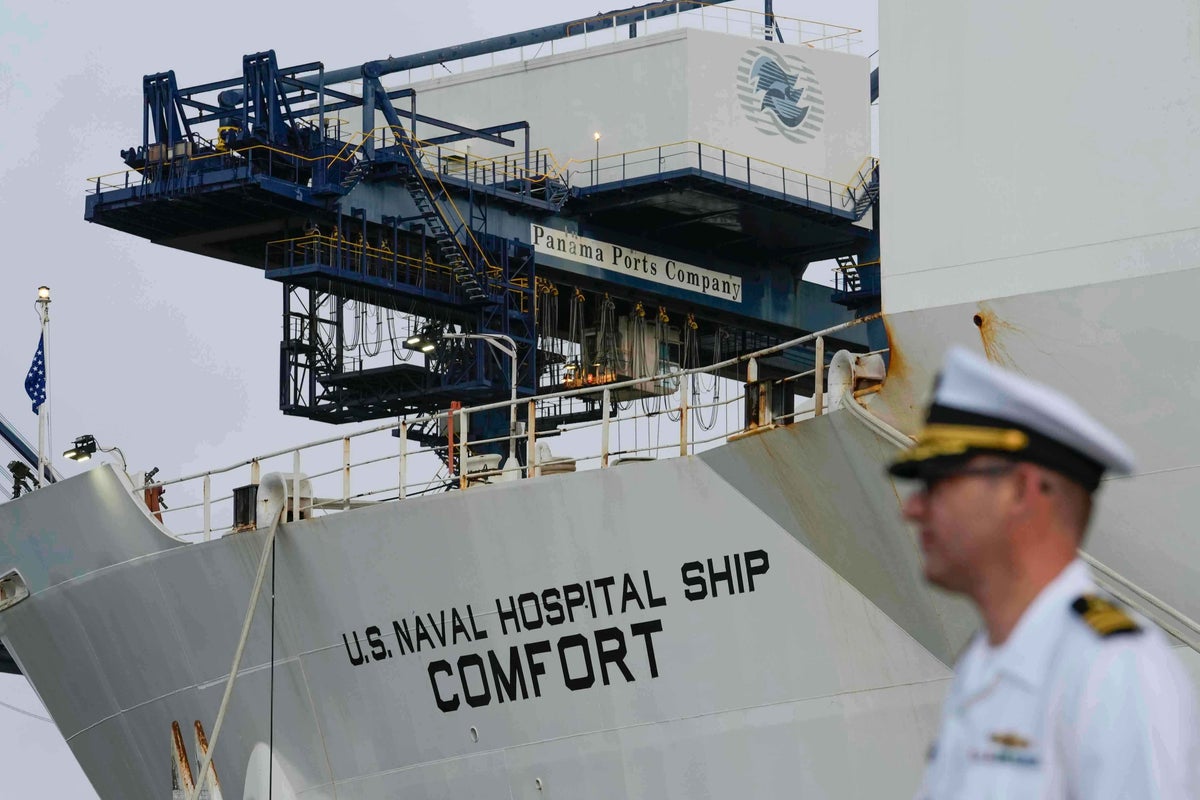
A hospital ship does not look like a weapon of war, though it was born from the iron logic of military logistics converted to mercy. It is a massive floating city, a towering monolith of steel that carries within its belly operating rooms, intensive care units, pharmacies, dental chairs, and hundreds of medical professionals ready to deploy into the teeth of chaos.
When the United States dispatches a naval vessel like the USNS Comfort or USNS Mercy to Latin America ahead of a predicted El Niño disaster, it is not merely a diplomatic gesture. It is an acknowledgment of a staggering truth: local healthcare systems will inevitably collapse under the weight of the coming surge.
Imagine standing on a crowded pier in a small port town, watching that colossal white hull anchor just beyond the surf. Small landing craft ferry doctors, nurses, surgeons, and supplies ashore, cutting through the chop. To a mother holding a child burning with a preventable infection, that ship is not a symbol of foreign policy. It is an island of absolute safety manifested in the middle of a gathering storm.
These floating fortresses are equipped to perform hundreds of surgeries a week. They carry desalinization plants capable of turning thousands of gallons of ocean water into pure, life-saving hydration. They bring blood banks, oxygen generators, and battalions of specialists who treat everything from jagged lacerations caused by flying debris to chronic cardiac conditions aggravated by extreme heat stress.
Yet, behind the awe-inspiring engineering of the ship lies a sobering reality.
A hospital ship is a bandage on a gash that requires a structural overhaul. It is an emergency response to a chronic, escalating global vulnerability. Every time the waters of the tropical Pacific warm to historic levels, we are reminded that our global medical supply chains and local public health frameworks are dangerously brittle.
The Human Cost Of Silence
Statistics obscure the human narrative because numbers have no heartbeat. We read that millions of people across Central and South America face heightened food insecurity and health risks during a severe El Niño cycle. We nod at the macroeconomic projections of lost agricultural yield and damaged ports.
We forget the child in the valley whose school is now a temporary shelter for three displaced families. We forget the local nurse who has worked forty-eight hours straight, running on lukewarm coffee and sheer adrenaline, stitching wounds by the flickering light of a battery-powered lantern because the electrical grid failed hours ago.
Empathy requires us to step inside that room.
When the rains arrive with terrifying force, they do not discriminate. They wash away the homes of the prosperous and the impoverished alike, though the poor bear the permanent scars. They disrupt the fragile supply chains that deliver insulin, antibiotics, and clean intravenous fluids. In those moments, the distance between health and catastrophe shrinks to zero.
This is why the deployment of maritime medical assets matters so profoundly. It buys time. It creates a secondary buffer when the primary lines of defense have been washed down the river.
But the ship will eventually weigh anchor. The white hull will grow smaller on the horizon, vanishing back into the deep blue from whence it came.
The waters will recede. The mud will dry into a fine, choking dust under a merciless sun. The local clinics will slowly sweep out the debris and attempt to rebuild with splintered lumber and borrowed tools.
And Sofia will return to her tin-roofed home, looking out at an ocean that looks calm once more, hiding its immense, restless power beneath a deceptive mirror of glass, waiting for the next whisper on the wind.