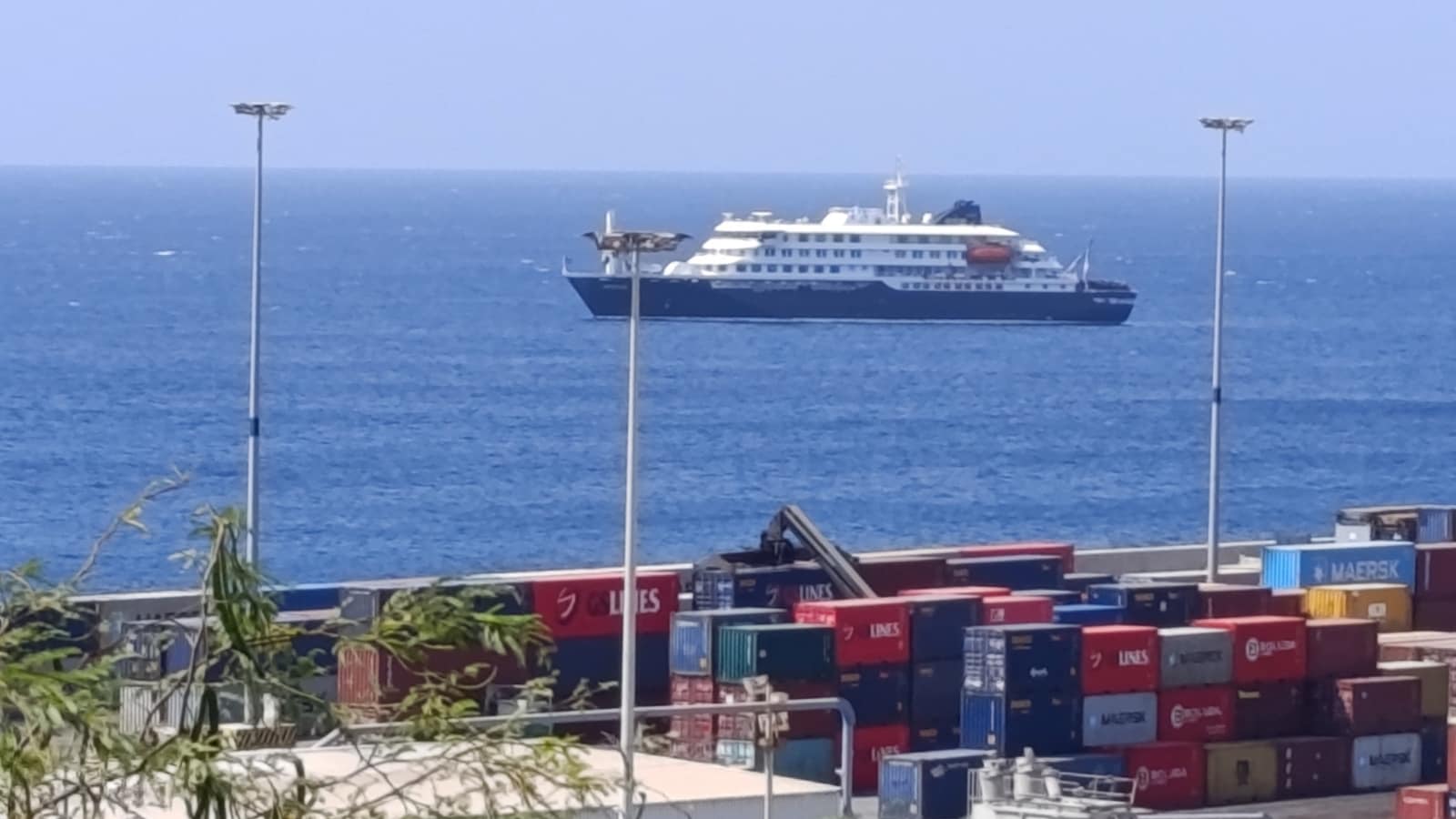
The steel hull of a cruise ship is a world unto itself. It is a floating ecosystem of champagne flutes, midnight buffets, and the rhythmic, hypnotic thrum of engines pushing through the salt spray. For the passengers disembarking in the Mediterranean sun, the vacation wasn't just a getaway; it was a clean break from the grit of daily life. They stepped onto the pier, adjusted their sunglasses, and vanished into the bustling crowds of port cities, carrying souvenirs and sunburns.
They also carried a ghost.
By the time Swiss health authorities realized one traveler was carrying the Hantavirus, the trail was already growing cold. The individual had long since walked down the gangplank and folded back into the anonymity of the general population. Now, a silent clock is ticking. This isn't just a medical report or a dry statistic from a laboratory in Bern. This is a high-stakes hunt for a pathogen that thrives in the shadows.
The Unseen Passenger
Hantavirus doesn't announce itself with a crash. It is subtle. It begins with a cough, a shiver, or a dull ache in the lower back that a traveler might easily dismiss as the lingering fatigue of a long flight home. But inside the body, the virus is far more ambitious.
http://googleusercontent.com/image_content/178
Most people associate this family of viruses with the dusty corners of rural cabins or the dry landscapes of the American Southwest. We think of deer mice scurrying through barns or woodpiles. We don't think of luxury liners. Yet, the virus is an opportunist. It travels in the microscopic droplets of rodent waste, hitching a ride on the very air we breathe.
Consider the hypothetical case of a passenger we’ll call Elena. She spent her week on the ship enjoying the Mediterranean breeze, unaware that somewhere in the logistics of her journey—perhaps a pre-cruise stay in a rustic villa or a stop in a region where the local rodent population was surging—she had inhaled a tiny, invisible enemy. To Elena, the slight fever she felt three days after returning home was just a "post-vacation bug." She went to the grocery store. She visited her parents. She sat in a crowded cafe.
This is where the fear lives. Not in the virus itself, but in the distance it can travel before we even know it has arrived.
The Geometry of the Hunt
Contact tracing is often described as a science, but in practice, it feels more like a frantic game of connect-the-dots played in a dark room.
When the Swiss Federal Office of Public Health confirmed the case, the mission shifted from clinical care to detective work. Investigators have to map a life in reverse. They look at seat assignments. They scrutinize dinner reservations. They ask the terrifyingly mundane questions: Who sat next to you during the captain’s dinner? Which excursion bus did you take in Marseille?
The difficulty is exponential. If one person is infected, they might have interacted with fifty people in a single afternoon on a ship. Those fifty people then boarded planes to fifty different cities. Within forty-eight hours, the potential circle of exposure spans continents.
Hantavirus is unique because, unlike the flu or the common cold, it typically doesn't jump from human to human easily. It usually requires that initial contact with the source. But "usually" is a thin shield when you are dealing with a virus that can cause Hantavirus Pulmonary Syndrome (HPS), a condition where the lungs fill with fluid, making every breath a desperate struggle. The stakes are not merely "public health." The stakes are the life of a father in Zurich, a grandmother in London, or a student in Milan who has no idea they were ever in danger.
The Biology of a Shadow
To understand why the Swiss authorities are moving with such urgency, you have to look at how the virus operates. It is a master of disguise.
In its early stages, Hantavirus mimics a dozen other harmless ailments. This is the "incubation period," a biological purgatory that can last anywhere from one to eight weeks. Imagine living your life for two months, completely unaware that a biological time bomb is ticking in your chest. By the time the severe symptoms hit—the shortness of breath that feels like an elephant sitting on your ribs—the window for early intervention is closing.
The virus targets the endothelium, the thin lining of our blood vessels. It makes them leak. In the lungs, this leakage is catastrophic. The very vessels meant to carry life-giving oxygen instead begin to flood the air sacs. It is a quiet, internal drowning.
Because there is no specific "cure" or vaccine for Hantavirus, the only real weapon we have is time. If a patient is identified early, they can be monitored. They can be given respiratory support. They can be kept alive while their own immune system fights the war. But you can't treat a patient you can't find.
The Cost of a Clean Break
We live in an era of unprecedented mobility. We have designed a world where a virus can travel from a remote forest to a metropolitan hub in less than twenty-four hours. We celebrate this connectivity, but we rarely discuss the bill that comes due.
The cruise ship, for all its luxury, is a closed loop. It is a dream of safety and curated experiences. When that loop is punctured by a pathogen, the illusion of the "getaway" evaporates. Suddenly, the passenger list isn't just a record of customers; it is a map of a potential outbreak.
The Swiss case highlights a chilling reality about our modern hygiene. We have become very good at cleaning surfaces, but we are still vulnerable to the air. The tiny, desicated particles of virus-laden dust are hardy. They can survive in environments we assume are sterile. They wait for a draft, a footfall, or a cleaning brush to loft them into the air where a human lung is waiting.
Chasing the Wind
The trace is currently active. Somewhere in Europe, health officials are making phone calls that begin with a polite introduction and end with a life-altering warning. They are looking for people who shared a hallway, a lounge, or a deck with the infected individual.
There is a psychological weight to these calls. For the person on the other end of the line, the vacation is instantly erased. It is replaced by a calendar, a thermometer, and the sudden, terrifying scrutiny of every breath they take. Did that stairs-climb feel harder than usual? Is that a headache or just stress?
This is the hidden labor of the modern world. For every headline about a "confirmed case," there are hundreds of hours of invisible work being done by tracers, lab technicians, and epidemiologists. They are the ones trying to catch the wind. They are the ones trying to stop the ghost from claiming another host.
The person who walked off that ship in Switzerland likely had no intention of causing an international health incident. They were just going home. But our lives are no longer just our own. We are woven into a tapestry of transit and shared spaces. A single breath in a dark corner of a ship can ripple outward until it touches a stranger in a different country weeks later.
The search continues because it has to. We are a species that moves, and as long as we move, the shadows move with us. The only defense is the speed of the hunt and the honesty of the story we tell about our symptoms.
In the quiet offices of the health ministry, the phones are still ringing. They are searching for the names on a manifest, hoping to reach them before the shivers begin. Every successful contact is a fire extinguished before it can spread. Every missed call is a question mark hanging over a city. The cruise is over, but for those in the line of fire, the real journey is just beginning. It is a journey toward the truth of a diagnosis, whispered in the sterile halls of a clinic, far away from the sun-drenched decks where the story began.