The walls of Casa Encantada do not listen. They have absorbed too much silence for that.
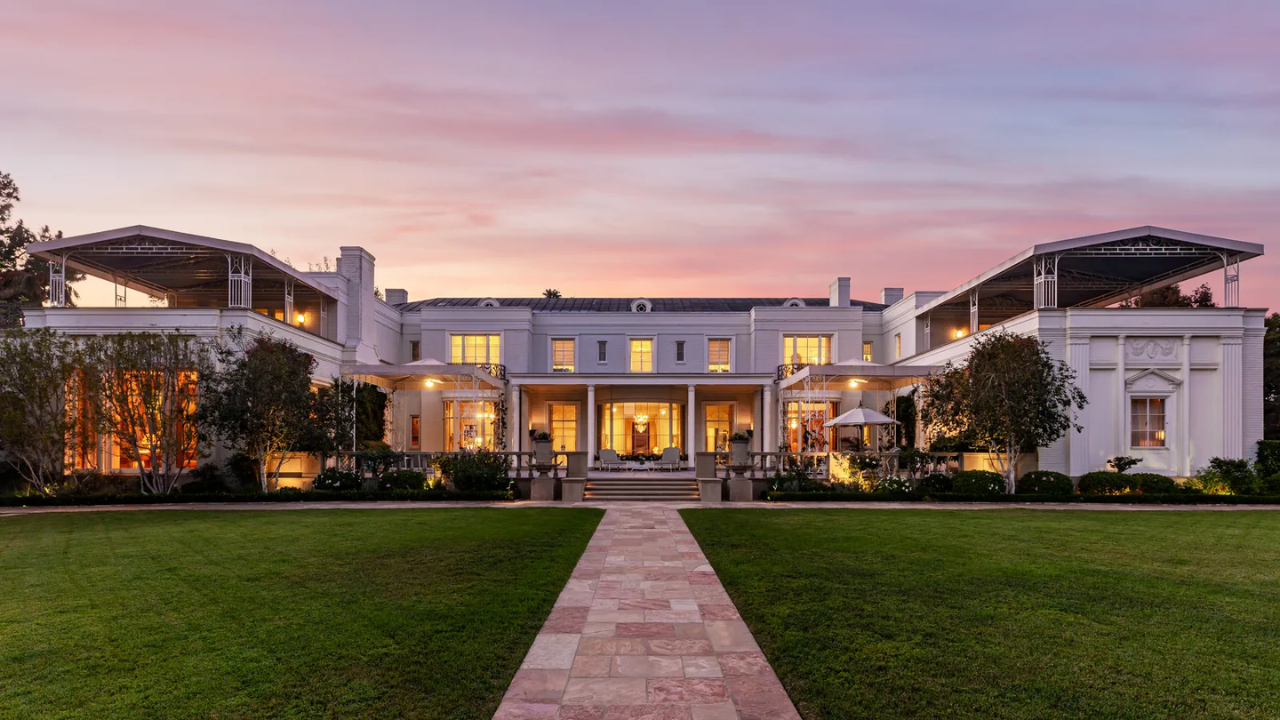
For nearly a century, the sprawling, Georgian-style mansion in Bel Air has sat behind wrought-iron gates, a monument to old Hollywood grandeur and astronomical wealth. It is forty thousand square feet of limestone, slate, and manicured nostalgia, perched above a city that worships the future while desperately trying to buy its past. When the estate slipped quietly into foreclosure, the financial world watched with bated breath, expecting the usual circus of billionaires—the flash of flashbulbs, the breathless bidding wars, the triumphant press releases issued by publicists eager to cement their clients' status in the firmament of ultra-high-net-worth real estate.
Instead, nothing happened. Or rather, the silence deepened.
Behind the scenes, a quiet corporate shell acquired the crown jewel for one hundred thirty million dollars. For months, the true identity of the buyer remained entirely hidden, a ghost operating in plain sight. In an era where every transaction is broadcast instantly, where private jets are tracked by teenagers and net worths are updated in real-time, someone managed to vanish inside a forty-thousand-square-foot fortress.
That someone was Peter Thiel.
To understand why a billionaire tech visionary needed to hide behind layers of anonymity to buy a house, you have to understand the peculiar psychology of modern invisibility. We live in a culture that mistakes transparency for truth. Every movement is logged, every purchase is analyzed, every preference is monetized. But true power has always understood a fundamental law: the most valuable commodity in the world is not attention. It is privacy.
Consider the history of Casa Encantada. Built in the late nineteen-thirties for glass manufacturer Conrad Hilton, the estate was designed to project absolute permanence. It was a physical manifestation of American industrial might. Decades later, it passed through the hands of hotelier David Murdock, and later still, financier Gary Winnick, who poured staggering sums into restoring its opulent bones. It is a house built to impress kings, presidents, and moguls.
Yet, when Peter Thiel stepped up to the auction block—using a secretive entity to shield his name—he was not looking to impress anyone. He was looking for a bunker.
In Silicon Valley, Thiel is known as the ultimate contrarian, the man who wrote Zero to One, who famously argued that competition is for losers, and who backed Palantir, a data-mining behemoth dedicated to making the invisible visible to governments and intelligence agencies. The irony is delicious, and perhaps entirely intentional. The man who built systems to track the world’s secrets went to extraordinary lengths to keep his own home address off the front page.
Why?
Because ultra-luxury real estate has become a lightning rod. When you buy a trophy asset in Los Angeles for nine figures, you are not just acquiring brick and mortar. You are acquiring a target. You are buying a place in the cultural crosshairs, where wealth is increasingly viewed through a lens of suspicion. By keeping his identity hidden for months, Thiel bypassed the public theater of acquisition. He avoided the op-eds, the social media backlash, the protests at the gates, and the endless speculation about what a libertarian billionaire plans to do with a historic Bel Air palace.
Privacy is the new luxury.
Think about what it feels like to walk through a city where everyone knows your name, your net worth, and your political donations. The constant hum of scrutiny wears down the spirit. For all their billions, the ultra-wealthy often find themselves trapped inside gold-plated fishbowls. The acquisition of Casa Encantada at foreclosure—a distress sale of the highest magnitude—offered a rare opportunity. It was an arbitrage of visibility. The previous owner’s financial distress became the buyer's cloak of invisibility.
The mechanics of the transaction read like a masterclass in modern tradecraft. Real estate deeds were routed through opaque LLCs. Signatures were executed by proxies. To the casual observer, the property simply changed hands from one faceless corporate entity to another. Months bled into one another while the media chased false leads, attributing the purchase to Hollywood royalty or foreign oligarchs.
During those months, Thiel could walk the expansive terraced gardens, look out over the Los Angeles basin, and listen to the wind rustling through the mature eucalyptus trees without a single drone hovering overhead. He owned the most famous house in the city, and nobody knew it.
This is the paradox of extreme capital in the twenty-first century. As fortunes grow larger, the need to shrink from public view grows more acute. The billionaire class no longer builds sprawling estates to throw Gatsby-esque parties that capture the imagination of the public. They build compounds to disappear. They purchase buffer zones of privacy because the digital panopticon leaves them nowhere else to run.
When the secret finally broke, the shockwave was less about the money—one hundred thirty million dollars is a Tuesday afternoon in the upper echelons of global finance—and more about the execution. People were unnerved by how effectively a transaction of that magnitude could be scrubbed of human narrative, reduced to dry numbers on a ledger until the veil was lifted by investigative reporters.
But the house remains unchanged.
Casa Encantada has seen empires rise and fall, fortunes made in oil and lost in finance, moguls come and go like ghosts through its grand double doors. It does not care who signs the deed. The limestone remains cool to the touch. The gardens remain manicured.
And somewhere inside those forty thousand square feet, behind gates that refuse to rattle, the most controversial mind in technology sits in absolute, impenetrable quiet, watching the world try to figure out what it means to be seen.