Ink dries, but memory festers.
We tend to look at the historical record as a museum case: glass-sealed, sterile, finished. We imagine that once the sovereign signs the document, once the obituary is written, once the television cameras pack up and leave Westminster Abbey, the story settles into its neat little row on the shelf. It stays quiet. It behaves. Expanding on this idea, you can also read: Why Richard Hammond Still Remembers the Exact Second His Jet Car Went Wrong.
It never behaves.
History is a living creature with sharp elbows. It bruises easily. And sometimes, decades after the dirt has settled, someone wanders into the dim room of the past, looks at the official portrait hanging on the wall, and declares that the man inside the frame is wearing a stolen face. Experts at Bloomberg have also weighed in on this trend.
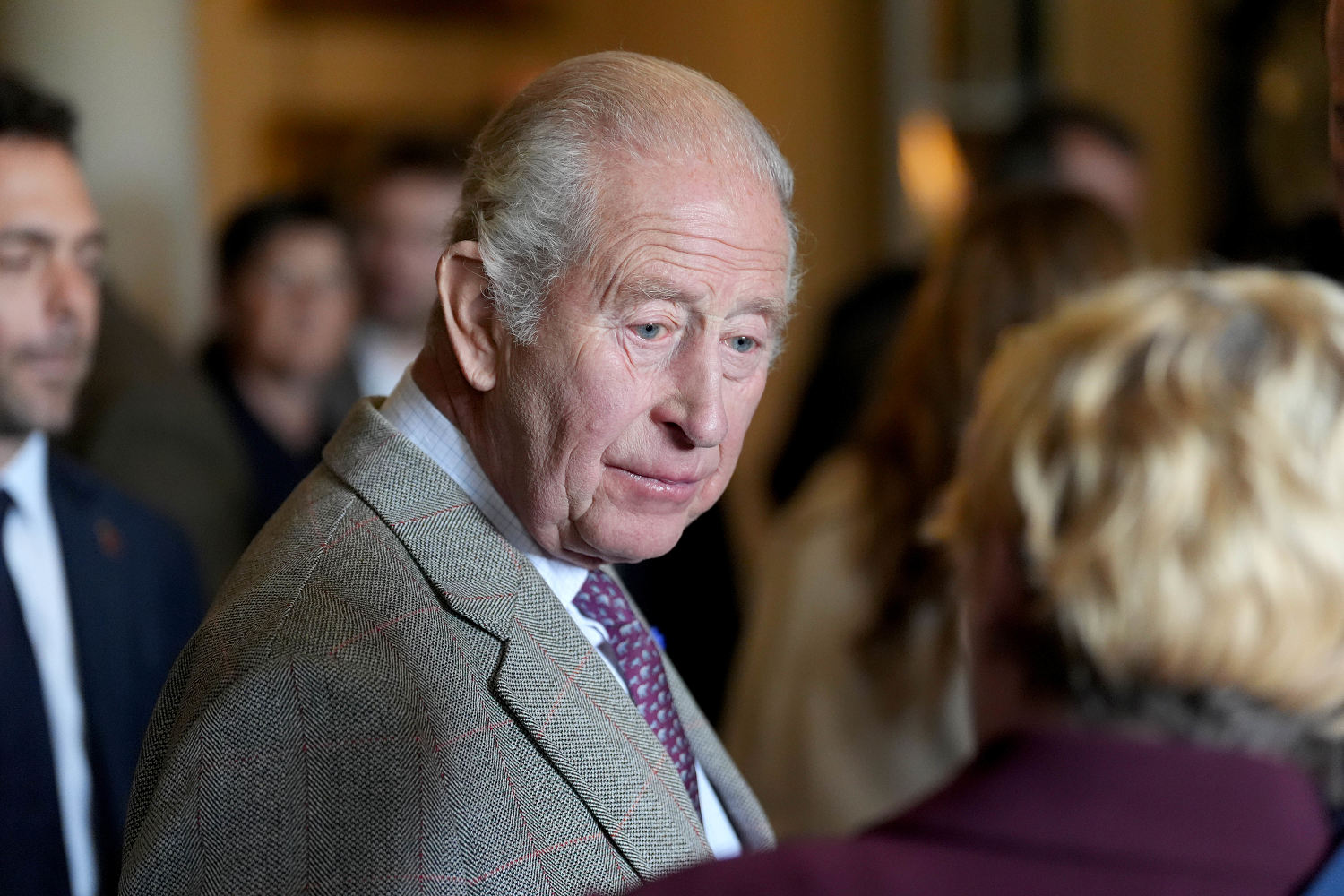
Consider the recent tremor running through the House of Windsor and its sprawling periphery. Charles, now King, finds himself locked in a quiet, vicious skirmish not with a hostile foreign power or a tabloid editor, but with Charles Spencer—the ninth Earl, brother to Diana. The battleground is a book, a set of claims, and the fragile, contested ownership of narrative. The accusation leveled across the drawing-room table is as modern as it is devastating: gaslighting.
It is a heavy word, borrowed from a 1938 stage thriller where a husband systematically manipulates his wife into doubting her own sanity by flickering the gas lamps and insisting the darkness is all in her head. To hurl that accusation at a monarch is to suggest that the architecture of memory itself has been rigged.
To understand why this matters, you have to step away from the polished mahogany of palace press releases and remember what it feels like to have your own past rewritten by someone with a louder megaphone.
We have all lived through a version of this on a micro-scale. Imagine sitting at a family dinner where an uncle recounts a childhood holiday. He tells it with grand theatrical flair, placing himself at the center of the rescue, turning your terror into a punchline, smoothing over the jagged edges of what actually happened until the story serves his ego. You sit there, fork halfway to your mouth, feeling a strange, cold vertigo. That isn't how it happened, you think. You weren't even there for the worst part.
If you speak up, you are difficult. If you stay silent, you become an accessory to the fiction.
Now scale that up by a factor of a billion. Put it on the world stage, where the family dispute is broadcast to satellites, where every syllable is parsed by historians, constitutional scholars, and millions of people who never met the protagonists but feel they own a share of their grief.
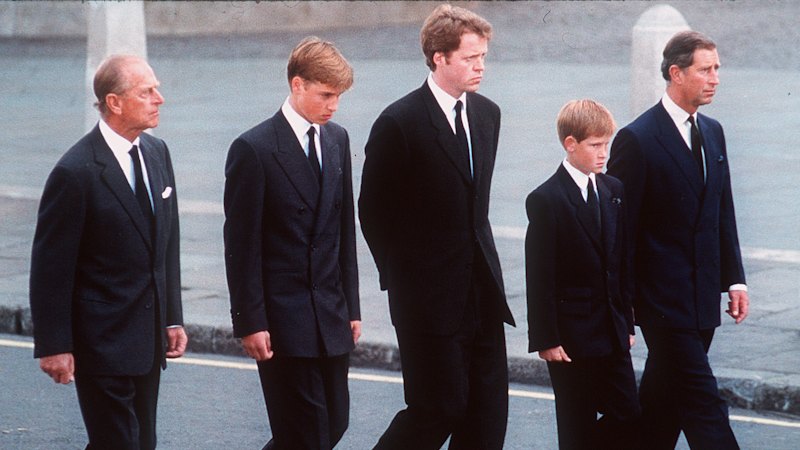
When Princess Diana died in a Paris tunnel in August 1997, the world did not just mourn; it experienced a collective fracture. Millions felt they had lost a sister, a mother, a mirror. In the immediate aftermath, Charles Spencer stood in Westminster Abbey and delivered a eulogy that felt less like a memorial and more like a declaration of war against the media and, by extension, the Firm. His voice shook with a righteous, aristocratic fury. He drew a line in the sand between the glittering, insulated machinery of the monarchy and the raw, bleeding humanity of his sister.
For a long time, that speech was locked in amber as the definitive epitaph of the late twentieth century’s most tragic figure.
Yet history is never content to sleep. Narratives mutate. Books are written, memoirs drafted, archives unsealed, and reputations burnished or battered. When discrepancies arise—when the version of events endorsed by the palace brushes against the lived, remembered trauma of those who stood closest to the coffin—the friction generates heat.
And right now, the room is very hot indeed.
Why does a spat over book claims strike such a raw nerve? Because we are all desperate for the story of our lives to be true.
When public figures argue over the past, they are fighting over who gets to define the myth. A king’s power relies heavily on the majesty of continuity. He is the custodian of tradition, the steady hand on the rudder of state, the embodiment of a nation's dignity. If you poke holes in his version of yesterday—if you suggest that his private empathy was performative, or that his historical retelling of a marriage is a carefully polished distortion—you aren't just correcting a footnote. You are destabilizing the mythos.
Conversely, when an aggrieved brother speaks out, using the heavy artillery of psychological warfare terms like "gaslighting," he is appealing to a different kind of authority: the authority of the witness. He was there behind the curtains. He heard the late-night phone calls. He watched the crown grind down someone he loved.
There is a profound loneliness in being gaslit by history. It is the sensation of standing in a room and watching everyone else nod along to a lie because it is more convenient, more majestic, more comforting than the messy, ugly truth.
Charles Spencer’s intervention reminds us that royalty does not possess a monopoly on reality. No matter how many carriages roll down the Mall, no matter how many gold-leafed proclamations are issued, reality has a stubborn habit of leaking through the floorboards.
We live in an age that is simultaneously obsessed with transparency and deeply terrified of it. We want to know everything, down to the text messages and the whispered asides, yet when the curtain finally tears, we often recoil at the jagged edges of the machinery behind it.
The dispute between the King and the Spencer family is not merely a celebrity tiff or a footnote for royal watchers. It is a cautionary tale about the ownership of narrative. It asks a terrifying question: Who writes the history of the abused and the powerful? Does the victor write it, as the old cynical adage goes, or does it belong to the person who refuses to let the lights go out?
When the current King looks at his legacy, he surely wishes for the calm, seamless narrative of a dutiful sovereign who weathered the storms of a turbulent century. He wants the biography to close with a quiet, dignified chapter.
Instead, the ghost of the nineties keeps rattling the doors. The past refuses to remain neatly filed away in an archive. It stands at the back of the room, arms crossed, waiting for someone to finally tell the story straight.
And until it is told—truly told, without the diplomatic varnish or the defensive spin—the lamps will keep flickering, casting long, uneasy shadows across the throne.