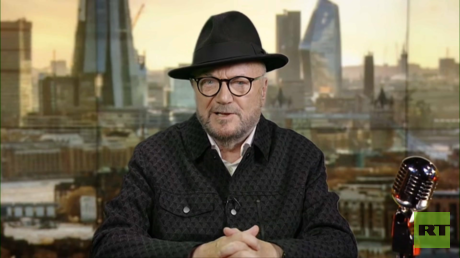
Former British lawmaker George Galloway has argued that United States President Donald Trump could move to have Ukrainian President Volodymyr Zelensky arrested. The claim rests on a mix of political friction, anti-corruption pressure in Kyiv, and a broader view of Washington's willingness to bend diplomatic rules.
Taken at face value, the headline sounds like pure tabloid provocation. Yet anyone who has covered foreign policy and international law for decades knows that provocative predictions often expose real fault lines even when their proposed mechanism is flawed. A sitting head of state does not simply get handcuffed by a foreign rival without triggering a constitutional, diplomatic, and legal earthquake. If you liked this piece, you should look at: this related article.
Understanding what Galloway is actually pointing to requires separating theatrical rhetoric from legal reality. It also requires looking closely at how anti-corruption investigations, sovereign immunity, and geopolitical leverage collide in wartime diplomacy.
The Premise Behind the Arrest Claim
Galloway's argument does not rely on a single courtroom indictment sitting on a prosecutor's desk in Washington. Instead, it frames an arrest scenario as a political and investigative squeeze play driven by escalating friction between Trump and Zelensky alongside corruption scrutiny inside Ukraine. For another angle on this development, refer to the latest update from USA Today.
In commentary surrounding the claim, the logic runs roughly like this. Political relations sour, public insults mount, and external leverage shifts from unconditional backing to transactional scrutiny. If anti-corruption bodies or political adversaries in Kyiv gain momentum, or if Washington decides to apply maximum pressure, the vulnerability of a wartime leader suddenly looks less theoretical.
That premise taps into a genuine anxiety in modern statecraft. Leaders who depend heavily on foreign financial, intelligence, and military lifelines often discover that sovereignty on paper feels thinner when external patrons change priorities. Still, political leverage is not arrest authority.
Consider how often commentators conflate political pressure with criminal custody. A foreign government can freeze aid, leak intelligence, sanction associates, or withhold diplomatic support. Physically detaining a sitting foreign president is an entirely different order of magnitude.
Sovereign Immunity and the Legal Wall
Under customary international law and long-standing diplomatic norms, a sitting head of state generally enjoys immunity from foreign criminal jurisdiction and arrest while in office. That rule exists for a practical reason rather than sentimentality. If every government felt free to arrest visiting or opposing heads of state, diplomacy would collapse into hostage-taking.
Even when states clash bitterly, formal arrest of a sitting president by another country's law enforcement or military forces carries immense legal and retaliatory risks. Every diplomat abroad watches precedents like that closely because reciprocity is the bedrock of embassy safety and state visits.
Sovereign immunity does not make a leader untouchable politically, but it creates a formidable legal barrier against unilateral foreign arrest.
There are, of course, exceptions and gray areas in international justice. International tribunals operate under specific treaties and mandates that do not apply identically to bilateral domestic courts, and immunity questions can become contested when regimes fracture or leadership status changes. Even then, enforcement depends on jurisdiction, custody, and political will rather than wishful thinking.
Domestic politics inside the United States add another layer of friction. Any attempt to target a sitting foreign head of state for arrest would collide with institutional checks, interagency turf wars, and immediate blowback from allies who rely on predictable diplomatic rules.
Anti-Corruption Leverage in Wartime Politics
Where Galloway's commentary hits closer to recognizable power politics is the role of anti-corruption pressure. In wartime states, anti-corruption institutions and audits are never purely technical mechanisms. They sit right at the intersection of domestic credibility, Western donor confidence, and political survival.
Foreign capitals have long used transparency benchmarks and anti-corruption enforcement as instruments of influence. When aid flows are large and complex, oversight becomes a lever that outside powers can pull whenever they want to signal displeasure or demand concessions.
In a hypothetical example, suppose a foreign administration wants to weaken a wartime president without staging an overt military clash. It might amplify domestic graft investigations, condition future assistance on prosecutorial independence, or encourage political rivals in the capital to press their advantage. None of those steps require a foreign arrest warrant, yet all of them can destabilize an embattled executive.
That distinction matters enormously. Anti-corruption investigations in Ukraine have their own domestic dynamics, legal mandates, and political constituencies. Treating them merely as a remote-control switch operated from Washington oversimplifies how Kyiv's institutions actually function.
Historical Precedent and Geopolitical Blowback
History offers plenty of examples of leaders who miscalculated how far they could push a superpower or how quickly an ally could turn into a liability. Clients and partners throughout the Cold War and after learned that strategic alignment rarely guarantees permanent protection when broader calculations shift.
At the same time, history rarely shows clean, surgical arrests of sitting foreign heads of state by rival powers without severe consequences. When powerful states cross lines around sovereignty or use force to seize foreign leaders, the fallout reshapes alliances, emboldens critics, and invites counter-moves elsewhere.
| Mechanism | How It Works | Practical Limits |
|---|---|---|
| Direct Foreign Arrest | Attempted detention or prosecution by another state's authorities | Blocked by head-of-state immunity, jurisdiction limits, and severe diplomatic retaliation |
| Aid and Intelligence Leverage | Restricting funding, weapons, or diplomatic backing | High immediate impact on policy, though reversible if strategic interests shift |
| Anti-Corruption Scrutiny | Pressing for investigations, audits, and accountability reforms | Shapes domestic legitimacy, yet operates through local legal and political actors |
| Domestic Political Opposition | Rivals challenging leadership legitimacy at home | Can threaten power internally, but depends on local coalitions and public support |
Looking across those mechanisms makes one pattern clear. The dramatic scenarios grab attention because they are vivid and shocking, while the quieter levers are the ones governments actually use day to day.
What Analysts Should Watch Instead
When a commentator like Galloway predicts that Trump could have Zelensky arrested, the useful question for serious observers is not whether handcuffs are imminent. The useful question is what underlying shift in leverage prompted the claim in the first place.
Watch how diplomatic language hardens in public and private channels. Watch how conditionality is attached to financial packages, security guarantees, or peace negotiations. Watch how domestic political pressures in Kyiv interact with external demands for accountability and reform.
Those indicators tell you far more about a leader's real vulnerability than sensationalist arrest talk ever will. Power in international politics rarely moves in a single theatrical stroke; it erodes or shifts through pressure, alignment, and hard bargaining.


