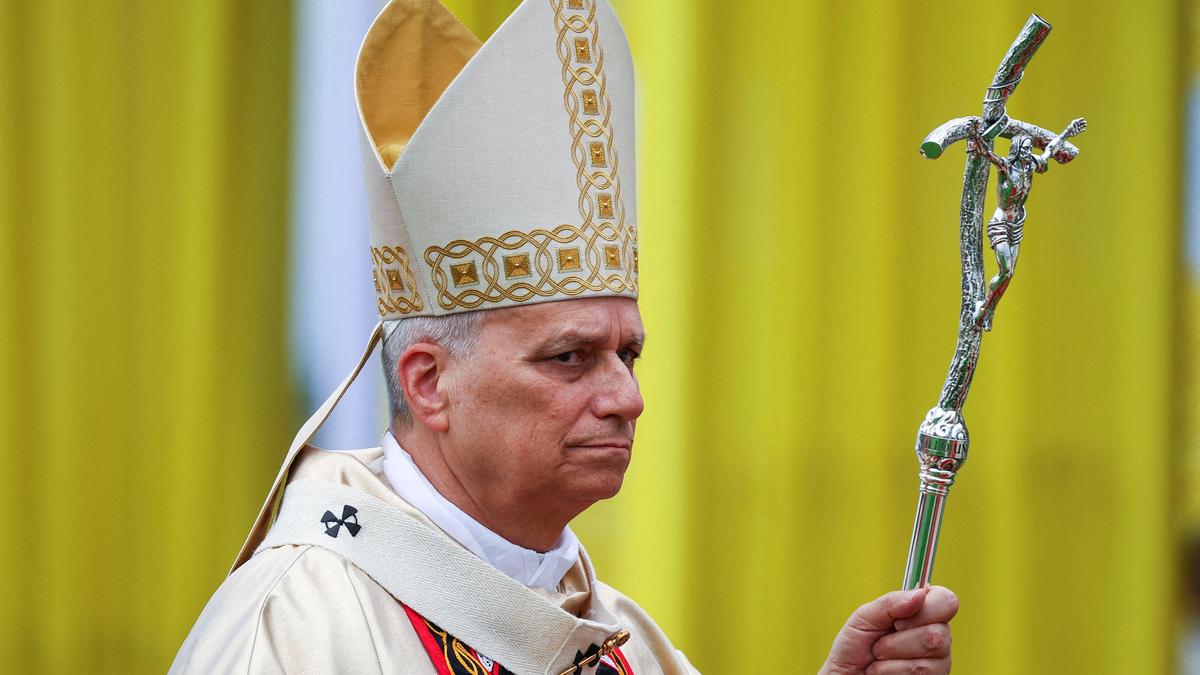
The global obsession with Donald Trump’s attempts to lecture the Vatican on Iranian "threats" is a masterclass in missing the point. Most mainstream reporting treats this as a clash of civilizations or a diplomatic gaffe. It isn't. It is a collision between two outdated, rigid frameworks that are equally incapable of addressing the reality of the Middle East in 2026.
Trump operates on a binary of maximum pressure and transactional loyalty. The Vatican operates on a long-game strategy of interfaith dialogue and humanitarian preservation. Both are failing. To suggest that the Pope simply needs to "understand" that Iran is a global threat is an insult to the oldest intelligence service on the planet. To suggest that the Pope’s "soft power" can restrain a regional hegemon is a fantasy. For an alternative look, read: this related article.
The real threat isn't that one side is right and the other is wrong. The threat is that both are playing a game that ended a decade ago.
The Intelligence Hubris of the White House
The Trumpian premise is built on a "lazy consensus" that the Vatican is a naive observer of global politics. This is objectively false. The Holy See maintains a diplomatic network that rivals the CIA and MI6, but with a different set of sensors. While the US tracks centrifuge rotations and proxy troop movements, the Vatican tracks the shifting loyalties of local bishops, the flow of refugees, and the slow-motion collapse of Christian communities in the Levant. Similar insight on this matter has been published by NBC News.
When Trump tells the Pope that Iran is a global threat, he is preaching to the person who already has the receipt for the funeral. The Pope knows Iran is a threat. He also knows that a destabilized Iran usually leads to a vacuum filled by even more radical, non-state actors who have zero interest in "Dialogue with the West."
Trump’s mistake is assuming that "understanding" a threat means adopting his specific brand of bellicosity. In reality, the Vatican’s refusal to echo White House talking points isn't a sign of ignorance; it’s a calculated hedge against the chaos that follows every American attempt at regime change.
The Myth of the Global Threat
Let’s dismantle the "Global Threat" label. It’s a convenient piece of marketing that collapses under its own weight. Iran is a regional power with global aspirations, yes. But its primary weapon isn't a nuclear warhead—it’s the exploitation of state failure.
If you want to stop Iran, you don’t do it by showing the Pope satellite photos of missile silos. You do it by fixing the broken states where Iran’s influence thrives. Lebanon, Iraq, Yemen, and Syria are not Iranian colonies by choice; they are Iranian colonies by default because the West provided no alternative to the militia-state model.
The "maximum pressure" campaign failed to stop this. In fact, it accelerated it. By squeezing the central economy, you didn't weaken the IRGC; you gave them a monopoly on the black market. I’ve watched this happen in corporate sectors when a dominant player tries to crush a scrappy competitor through litigation—you don't kill the competitor, you just force them to become leaner, meaner, and more innovative in their illegality.
Why the Pope Won't Bite
The Vatican views the world through a lens of $2,000$ years of institutional survival. They have seen empires rise and fall while the Church remains. To a Pope, a four-year or eight-year presidential term is a blip. Why would the Holy See burn its bridges with a major regional power for a temporary alliance with a volatile administration?
Furthermore, the Vatican’s primary concern in the Middle East is the survival of the "Living Stones"—the indigenous Christian populations. History shows that when the US "deals" with an Islamic threat, the local Christians are the first to be purged. From the 2003 invasion of Iraq to the chaotic withdrawal from Afghanistan, Western intervention has been a death sentence for Eastern Christianity.
When Trump asks for the Pope’s "understanding," he is asking the Pope to sign a death warrant for his own flock. That’s not diplomacy; it’s an ego trip.
The Logic of the Proxy
The mainstream media loves to talk about Iran’s "proxies" as if they are mindless drones controlled by a remote in Tehran. This is a fundamental misunderstanding of the Shiite Crescent. Groups like Hezbollah and the Houthis are organic movements that have aligned with Iran because their interests happen to overlap.
If we want to disrupt these networks, we have to stop treating them like military targets and start treating them like political competitors.
- Logic Check: If you bomb a bridge, the people hate you. If you build a bridge and the other guy tries to bomb it, the people hate him.
- The Reality: We haven't built a bridge in the Middle East in twenty years. We’ve only provided the bombs.
The Pope understands this. He knows that peace isn't the absence of war; it’s the presence of an alternative. Trump’s "understanding" offers no alternative. It offers only a bigger bomb.
The Data of Failure
Look at the numbers. Since the "Global Threat" rhetoric peaked, Iran’s regional footprint has expanded, not contracted.
| Metric | 2016 Status | 2026 Status |
|---|---|---|
| Enriched Uranium Stockpile | Controlled/Monitored | Unregulated/Weapon-Grade |
| Proxy Reach | Limited to Levant | Red Sea to Mediterranean |
| Regional Diplomacy | Isolated | Integrated (China/Russia brokered) |
The data proves that the "maximum pressure" strategy is a bankrupt ideology. It has achieved the exact opposite of its stated goals. It has pushed Iran into the arms of Beijing and Moscow, creating a genuine "Global Threat" that didn't exist when this whole saga began.
Breaking the Binary
The conversation shouldn't be about whether the Pope "understands" Iran. It should be about whether the West "understands" the Vatican’s role as a neutral arbiter in a world that is rapidly de-polarizing.
We are moving into a multipolar reality. The era of the US dictates being the sole source of "truth" is over. When the Pope meets with Iranian leaders, he isn't "appeasing" them. He is maintaining a channel of communication that will be essential when the US inevitably decides to pivot away from the region again.
Stop Asking the Wrong Questions
People often ask: "How can the Pope ignore Iran's human rights record?"
That is the wrong question. The right question is: "Does the Pope’s silence achieve more for human rights than Trump’s shouting?"
The answer is uncomfortable. Public condemnation by a Western leader often results in a domestic crackdown within Iran to "prove" the regime isn't bowing to foreign pressure. Private, back-channel diplomacy by the Vatican has historically led to the release of prisoners and the protection of minorities—results that don't make for a good campaign slogan but actually save lives.
The Actionable Truth
If we want a functional policy toward Iran, we need to stop treating the Vatican like a PR firm for the State Department.
- Acknowledge Local Agency: Stop treating Middle Eastern actors as chess pieces. They have their own agendas.
- Invest in Stability, Not Just Weapons: Until there is a viable economic alternative to militia-backed governance, Iran will keep winning.
- Respect the Long Game: The Vatican’s neutrality is a tool, not a hindrance. Use it.
The arrogance of the "understand the threat" line is that it assumes the listener is blind. The Pope isn't blind. He's just looking at a different map—one that includes the people we’ve forgotten in our rush to name a villain.
Trump’s demand for the Pope to fall in line is a desperate attempt to regain moral authority he has already traded away for political theater. The Vatican isn't moving because the Vatican knows that when the dust settles on this administration, Iran will still be there, the regional mess will still be there, and the Church will still be there to pick up the pieces.
Stop trying to "educate" the oldest institution on Earth. Start listening to what they aren't saying.