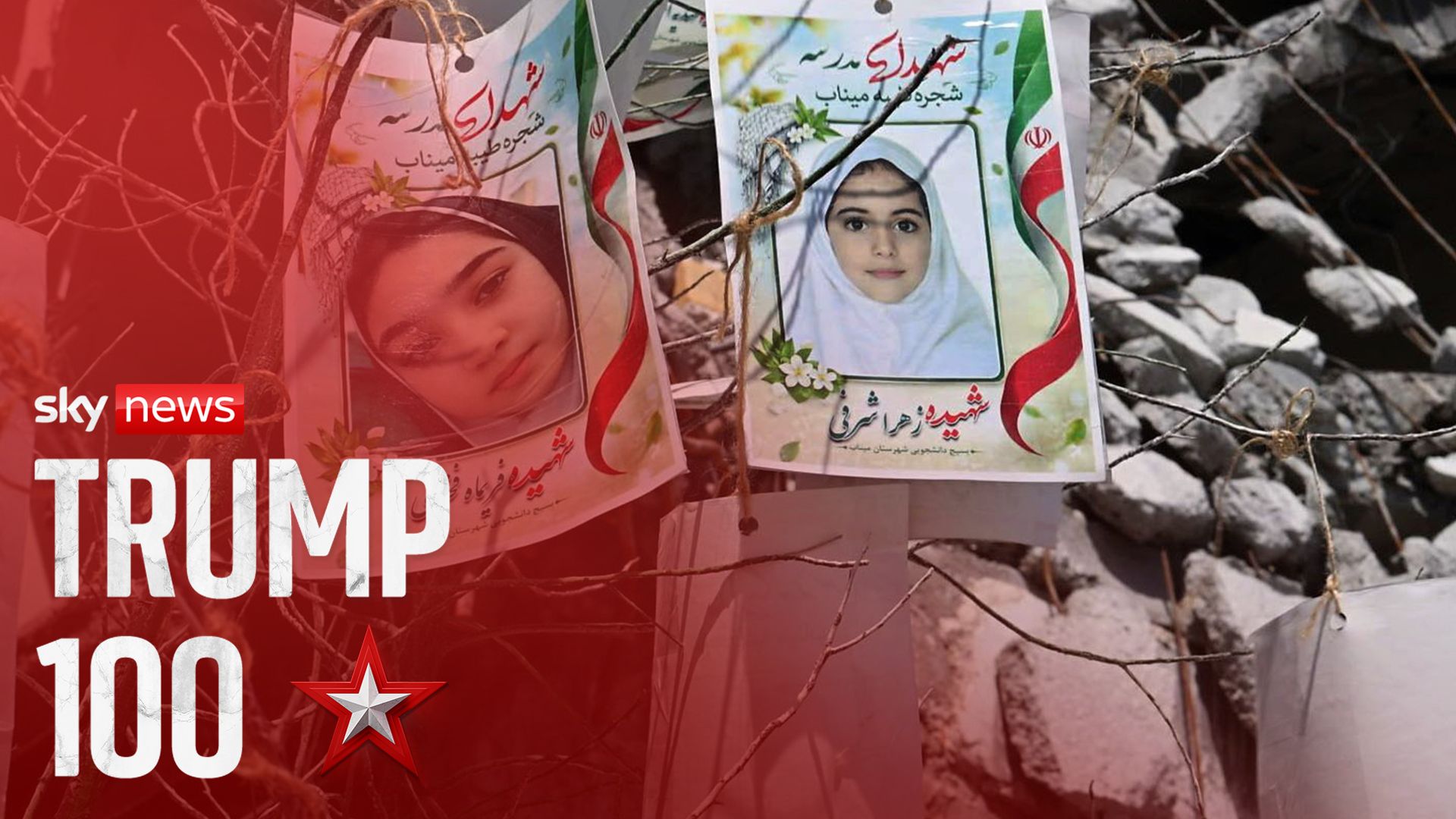
The release of a formal United States intelligence report regarding an attack on Iranian civilian infrastructure—specifically educational institutions—is never a matter of simple transparency; it is a calculated move within a broader escalation ladder. Publicizing intelligence findings serves specific strategic functions: the attribution of blame, the signaling of capabilities, or the justification of retaliatory measures. When the U.S. executive branch weighs the dissemination of such a report, it operates under a three-pillar framework: intelligence source protection, diplomatic leverage, and internal political optics. The decision to withhold or release information regarding the 2023 poisoning incidents in Iranian girls' schools reveals the friction between humanitarian advocacy and hard-power realism.
The Tripartite Logic of Intelligence Declassification
The U.S. intelligence community (IC) does not operate as a news agency. Any decision to declassify information must clear a high bar of utility vs. risk. The mechanism of disclosure is governed by three primary variables:
- Source and Method Vulnerability: The primary deterrent to releasing a report is the risk of revealing how the information was obtained. If the U.S. knows exactly who ordered an attack, the Iranian counter-intelligence apparatus can work backward to identify the specific human assets (HUMINT) or electronic intercepts (SIGINT) used to gain that knowledge. A public report is often judged too expensive if it burns a high-value signal path.
- Attribution Certainty: In the context of the Iranian school poisonings, the technical difficulty of forensic attribution creates a bottleneck. Determining whether an event was a state-sponsored chemical attack, a localized extremist action, or a case of mass sociogenic illness requires granular physical data. Without "smoking gun" evidence, a formal report risks being dismissed as propaganda, which erodes U.S. credibility in international forums like the UN Security Council.
- Strategic Ambiguity: Sometimes, silence is more effective than noise. By refusing to confirm or deny specific findings, the U.S. maintains a state of "strategic ambiguity." This forces the adversary to assume the U.S. knows more than it does, potentially deterring future actions without requiring the U.S. to commit to a specific policy response.
Structural Incentives for Withholding Evidence
The executive branch faces significant pressure from human rights organizations to release findings that might implicate the Iranian government or its proxies. However, structural incentives often favor non-disclosure.
Attributing an attack on a school to the Iranian state carries a heavy "Commitment Cost." Once the U.S. officially blames a state actor for a "red line" violation—such as the targeting of children—international law and domestic political pressure demand a response. If the U.S. administration is currently prioritizing nuclear de-escalation or regional maritime security, it may find the timing of a bombshell report counter-productive to its immediate diplomatic goals.
Furthermore, the Iranian internal political landscape is a factor. If a report identifies a specific hardline faction within the Islamic Revolutionary Guard Corps (IRGC) as the perpetrator, it may inadvertently strengthen that faction’s position by allowing them to frame themselves as the primary targets of "Western meddling." The U.S. State Department often views the potential for unintended domestic consequences within Iran as a reason to keep intelligence findings classified.
The Mechanism of Selective Leaks vs. Formal Reporting
There is a distinct difference between a formal "Intelligence Assessment" (IA) and a selective leak.
Formal reports are vetted by the Office of the Director of National Intelligence (ODNI) and represent a consensus view. They are rigid and legally significant. Selective leaks, often delivered via "unnamed officials" to major press outlets, allow the U.S. to influence the narrative without the legal or diplomatic weight of a formal document. If the U.S. intends to pressure Iran without triggering a formal diplomatic break, it will opt for the leak over the report.
This creates a "credibility gap" for the public. When an official report is delayed or suppressed, the vacuum is filled by speculation. In the case of the Iranian school incidents, the absence of a U.S. report has allowed for two competing, unverified narratives to take root:
- The State-Sponsored Terror Model: Hardline elements within the regime or their supporters used chemical agents to suppress the "Woman, Life, Freedom" movement.
- The Sociogenic Stress Model: The events were a manifestation of mass psychological stress among students, exacerbated by the intense social unrest of 2022-2023.
Without the release of high-confidence technical data—such as toxicology results or intercepted communications—neither model can be definitively proven or discarded.
Bureaucratic Inertia and the Mandate of the State Department
The U.S. State Department’s annual "Country Reports on Human Rights Practices" often serves as the surrogate for a specific intelligence report. By folding the school incidents into a broader list of Iranian human rights violations, the administration can fulfill its reporting mandates to Congress without the escalation risks associated with a standalone "Special Intelligence Assessment."
This "bundling" strategy serves as a pressure valve. It acknowledges the event and satisfies the "Leahy Law" requirements (which prevent U.S. assistance to foreign security forces committing gross human rights violations) without necessitating a direct confrontation over a single, specific incident.
Tactical Reality of the Information War
The Iranian government has historically used the lack of Western "proof" to craft counter-narratives, often blaming foreign actors for domestic instability. For the U.S., releasing a report is a tactical move in an information war where the "Truth" is secondary to the "Impact."
The decision-making process is a function of the following equation:
Net Strategic Value = (Value of Narrative Dominance + Pressure on Adversary) - (Risk to Intelligence Sources + Diplomatic De-escalation Cost).
If the result of this equation is negative, the report remains classified. In the current geopolitical environment, where the U.S. is managing multiple high-stakes theaters in Ukraine, the Middle East, and the Indo-Pacific, the threshold for releasing a high-friction report on Iran is exceptionally high.
The strategic play here is to monitor the "quiet" channels. Look for changes in U.S. Treasury sanctions or the language used in multilateral organizations. These are the downstream effects of intelligence findings. If the U.S. possesses definitive proof of state-level involvement in the school incidents, that proof will manifest as financial and diplomatic strangulation long before it appears in a PDF on a government website. The absence of a report is not an absence of knowledge; it is a choice regarding the most efficient application of that knowledge to achieve a specific regional outcome.