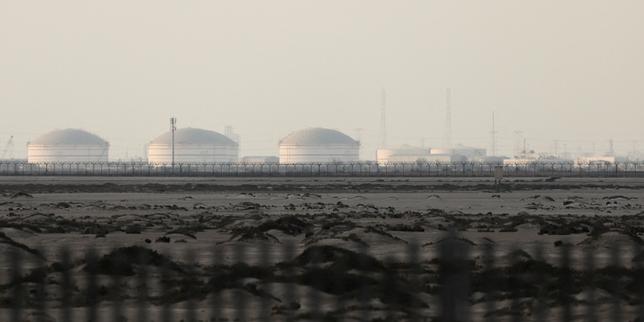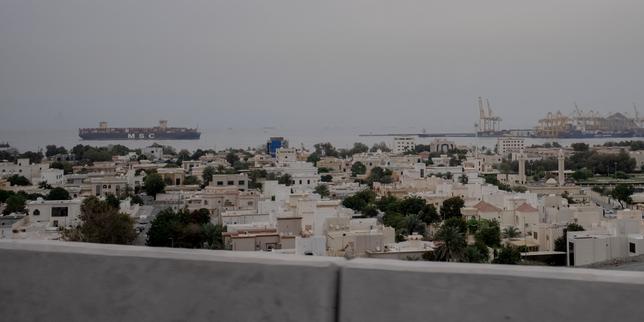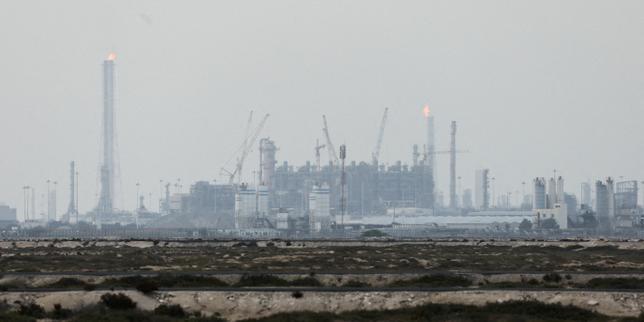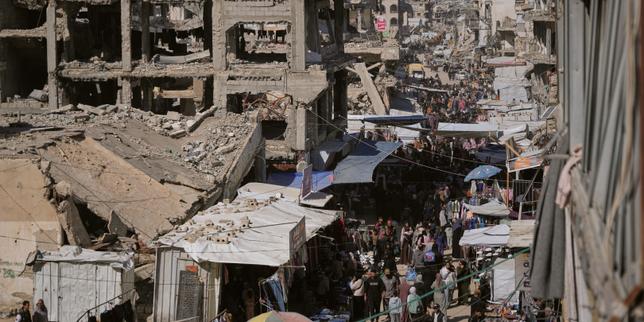
The vision for a reshaped Middle East has hit a wall of fire. Donald Trump’s second-stage strategy for regional integration—a plan designed to follow the Abraham Accords by tying Gaza’s reconstruction to a broader Arab-Israeli security umbrella—is currently paralyzed. This isn't just a temporary delay. The escalating conflict with Iran and its regional proxies has fundamentally altered the risk calculations in Riyadh, Abu Dhabi, and Washington. While the initial goal was to swap perpetual conflict for economic prosperity, the current reality is a scramble for containment.
To understand why this plan is frozen, one must look past the daily headlines of tactical maneuvers. The "Phase Two" blueprint relied on a specific set of assumptions: that Iran could be deterred by economic pressure alone, and that Gulf monarchies would prioritize a "business-first" relationship with Israel over the unresolved Palestinian question. The war in Gaza and the subsequent direct exchanges between Israel and Iran have shattered those premises. Now, the architects of this policy are facing a brutal reality where economic incentives cannot outpace ballistic missiles.
The Architecture of a Frozen Vision
The original concept for the Phase Two plan was remarkably ambitious. It wasn't just about building apartments in Gaza. It was a macro-economic play to create a "Mediterranean-Red Sea corridor" that would effectively make the Levant a global logistics hub. The idea was to use Gulf capital to rebuild Gaza under a reformed administrative body, bypassing Hamas entirely, while formalizing a defense pact between Israel and Saudi Arabia.
This was supposed to be the "Great Normalization."
However, the "how" of this plan required a stable environment. Investors do not pour billions into a coastline that is under constant bombardment. The logic was that the Abraham Accords would create a vacuum where Iran’s influence would naturally wither as the region’s youth chose jobs over "resistance." That theory has been tested and found wanting. The conflict has proven that Tehran retains a "spoiler" capability that can freeze global trade routes in the Red Sea and force a total pause on diplomatic breakthroughs.
The Saudi Calculation and the Price of Normalization
Riyadh holds the keys to any Phase Two success. Before the current regional flare-up, the Saudi leadership was signaling a historic willingness to move toward Israel. The price was high: a US defense guarantee, assistance with a civilian nuclear program, and a "credible path" to a Palestinian state.
The war has moved the goalposts.
- Public Sentiment: The Saudi street, long quieted by social reforms, has been re-politicized by the images coming out of Gaza. This makes a quick, high-profile deal with Israel politically expensive for the House of Saud.
- Security Guarantees: The Saudis have watched Iranian drone technology penetrate sophisticated defenses. They are no longer interested in a "light" defense pact. They want the kind of ironclad commitment that the US Congress is currently hesitant to provide.
- The Iran Hedge: Instead of choosing sides in a definitive Western-led bloc, Riyadh is practicing a policy of de-escalation with Tehran. They are talking to the Iranians to protect their "Vision 2030" economic projects from sabotage.
This hedging is the direct opposite of what the Trump Phase Two plan required. The plan needed a firm, anti-Iran coalition. Instead, it has a collection of nervous partners who are more interested in quiet than in a transformative crusade.
The Gaza Power Vacuum
Reconstruction is impossible without a governing entity that both Israel and the Arab world trust. The Phase Two plan envisioned a "Technocratic Government" supported by an international Arab force.
It sounds good on paper. In practice, it is a nightmare.
No Arab nation is willing to send its sons to police the ruins of Gaza and be labeled as "Israel’s subcontractors." This creates a circular logic: Israel will not withdraw without a security guarantee, but the entities that could provide that guarantee will not enter until Israel withdraws and commits to a sovereign Palestinian entity. The Trump strategy attempted to bridge this with money. It assumed that a multi-billion dollar "Marshall Plan" for Gaza would buy compliance. But money cannot buy legitimacy for a government that arrives on the back of a foreign tank.
The plan also overlooked the resilience of the local political infrastructure. Even if Hamas is militarily degraded, the "Day After" requires a civil service. If the Palestinian Authority is deemed too corrupt or weak, and a transitionary body is seen as a puppet, the result is a failed state on the Mediterranean. This is why the plan is stuck in the "idea" phase while the ground remains a tactical quagmire.
The Iranian Shadow Over the Accords
The most significant factor freezing the peace plan is the direct nature of the Israel-Iran confrontation. For decades, this was a "shadow war." Now, it is an open exchange. When missiles fly between Isfahan and the Negev, the "economic peace" model looks remarkably fragile.
Tehran’s strategy is clear: make the cost of regional integration too high for everyone involved. By activating the "Axis of Resistance" from Yemen to Lebanon, Iran has forced the United States to spend its diplomatic and military capital on crisis management rather than peace-building. Every time a drone hits a ship in the Bab el-Mandeb, a piece of the Trump Phase Two plan dies.
International logistics companies are rerouting. Insurance premiums are spiking. The "corridor of prosperity" is currently a corridor of risk. For the Trump peace plan to be revived, there must first be a definitive answer to the Iranian question. Can Iran be contained without a full-scale regional war? The current administration hasn't found the answer, and the Trump camp's "maximum pressure" 2.0 would face a much more aggressive and nuclear-adjacent Iran than it did in 2017.
The Hard Truth of Reconstruction Economics
Let’s look at the numbers that are rarely discussed in the glossy brochures of regional peace. The estimated cost to rebuild Gaza's basic infrastructure exceeds $40 billion. This isn't just for houses; it's for power plants, desalination units, and a modern port.
The Phase Two plan assumed this would be funded by a mix of Gulf sovereign wealth funds and private equity. But private equity requires an exit strategy. It requires insurance. Most importantly, it requires a legal framework. None of that exists in Gaza today. The legal status of the land, the control of the borders, and the jurisdiction over the airspace are all contested.
Furthermore, the "economic peace" theory suffers from a fundamental flaw: it assumes that people will always choose a paycheck over national or religious identity. History suggests otherwise. The residents of the region have seen several "economic peace" initiatives fail over the last thirty years. From the Oslo-era industrial zones to the "Peace to Prosperity" workshop in Manama, the result has been the same—economic development cannot substitute for political self-determination.
The Intelligence Gap
There is also a significant intelligence and diplomatic gap that has stalled the plan. The planners in Washington underestimated the internal political dynamics within Israel. The current Israeli government is not just focused on security; it is ideologically committed to preventing the very "path to statehood" that the Saudis require for Phase Two to move forward.
This creates a deadlock. You cannot have a regional peace plan that requires a Palestinian state if the Israeli partner refuses to discuss one. You cannot have Saudi normalization without that discussion. And you cannot have Gaza reconstruction without Saudi money.
The Trump team’s "Deal of the Century" was built on the idea that they could bypass the "old guard" of diplomats and make a deal directly with the leaders. But the leaders are constrained by their own internal realities. Netanyahu has a coalition to maintain. Bin Salman has a religious and pan-Arab reputation to protect. And the Iranian leadership has a survival instinct that dictates perpetual chaos for its neighbors.
Why Military Might Won't Unfreeze the Deal
There is a temptation to believe that a decisive military victory in Gaza or a crushing blow to Hezbollah would "clear the brush" for Phase Two to resume. This is a fallacy. Military force can destroy infrastructure and eliminate leaders, but it cannot create the social contract necessary for a peace plan to take root.
Even if the "Axis of Resistance" were neutralized tomorrow, the fundamental problem remains: who governs? The Phase Two plan lacks a credible local partner. The plan was designed as a top-down imposition of order. It was a CEO’s approach to a problem that requires a sociologist and a historian.
The current freeze is a reflection of the fact that the "Business Transaction" model of diplomacy has hit its limit. You can negotiate a trade deal or a real estate development with that mindset. You cannot negotiate the identity and security of two peoples who have been at war for a century while a third, regional power is actively trying to burn the house down.
The Credibility Problem
Finally, there is the issue of American credibility. To restart Phase Two, the United States must be seen as a reliable guarantor. The chaotic withdrawal from Afghanistan and the shifting stances on Iran have made regional players skeptical. They are asking: "If we sign onto this plan and it leads to a war with Iran, will the US stay the course?"
The Trump administration's "America First" rhetoric was a double-edged sword. It encouraged regional players to take more responsibility, but it also signaled that the US might not be there when the bill for that responsibility comes due. The Phase Two plan requires a massive, multi-decade American commitment—not just to the economics, but to the security of every participant.
The Pivot to Reality
If the plan is to be unfrozen, it will require more than just a return to the 2020 playbook. It will require a total reassessment of the Iranian threat and a realistic plan for Palestinian governance that doesn't involve "magical thinking" about technocrats.
The "Phase Two" vision of a high-tech, integrated Middle East is a compelling one. It is certainly better than the alternative of endless cycles of violence. But the path to that vision is currently blocked by a mountain of rubble and a sea of distrust. The brokers of this deal must realize that you cannot build a skyscraper on a foundation of sand—especially when that sand is on fire.
The next step isn't a new summit or a new white paper. It is a fundamental decision on whether the US and its allies are willing to pay the political and military price to actually secure the region, or if they will continue to offer economic solutions to an existential crisis. Until that choice is made, the plan remains a relic of an era that ended on October 7.
Check the status of the maritime corridor initiatives and the current Saudi-US defense talks to see where the next crack in the ice might appear.