The Flawed Premise of Multipolarity
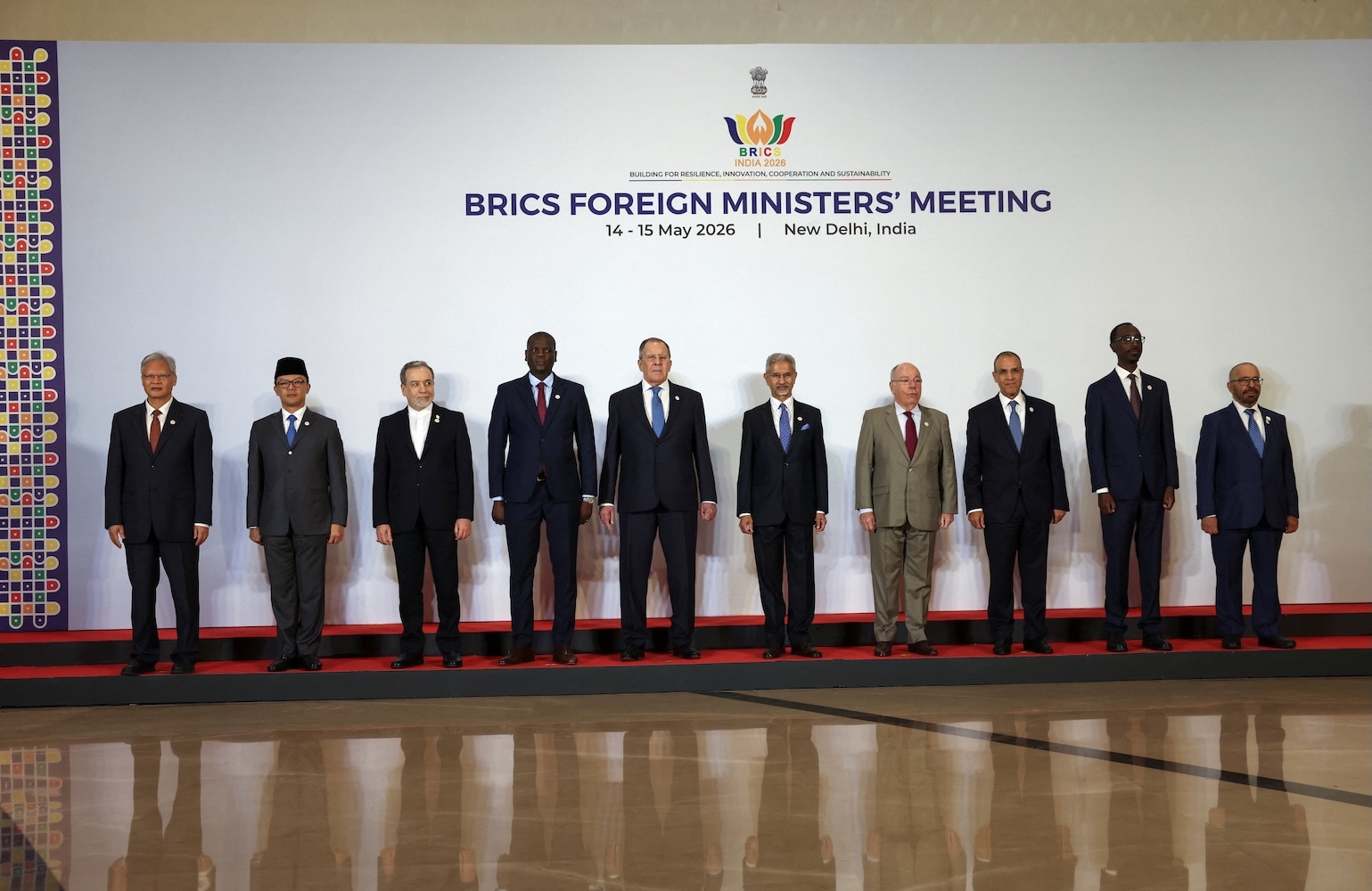
The foreign policy establishment is wringing its hands over a non-existent crisis. Analysts look at the shifting dynamics in West Asia, note the fractured responses from BRICS nations, and declare the bloc broken. They see India’s refusal to step into the mediator role as a failure of ambition, a sign of a nation paralyzed by its own competing alliances.
They are looking at the chessboard completely upside down.
The lazy consensus dictates that for BRICS to be a "game-changer"—to use the tired vocabulary of Davos elites—it must behave like a mini-UN or an anti-NATO. It must issue unified communiqués, take collective moral stances, and police global flashpoints. When Russia, China, India, Brazil, and South Africa fail to align perfectly on the Israel-Iran conflict or the future of the Abraham Accords, the commentariat treats it as an existential failure.
This view fundamentally misunderstands the mechanics of modern geopolitics. BRICS was never meant to be a monolithic ideological alliance. It is a trade syndicate and a diplomatic hedge. Expecting BRICS to have a unified West Asian policy is like expecting the board of a multinational corporation to agree on theology. It misses the point of why the entity exists in the first place.
The Mirage of the Neutral Mediator
Let us dismantle the specific critique leveled against New Delhi: the idea that India is shrinking from its responsibility by not mediating between warring factions in the Middle East.
This narrative assumes mediation is an inherent good. It assumes that sitting at a table in Geneva or Doha, hammering out a ceasefire that will be broken in forty-eight hours, is the ultimate marker of a superpower.
It is not. It is an expensive, thankless bureaucratic trap.
Consider the historical record. The United States spent three decades attempting to be the indispensable mediator in West Asia. The return on that investment? Trillions of dollars sunk into regional conflicts, systemic instability, and a dramatic erosion of American soft power. Washington’s mediation efforts did not bring peace; they merely institutionalized the conflict while tying American foreign policy to the whims of regional proxies.
India’s current stance is not inaction; it is deliberate, calculated abstention.
By refusing to play the mediator, India avoids the structural trap that hobbled Western foreign policy for a generation. New Delhi understands a reality that traditional diplomats refuse to admit: you cannot mediate a conflict where the core actors view the struggle as existential and zero-sum. You only end up alienating both sides.
Instead, India has pioneered a policy of multi-alignment. It maintains deep, structural security cooperation with Israel while simultaneously expanding energy ties with Iran and securing massive sovereign wealth investments from the UAE and Saudi Arabia. This is not ideological hypocrisy. It is cold, hard realism.
If India were to step into the mediator role, it would have to take positions. Taking positions means drawing lines. Drawing lines means creating enemies.
Deconstructing the BRICS Split
The mainstream media covered the recent BRICS gatherings as if the ideological disagreements over West Asia were a fatal flaw. China wants to position itself as the champion of the Global South by backing Palestinian statehood aggressively. Russia uses the regional chaos to divert Western attention and resources away from Ukraine. India focuses on maritime security in the Red Sea and securing the diaspora.
The critics cry: "Look! They are divided!"
Of course they are divided. They are sovereign nations with wildly divergent geographic realities and economic imperatives.
The strength of BRICS lies precisely in its lack of ideological cohesion. Unlike NATO, which requires total alignment and forces member states to subsidize the security failures of their neighbors, BRICS operates on a transaction-by-transaction basis. It is a platform for de-dollarization, trade corridor development, and financial architecture reform.
When the New Development Bank approves a loan for infrastructure in Brazil, the board does not debate the finer points of the Zionism-versus-Iran dynamic. The system ignores the geopolitical noise to focus on structural economics.
The expectation of a unified BRICS foreign policy is a projection of Western institutional bias. The West is obsessed with alliances built on shared values—even if those values are frequently abandoned when convenient. The East and Global South are building alliances based on shared interests. Interests change; therefore, the alliances are flexible.
The Cost of the Global Stage
There is a distinct downside to this contrarian approach, and we must be honest about it.
By refusing to play the global policeman or the grand mediator, India cedes the rhetorical high ground to China. Beijing loves the optics of diplomacy. When China brokered the Saudi-Iran normalization agreement in 2023, the international press lauded it as a masterstroke that signaled the end of American hegemony.
But look closer at the substance of that agreement. Did it stop the regional escalation? Did it prevent the Red Sea shipping crisis? No. It was an optical triumph with minimal operational utility. Beijing got the photo-op; regional actors got a temporary diplomatic breathing room, and the underlying structural tensions remained entirely untouched.
India’s strategy sacrifices the superficial prestige of the signing ceremony to protect its concrete interests.
I have watched diplomatic circles spend millions of dollars hosting summits that produce nothing but beautifully bound reports and empty promises. It is a vanity industry. India’s refusal to participate in this theater in West Asia is a sign of strategic maturity, not geopolitical timidity. New Delhi is prioritizing its internal economic transformation—which requires cheap energy, open shipping lanes, and foreign capital—over the fleeting applause of the international diplomatic community.
Dismantling the "People Also Ask" Delusions
The public debate around this topic is driven by flawed assumptions. Let us answer the questions people are actually asking, without the diplomatic spin.
Why doesn't India use its leverage to stop the conflict?
Because India does not possess that kind of leverage, and neither does anyone else. The belief that an external power can simply walk into a centuries-old geopolitical rivalry and force a resolution through economic or diplomatic pressure is a delusion left over from the unipolar era. The regional actors in West Asia are driven by internal survival mechanisms that completely override external economic incentives.
Is Russia eclipsing India’s influence within BRICS?
Only if you measure influence by the volume of anti-Western rhetoric. Russia’s current foreign policy is dictated by the immediate pressure of Western sanctions, forcing Moscow into a closer embrace with Beijing and Tehran than it would otherwise choose. India is under no such compulsion. New Delhi’s ability to engage with Washington, Moscow, Tel Aviv, and Riyadh simultaneously gives it a structural flexibility that Russia completely lacks. India is playing a long-game strategy; Russia is managing an immediate crisis.
Does the lack of consensus mean BRICS will fail?
BRICS will fail only if it tries to become the European Union. If it remains an economic clearinghouse and a diplomatic forum for rewriting the rules of global finance, it will continue to expand. The recent inclusion of new member states proves that the demand for an alternative financial infrastructure outweighs the need for ideological purity.
The Operational Reality
Stop looking for a unified BRICS doctrine on West Asia. It does not exist, and it will never exist.
Stop waiting for India to emerge as the grand mediator of the Middle East. New Delhi is too smart to buy into a failing business model.
The future belongs to states that can navigate chaos without being consumed by it. While Western nations bankrupt their treasuries and deplete their military stockpiles attempting to enforce an outdated status quo, and while competitor states chase the empty prestige of diplomatic theater, India is quietly building an insular, resilient network of bilateral relationships designed purely to fuel its domestic growth.
In the modern geopolitical arena, the most powerful move you can make is refusing to play a rigged game.