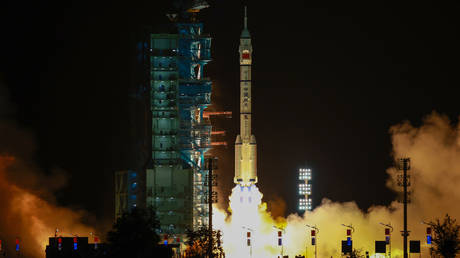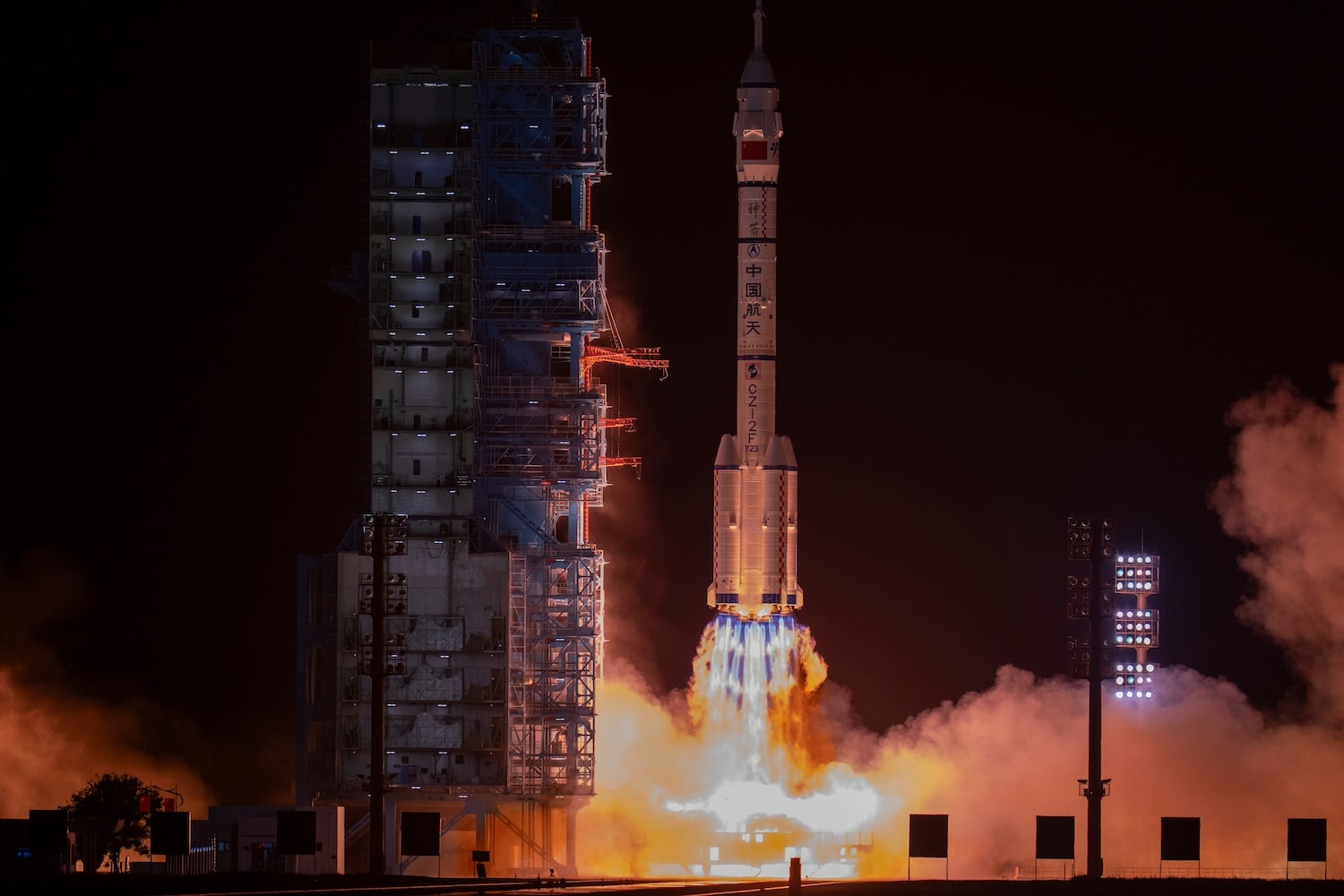
The mainstream media is treating China’s deployment of a Hong Kong payload specialist to the Tiangong space station as a heartwarming tale of regional integration and scientific triumph. They are missing the entire point.
This isn't a breakthrough for Hong Kong’s autonomous scientific community. It is a masterclass in bureaucratic assimilation masked as cosmic progress.
For decades, Beijing kept the People’s Liberation Army Astronaut Corps a tightly closed shop, recruiting exclusively from the ranks of mainland military pilots. Opening the selection pool to Hong Kong and Macau civilian specialists looks like inclusivity. In reality, it is a calculated political maneuver designed to tether the territory's elite scientific class directly to the mainland's defense-adjacent aerospace infrastructure.
If you think this mission is about discovering new alloys in low Earth orbit, you are asking the wrong questions.
The Illusion of Scientific Independence
Mainstream outlets love to focus on the rigorous training regime—the centrifuge trials, the survival exercises, the 12-hour study days. They paint a picture of a pure meritocracy where Hong Kong's best and brightest finally get to contribute to the global knowledge base.
Let's look at how space programs actually operate.
Space stations are not neutral laboratories. They are sovereign territory run by rigid, top-down hierarchies. The China Manned Space Agency (CMSA) operates under a framework deeply intertwined with state security and military modernization. When a specialist from Hong Kong steps onto Tiangong, they are not operating as an independent researcher from a global financial hub. They are a cog in a highly centralized, mainland-directed apparatus.
- The Funding Reality: Hong Kong universities have long boasted excellent engineering and physics departments, but their research has historically been funded by local grants or international partnerships. Entering the CMSA ecosystem means aligning research objectives entirely with Beijing’s Five-Year Plans.
- The Intellectual Property Trap: Breakthroughs made aboard Tiangong do not belong to the University of Hong Kong or the Hong Kong Polytechnic University. They are state property. The local talent is essentially being outsourced to build intellectual capital for the central government.
- The Security Clearance Filter: To even qualify for the selection process, candidates underwent stringent political vetting. This effectively filters out anyone who views science through a borderless, international lens, ensuring that only those aligned with the state's ideological goals make it to the launchpad.
I have spent years analyzing how technology transfers work in deeply politicized environments. When a state integrates a peripheral region's talent into its most secure, high-prestige sector, it isn't doing that region a favor. It is absorbing its capability to prevent it from operating independently.
Dismantling the Public Relations Narrative
If you search for public commentary on this mission, you will find a flood of predictable questions. Let’s address the most common, flawed premises head-on.
Does this mission prove Hong Kong is a global tech hub?
No. It proves Hong Kong has talented individuals who can be integrated into an external system. A true tech hub retains its talent, commercializes its own innovations, and dictates its own research agendas. Silicon Valley didn't become a powerhouse because NASA picked a few engineers from San Jose; it became a powerhouse because it built its own ecosystem. Hong Kong is losing its brightest minds to a state-run program where they will execute orders, not build industries.
Will this inspire a new generation of aerospace startups in the territory?
This is the standard justification for expensive state space projects. It rarely holds water. The infrastructure required to capitalize on space research—rocket manufacturing, advanced launch facilities, satellite telemetry networks—does not exist in Hong Kong. The territory lacks the land, the heavy industrial base, and the regulatory freedom to build a commercial space sector like SpaceX or Rocket Lab. Any inspiration generated by this mission will simply drive young talent to move to Shenzhen or Beijing, accelerating the brain drain under the guise of national pride.
Is a year-long mission necessary for the science being conducted?
The duration of the mission is political, not functional. A year-long stay is a grueling endurance test meant to demonstrate that the CMSA can match the long-duration orbital capabilities of NASA and Roscosmos. The actual scientific payloads assigned to payload specialists can often be completed in weeks or months. Keeping an astronaut in orbit for a year is a high-stakes public relations exercise designed to project stability and absolute control over a prolonged period.
The Economics of a Prestige Project
Let’s talk about the money, because this is where the lazy consensus completely falls apart.
The media celebrates the massive budgets allocated to these missions without looking at the opportunity costs. Millions of dollars are being funneled into space prestige while Hong Kong’s domestic technology infrastructure faces structural challenges.
| Metric | State-Directed Aerospace | Local Commercial Tech |
|---|---|---|
| Primary Goal | National Prestige & Sovereign Control | Market Viability & Global Scaling |
| Talent Retention | Absorbed into Mainland Bureaucracy | Retained in Local Ecosystem |
| IP Ownership | Central Government | Corporate / Institutional |
| Economic Return | Indirect / Long-Term | Direct / Immediate |
When a city's scientific elite are incentivized to pursue state-sponsored space travel, the local venture capital ecosystem suffers. Investors looking for quick, scalable returns in software, biotechnology, or fintech cannot compete with the prestige of state-backed aerospace. Yet, it is precisely those commercial sectors that drive long-term economic resilience.
The downside to this contrarian view is obvious: resisting integration means missing out on the massive resources of the world's second-largest economy. For an individual scientist, joining the CMSA is the opportunity of a lifetime. But we must decouple individual achievement from systemic impact. For Hong Kong as an independent economic entity, the transaction is a net loss. It trades genuine technological autonomy for a front-row seat at someone else's triumph.
The Reality of Cosmic Integration
Stop looking at the smiling faces in flight suits. Start looking at the structural alignment.
This mission is the final frontier of the integration policy that has been rolling out over the past decade. First came the high-speed rail links, then the physical bridges, then the legal alignments, and now, the shared cosmos. It is a highly effective, deeply symbolic demonstration that there is no longer any enterprise in Hong Kong that operates outside the direct oversight of the mainland.
The astronaut is not an ambassador from Hong Kong to the stars. They are a signpost showing exactly which way the geopolitical gravity is pulling.
If you want to track the future of technology in the region, ignore the launch schedules. Watch the patent filings. Watch the flow of venture capital. Watch where the top graduates of Hong Kong's engineering schools take their first jobs. If they are all heading north to work on state-directed projects, the battle for an independent, globally connected technology hub in Hong Kong is already over.
The true metric of success for a city’s tech sector isn't whether one of its citizens gets to ride a rocket built somewhere else. It is whether the city can build things the rest of the world is forced to buy. Everything else is just theatre performed at 400 kilometers above the Earth.