The global macroeconomic expansion will decelerate to 2.5% in 2026, marking the lowest non-recessionary growth rate since the 2020 COVID-19 contraction. Data published in the World Bank’s June 2026 Global Economic Prospects report reveals a systemic downgrade affecting two-thirds of all national economies. This widespread contraction is directly traceable to the kinetic escalation in the Middle East following the February 2026 US-Israeli military intervention in Iran.
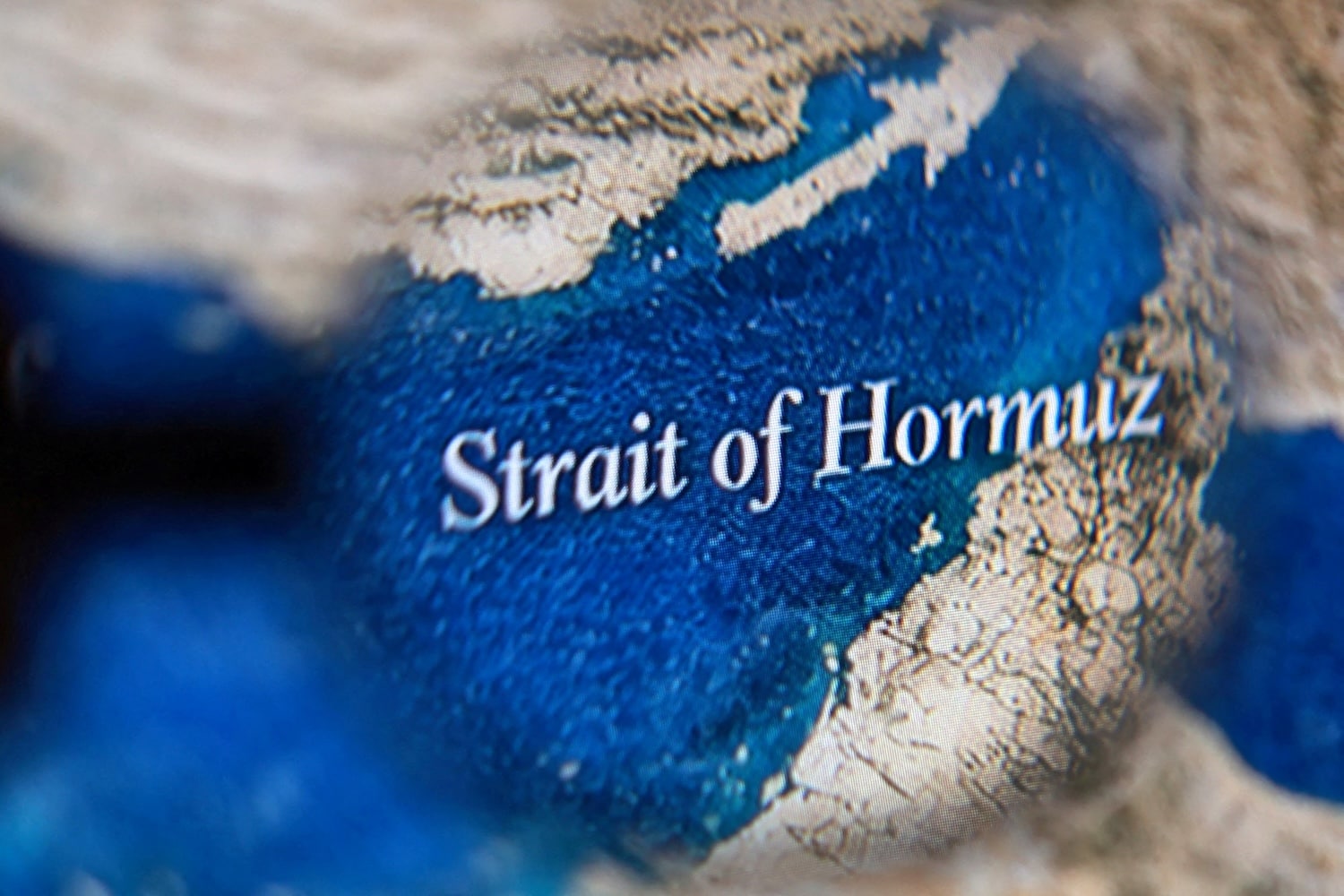
The primary transmission mechanism for this deceleration is not widespread infrastructure destruction, but rather a catastrophic supply-side shock concentrated in the Strait of Hormuz. Maritime transit through this choke point has contracted by 95%, dropping from a baseline average of 96 vessels per day to an average of five. Because this channel handles approximately 20% of global petroleum and Liquefied Natural Gas (LNG) liquid volumes, its near-total occlusion alters the global energy cost function, establishing a structural bottleneck that threatens to lock emerging markets into a multi-year income stagnation phase.
The Three Pillars of Structural Transmission
The economic fallout travels from the Persian Gulf theater to global balance sheets via three distinct macro-transmission channels.
[Geopolitical Kinetic Flashpoint]
               │
               ▼
   [Strait of Hormuz Occlusion]
               │
      ┌────────┼────────┐
      ▼        ▼        ▼
  Pillar 1  Pillar 2  Pillar 3
  [Energy]  [Agri]   [Fiscal]
Pillar 1: The Energy Supply Shock and Inflationary Transmutation
The immediate consequence of the Hormuz blockade is a structural deficit in global crude supply. The World Bank model revises the baseline price of Brent crude upward to an average of $94 per barrel for 2026, representing a 36% increase over 2025 levels and a 50% increase relative to January 2026 projections.
This commodity spike acts as an immediate tax on energy-importing economies. It increases industrial input costs and alters headline consumer price indices (CPI). Global headline inflation is on track to reach 4.0% in 2026, up from 3.3% in 2025. This cost-push inflation limits the ability of central banks to ease monetary policy, forcing interest rates to stay higher for longer.
Pillar 2: Downstream Agricultural Degradation
The disruption of the Persian Gulf maritime lanes extends beyond hydrocarbons to industrial chemicals and natural gas derivatives essential for synthetic fertilizer production. Global fertilizer prices are projected to rise by up to 38% in 2026.
The relationship between energy input and food security follows a predictable lag. The spike in intermediate chemical components increases agricultural operating expenses globally. This creates a downstream bottleneck that will reduce crop yields and increase food prices heading into 2027, disproportionately impacting low-income countries (LICs) with high food-to-income consumption ratios.
Pillar 3: Debt Accumulation and Fiscal Suffocation
Emerging Market and Developing Economies (EMDEs) are entering this crisis with historically thin financial buffers. Between 2010 and 2026, aggregate government debt in developing countries expanded from 40% to 70% of GDP.
This pre-existing leverage creates a dangerous feedback loop. As energy and food import bills rise, EMDE governments face a difficult trade-off: either expand fiscal deficits via unhedged consumer subsidies or allow domestic inflation to run unchecked. Because global borrowing costs are elevated, financing these deficits drives sovereign risk premiums higher, reducing the capital available for domestic private investment.
Quantifying the Stress Scenarios
The World Bank’s baseline forecast of 2.5% global growth assumes that alternative shipping routes and strategic reserves will partially offset the Persian Gulf shortfalls, with Hormuz disruptions easing by late July 2026. However, if military operations persist or expand, the macroeconomic model identifies severe downside risks.
| Macroeconomic Indicator | 2025 Act. | 2026 Baseline Forecast | 2026 Severe Downside Shock |
|---|---|---|---|
| Global Real GDP Growth | 2.9% | 2.5% | 1.3% |
| Average Brent Crude (per Barrel) | $69 | $94 | $115 |
| Global Headline Inflation | 3.3% | 4.0% | 4.4% |
| EMDE Growth Rate (Excl. CN/IN) | 4.4% | 3.6% | < 2.0% |
The severe downside scenario is triggered if the closure of the Strait of Hormuz lasts past July, pushing Brent crude to an annual average of $115 per barrel. This would cut global growth to 1.3%, a level matching previous systemic banking crises. This scenario would likely trigger widespread corporate defaults and sovereign credit downgrades across highly indebted EMDEs.
Asymmetrical Regional Divergence
The macroeconomic shock does not hit all regions equally. Instead, it reveals stark differences in structural resilience and domestic market size across major economies.
The United States Insulated Core
The United States remains relatively insulated, with its 2026 growth forecast holding steady at 2.2%. This resilience is driven by two structural advantages: net energy self-sufficiency via domestic shale production and a massive surge in capital expenditure focused on artificial intelligence infrastructure.
The World Bank notes that US investment in AI-related infrastructure currently exceeds the combined spending of all other nations. This high concentration of technology-focused capital expenditure acts as a buffer against energy-driven supply shocks, shielding domestic productivity from global supply chain failures.
China and the Eurozone Margin Squeeze
Conversely, net energy-importing economic centers are seeing clear downgrades:
- China: Growth projections for 2026 have been cut to 4.2%, down from 5.0% in 2025. This deceleration stems from the twin pressures of high crude import costs and weakening consumer demand in key export markets.
- The Eurozone: Caught between high energy costs and structural rigidities, Eurozone growth is projected to slow to 0.8% in 2026. This puts the region on the edge of technical stagflation.
The Persian Gulf Epicenter
The hardest-hit economies are those directly adjacent to the conflict zone. Growth across the Gulf Cooperation Council (GCC) bloc is projected to collapse from 3.9% in 2025 to near zero in 2026. This contraction reflects the physical halt of maritime energy exports and the rapid escalation of regional insurance premiums.
The Income Convergence Deficit
The most troubling structural finding in the June 2026 data is the long-term damage to the global income convergence model. Excluding the large domestic markets of India (growing at 6.3%) and China, per-capita income growth in the developing world will slow to a post-pandemic low of 3.6% this year.
Advanced Economies Per Capita Income Growth ───► [Stable Path]
                                                      ▲
                                                      │ (Gap Widening)
Developing Economies Per Capita Income Growth ──► [Lost Decade Path]
This structural shift effectively erases nearly a decade of economic catch-up. Barring an immediate cessation of hostilities and a rapid drop in energy prices, per-capita incomes in these regions will not recover to their pre-pandemic trends until at least 2028. This delay locks half of all developing economies into a low-growth trap characterized by underfunded public services and falling real wages.
While the World Bank points to broad AI adoption in the 2030s as a potential tool to boost structural productivity, this transition requires solid digital infrastructure and a highly skilled workforce. Because developing nations face capital flight and rising debt service costs, they lack the fiscal capacity to invest in these technologies. This threatens to turn a short-term energy shock into a long-term structural productivity gap between advanced and emerging economies.
Strategic Asset Allocation Under Stagflationary Pressure
Corporate treasury departments and institutional asset managers cannot rely on traditional diversified portfolios when facing supply-side stagflation. Managing risks under this World Bank outlook requires shifting capital toward sectors that benefit from or resist these specific supply disruptions.
- Energy Infrastructure and Logistics Redirection: Capital allocation should target midstream transport infrastructure outside the Persian Gulf. Freight rail, alternative trans-continental pipelines, and deep-water port facilities in non-aligned maritime corridors are seeing structural demand increases as supply chains adapt to the closure of the Strait of Hormuz.
- Agricultural Input Substitution: With synthetic fertilizer prices projected to rise 38%, commercial agriculture must pivot toward precision nitrogen deployment tools, biological alternatives, and localized organic inputs. Investing in companies that improve fertilizer efficiency provides a structural hedge against these rising costs.
- Sovereign Debt Risk Mitigation: Financial institutions must re-evaluate their exposure to EMDE frontier bonds. Organizations should prioritize countries with strong domestic energy production or long-term fixed-rate debt structures, while reducing exposure to net energy importers facing large short-term debt maturities.