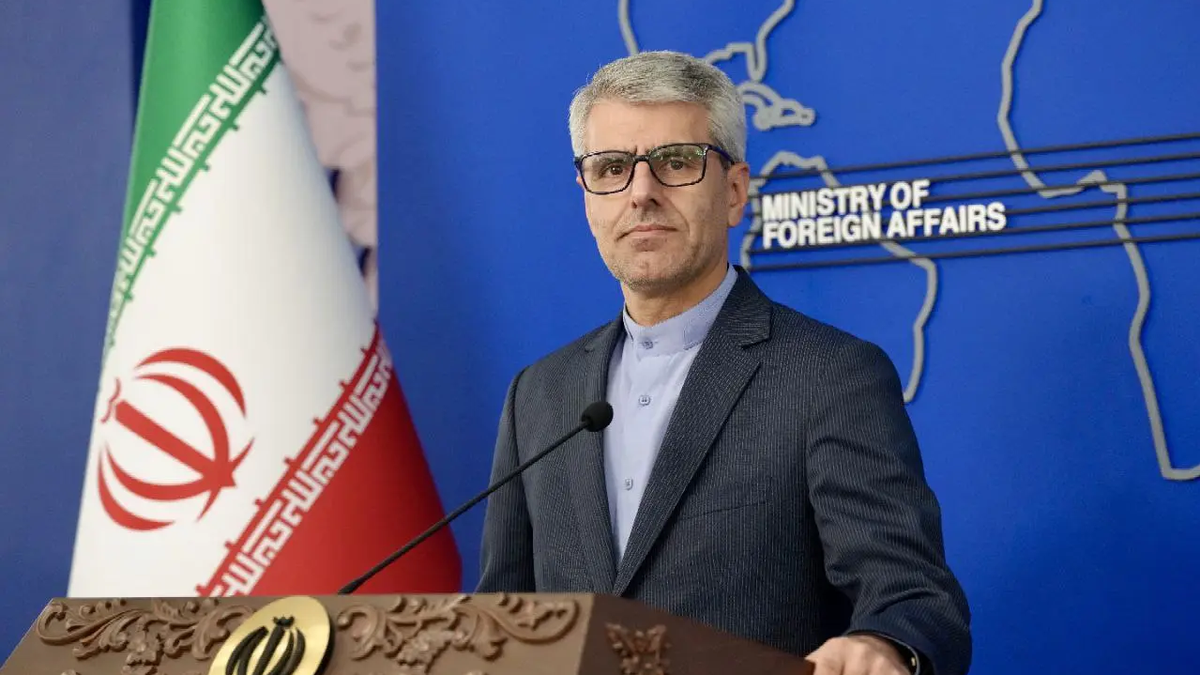
Iran’s self-classification as a "superpower" within the Middle Eastern theater represents a shift from tactical insurgency to institutionalized regional hegemony. This assertion, recently articulated by Foreign Ministry spokesperson Esmail Baqaei, rests on three distinct pillars: the integration of non-state actors into a unified command structure, the domestic production of sophisticated missile and drone technology, and the exploitation of a shifting multipolar global order. When indexed against the deepening of ties with India, specifically through the developmental bypass of the International North-South Transport Corridor (INSTC), the Iranian strategy reveals a move to insulate its economy from Western sanctions through permanent structural alignment with Asian powers.
The Tripartite Architecture of Iranian Power Projection
To evaluate the "superpower" claim requires moving beyond rhetoric and analyzing the specific mechanisms of influence Iran has refined over the last two decades. Power in the contemporary Middle East is not measured solely by GDP or aircraft carrier groups, but by the ability to project force without triggering a direct total war.
1. Asymmetric Escalation Dominance
Iran has mastered a "Forward Defense" doctrine. By maintaining high-functioning relationships with groups like Hezbollah in Lebanon, various PMFs in Iraq, and the Houthis in Yemen, Tehran creates a buffer zone that extends thousands of kilometers from its borders. This network allows for a graduated response to external pressures. The strategic value here is the creation of a "ring of fire" that forces adversaries to expend significant resources on defensive posture while Iran maintains deniability and low-cost offensive options.
2. Technological Autarky in Aerospace
Sanctions regimes designed to cripple the Iranian military have inadvertently forced a high degree of domestic innovation. Iran’s development of the Shahed series of loitering munitions and the Fattah hypersonic missile system demonstrates a leap from importing technology to exporting it. This autarky changes the cost-benefit analysis for regional rivals. The proliferation of low-cost, high-precision drones creates a "denial of access" environment where traditional air superiority is neutralized by the sheer volume of cheap, effective aerial threats.
3. Diplomatic Reorientation and the BRICS+ Pivot
The inclusion of Iran into BRICS+ and the Shanghai Cooperation Organization (SCO) signals the failure of the "maximum pressure" isolation strategy. Iran is no longer a pariah state in the eyes of the Global South; it is a critical node in a new energy and logistics architecture. This provides Tehran with a "diplomatic shield" at the UN Security Council and access to alternative financial clearing systems that bypass the SWIFT network.
The Indo-Iranian Strategic Nexus: A Logistics-First Approach
The relationship between Tehran and New Delhi is frequently mischaracterized as a simple energy trade. In reality, it is a sophisticated geostrategy built on the logic of geography and the necessity of bypassing Pakistan to reach Central Asia.
The Chabahar Port Variable
The development of the Shahid Beheshti terminal at Chabahar Port is the cornerstone of this partnership. For India, Chabahar is not just a port; it is a strategic gateway to the International North-South Transport Corridor (INSTC). By investing in this infrastructure, India secures a route to Afghanistan and Central Asia that is entirely independent of Pakistani territory.
For Iran, Indian investment provides three critical advantages:
- Infrastructure Capital: Direct foreign investment in maritime and rail infrastructure that Iranian firms cannot currently finance due to banking restrictions.
- Sanction Dilution: By making India a primary stakeholder in its logistics hubs, Iran gains a powerful advocate in global forums. India’s ability to secure U.S. sanctions waivers for Chabahar projects illustrates this dynamic.
- Transshipment Revenue: Iran intends to transform from a simple energy exporter to a global transit hub, collecting rents and transit fees from the flow of goods between the Indian Ocean and the Caspian Sea.
The Cost Function of Regional Supremacy
While the "superpower" label reflects a high degree of confidence, several structural bottlenecks threaten the sustainability of this trajectory. Strategic analysis requires accounting for the friction points that impede Iranian expansion.
Economic Fragility and the Currency Trap
The Iranian Rial has suffered chronic depreciation, fueled by double-digit inflation and a lack of access to foreign exchange reserves. While the military-industrial complex is robust, the civilian economy remains tethered to oil exports that are subject to fluctuating global prices and "dark fleet" shipping risks. There is a widening gap between the state’s external military capabilities and its internal economic stability.
The Integration Threshold
Integrating into the Indian economy requires more than just port infrastructure; it requires financial interoperability. The mismatch between India’s compliance with global anti-money laundering (AML) standards and Iran’s status on the FATF "Blacklist" creates a persistent bottleneck. Until a reliable, non-dollar-denominated clearing mechanism is standardized—potentially using the digital Rupee or a gold-backed settlement system—the volume of trade will remain capped.
Quantitative Indicators of Influence
Evaluating the "flourishing" nature of Indo-Iranian ties involves tracking specific metrics beyond diplomatic rhetoric:
- Cargo Throughput at Chabahar: A year-over-year increase in TEUs (Twenty-foot Equivalent Units) indicates the viability of the INSTC over the traditional Suez Canal route.
- Energy Diversification: The shift from crude oil sales to the export of petrochemicals and refined products, which are harder to track and sanction.
- Joint Military Exercises: The frequency and scale of naval drills in the Gulf of Oman, signaling a shared interest in maritime security and the protection of trade lanes.
Structural Logic of the 2026-2030 Outlook
The claim of superpower status is a signal to regional actors that Iran considers the era of American-led unipolarity in the Middle East to be over. This is not a claim of global dominance, but of regional veto power.
The partnership with India will likely evolve into a "Technology-for-Transit" exchange. India requires stable energy prices and access to Eurasian markets to sustain its 7%+ GDP growth. Iran requires Indian technical expertise in telecommunications, rail engineering, and digital payment systems to modernize its domestic infrastructure without relying solely on Chinese providers.
The primary risk factor remains the volatility of the Israeli-Iranian shadow war. Any escalation into direct kinetic conflict would force India into a diplomatic hedging position, potentially slowing the momentum of the INSTC. However, the geographic fundamentals remain unchanged: India needs a route North, and Iran is the only viable land bridge.
The strategic play for Tehran is to solidify the INSTC before the next major shift in U.S. foreign policy. By embedding itself into the supply chains of the world’s fastest-growing major economy, Iran creates a "too-big-to-fail" scenario for New Delhi. Success will be defined not by the total defeat of Western sanctions, but by the creation of a parallel economic ecosystem where those sanctions no longer dictate the ceiling of Iranian national power.