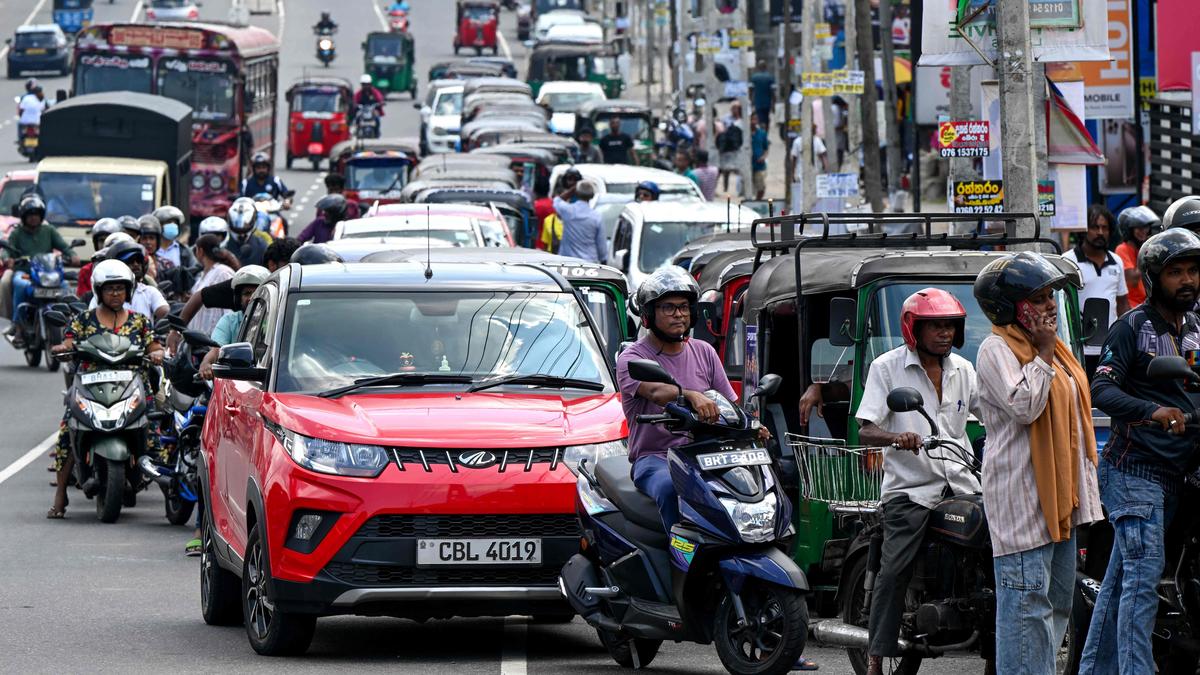
The global media fell in love with a fairy tale about Sri Lanka. They called the National Fuel Pass a "technological triumph." They praised the QR code system as a sophisticated way to manage a crisis. They marveled at how a developing nation used "innovation" to stop the breadlines and the riots.
They are dead wrong.
What happened in Sri Lanka wasn't a tech breakthrough. It was the high-tech management of a systemic collapse. When you celebrate a QR code that tells a citizen they are only allowed twenty liters of petrol a week, you aren't celebrating efficiency. You are celebrating the normalization of scarcity. You are cheering for a digital leash that masks the underlying rot of a failed monetary policy.
The "lazy consensus" suggests that digital rationing is a blueprint for future resource crises. It isn't. It is a cautionary tale of how governments use slick interfaces to distract from the fact that they’ve run the economy into a brick wall.
The Myth of the "Smart" Ration
Proponents of the QR system argue that it eliminated the black market and reduced queue times. On the surface, the data supports this. Before the system, people spent days in lines. After the system, the lines shrunk.
But look closer at the mechanics. The lines didn't vanish because the "tech" worked; they vanished because the government capped demand at an abysmal level. If I tell a thousand starving people they can only have one grain of rice, the "queue" for the rice sack will be very orderly. That doesn't mean I’ve solved hunger.
In any functioning market, price is the signal. When supply is low, price goes up, demand drops, and new supply is incentivized to enter the market. By implementing a digital quota, the Sri Lankan state effectively killed the price signal. They replaced a market-driven reality with a bureaucratic decree.
I’ve watched emerging markets attempt "digital fixes" for decades. Whether it’s currency pegs or commodity quotas, the result is always the same: you drive the real economic activity underground. The QR code didn't kill the black market; it just made the black market more expensive because now you have to bribe the guy holding the scanner or buy a "clean" QR code from a neighbor who doesn't own a car.
The Data Privacy Disaster Nobody Discusses
We need to talk about the "National Fuel Pass" as a surveillance tool. To get a code, citizens had to provide their National Identity Card (NIC) number, vehicle chassis number, and mobile number.
In a stable democracy, this is a privacy concern. In a country reeling from political instability and crackdowns on dissent, this is a weapon. The state now has a real-time map of every citizen's movement patterns, linked directly to their biometric identity and communication device.
- Granular Control: The government can toggle your ability to move with a single keystroke.
- Predictive Policing: Movement data can be used to identify "anomalous" patterns—like a lot of people suddenly driving toward a protest site.
- Dependency: Once the population accepts digital rationing for fuel, why not for bread? Why not for medicine? Why not for internet bandwidth?
The technical architecture of these systems is rarely built with "privacy by design." It’s built for "control by necessity." We are witnessing the birth of a social credit system by another name, birthed in the desperation of a fuel pump.
The Economic Cost of Artificial Equilibrium
The QR code creates a false sense of stability. Economists call this a "deadweight loss." When you prevent people from buying the amount of fuel they need to run their businesses, the entire GDP shrinks to fit the quota.
Imagine a small-scale delivery entrepreneur. Under a free market, even with high prices, they might pay a premium for fuel because their business generates enough value to cover the cost. Under the QR system, they hit their limit on Wednesday. Their truck sits idle on Thursday and Friday. The goods don't move. The shops stay empty.
The "efficiency" of the QR code is actually a massive drag on recovery. It prioritizes the survival of the rationing system over the revival of the economy. It is the digital equivalent of bloodletting to cure a fever.
The "People Also Ask" Trap
If you search for "Sri Lanka fuel crisis solutions," you'll find questions like: "How did the QR code system stabilize the economy?"
The premise of the question is flawed. The economy didn't stabilize because of a QR code. It stabilized because of a massive IMF bailout, debt restructuring, and a painful 60%+ inflation rate that crushed the purchasing power of the poor. The QR code was just the PR department’s way of making the misery look organized.
Another common query: "Can other countries use QR codes to manage energy shortages?"
The answer is a brutal "No." Unless your goal is to transition your country into a command economy where the state decides your caloric and caloric-equivalent (fuel) intake. If a Western nation adopts this, it isn't "progressive"—it’s a declaration of bankruptcy, both financial and moral.
The Real Fix (The One They Won't Do)
If you want to solve a fuel crisis, you don't build an app. You fix the balance of payments.
- Float the Currency: Stop trying to defend an imaginary exchange rate. Yes, it hurts. Yes, prices spike. But it stops the bleeding.
- Dismantle State Monopolies: In Sri Lanka, the Ceylon Petroleum Corporation (CPC) is a bloated, politicized mess. Open the market to global players like Shell, Vitol, or Adani without the state holding the leash.
- End Subsidies: Subsidies are a middle-class bribe paid for by the future debt of the poor. Remove them and let the true cost of energy be known.
The QR code is the "lazy consensus" of the tech-bro era. It’s the belief that an API can fix a structural deficit. It’s a bandage on a gunshot wound, and we’re all standing around complimenting the color of the bandage.
The downsides of my approach are obvious: short-term political suicide and temporary extreme price shocks. But the alternative—the path we are currently on—is a permanent state of managed decline where your freedom of movement is subject to an "Access Denied" screen on a cheap smartphone.
Stop calling it an innovation. Start calling it what it is: the digital infrastructure of a failing state.
Would you like me to analyze the specific technical vulnerabilities of the National Fuel Pass API architecture?