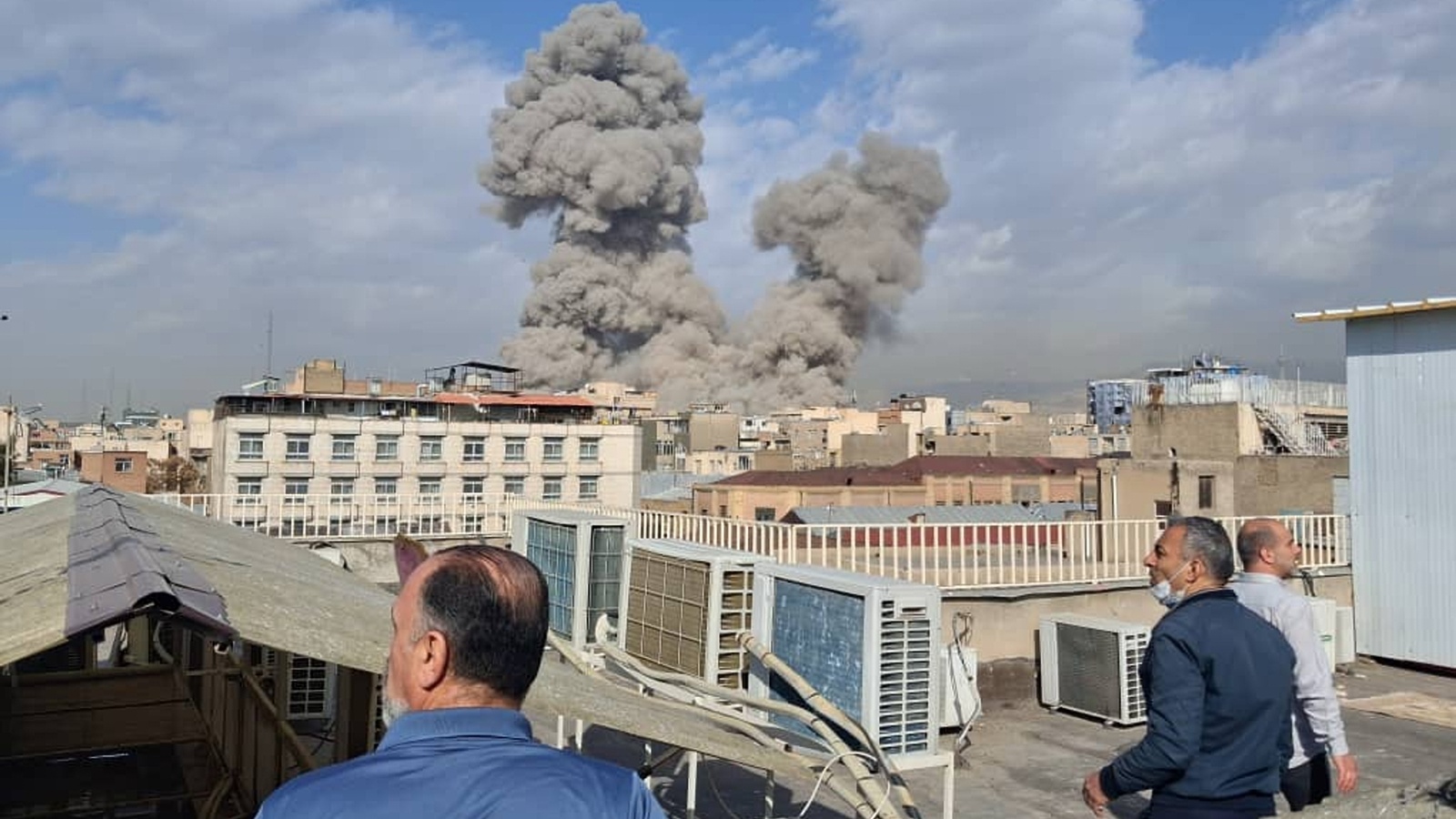
The tactical exchange between the United States Military and the Islamic Republic of Iran across the Strait of Hormuz is not a random escalation. It is a mathematically predictable outcome of a structural flaw in an interim 60-day bilateral framework. The deployment of kinetics against Qeshm Island—where approximately 10 to 11 precision projectiles neutralized Islamic Revolutionary Guard Corps (IRGC) positions—demonstrates the friction between a superpower enforcing an international commons and a regional power attempting to implement a sovereign toll and anti-access zone.
To evaluate this flashpoint, analysts must bypass political rhetoric and measure the underlying structural mechanics: the physical geometry of the choke point, the asymmetry of the tactical systems engaged, and the conflicting legal doctrines governing the waterway.
The Geography of Interdiction: The Qeshm-Hormuz Arch
The Strait of Hormuz is a maritime bottleneck measuring just 34 kilometers wide at its narrowest point. This geography compresses international shipping lanes into an explicit vulnerability. Iran’s defensive architecture relies on a geographic feature known as the "arch defense" posture. Qeshm Island, the largest landmass in the Persian Gulf, serves as the operational anchor of this strategy.
[ Persian Gulf ] ---> [ Qeshm Island: IRGC Coastal Batteries ]
                             |
                             v  <--- 34 km Shipping Lane Choke Point
                             |
[ Gulf of Oman ] <--- [ Omani Territorial Waters / Safe Route ]
The island operates as a stationary, fortified aircraft carrier positioned directly alongside the northern edge of the shipping transit zones. By embedding underground missile silos, drone launch facilities, and fast-attack craft pens within Qeshm's topography, the IRGC shortens the sensor-to-shooter loop to under 120 seconds. This creates a severe tactical constraint for commercial shipping:
- Proximity vs. Reaction Time: Anti-ship cruise missiles (ASCMs) launched from Qeshm do not require a mid-course guidance phase or high-altitude flight profiles. They can operate entirely within a low-altitude, sea-skimming envelope, minimizing the radar horizon detection window for targeted vessels and escort warships.
- The Channelization Effect: To mitigate the threat of Iranian coastal batteries, commercial traffic has increasingly relied on alternative routes hugging the Omani coastline to bypass Iranian territorial seas. This compresses the usable maritime corridor, turning a macro shipping lane into a predictable, narrow path that can be easily targeted by low-cost, one-way attack drones.
The recent strike on a Cyprus-flagged container ship illustrates this vulnerability. The vessel suffered critical engine room damage from a precise strike while navigating near the Omani coast. This demonstrates that shifting ship positioning within the channel does not eliminate risk if the adversary holds high-density surveillance and strike assets on Qeshm Island.
Weapon System Asymmetry and Target Degradation Mechanics
The military action led by US Central Command (CENTCOM) targeted a specific menu of capabilities: missile storage sites, drone launch installations, ammunition depots, and IRGC fast-attack craft. This selection reflects a deliberate effort to counter Iran’s asymmetric maritime strategy, which relies on two main pillars:
The Mass-to-Cost Layer
Iran’s primary tool for closing the strait is not a conventional navy, but a swarm model built around fast-attack craft and low-cost uncrewed systems. These systems challenge expensive naval defenses by forcing an unfavorable cost exchange. Defending against a $20,000 one-way attack drone or a fast-boat salvo often requires launching a multi-million-dollar air defense missile, creating a highly unsustainable economic equation during prolonged conflicts.
The Land-Based Inversion
Instead of projecting power from vulnerable surface ships, Iran uses land-based mobile launchers hidden in the rugged terrain of Qeshm and the surrounding coastal cliffs of Bandar Abbas. This design insulates their offensive firepower from standard anti-ship operations.
The US response focused on degrading these specific capabilities rather than launching a broader campaign. Air strikes targeting maintenance hubs and storage depots directly disrupt the logistical tail required to keep these weapon systems operational.
However, evaluating this strategy reveals an important limitation: mobile missile launchers and small drone teams can easily relocate. Unless an international coalition maintains continuous aerial surveillance paired with immediate strike capabilities, any degradation of land-based assets remains a temporary fix rather than a permanent solution.
Legal Doctrines in Conflict: Transit Passage vs. Internal Waters
The military standoff stems from a fundamental, unresolved dispute over international maritime law. The conflict centers on two competing legal interpretations of the Strait of Hormuz:
| Legal Variable | United States / International Coalition Position | Islamic Republic of Iran Position |
|---|---|---|
| Primary Framework | UN Convention on the Law of the Sea (UNCLOS) - Transit Passage | Sovereign Territorial / Internal Waters Exception |
| Vessel Status | Freedom of navigation for all commercial and military vessels. | Conditional entry subject to prior notification and state approval. |
| Regulatory Authority | International Maritime Organization (IMO) standards. | Joint bilateral regulation (specifically demanding coordination with Oman). |
| Enforcement Right | High-seas freedom; security presence allowed without coastal state consent. | Right to suspend transit and charge regulatory fees during security threats. |
The US position relies on the doctrine of Transit Passage under customary international law, which dictates that strait waters connecting parts of the high seas or exclusive economic zones must remain open and unimpeded for all vessels. Under this framework, a coastal state cannot legally suspend transit or demand prior authorization.
Tehran operates on a narrower interpretation. Because Iran has signed but never ratified UNCLOS, its leadership argues it is not bound by the transit passage provision. Instead, it applies its own national maritime legislation, viewing the strait as part of its territorial sea.
Under this view, Iran claims the authority to regulate or halt traffic to protect its national security. The demand by the Iranian Parliament to collect tolls and enforce mandatory navigation routes is a deliberate attempt to operationalize this legal stance, transforming an international waterway into a controlled domestic asset.
Regional Escalation and the Defensive Network
The strategic fallout from the strikes on Qeshm Island spread rapidly across the Persian Gulf, cutting through the neutral stance of nearby Arab states. Rather than containing the conflict to the coastline, the IRGC launched retaliatory missile and drone attacks against regional neighbors that host US military infrastructure. This retaliation triggered air defense systems in Qatar, Bahrain, Kuwait, Jordan, and Oman.
[ Iran / IRGC Base ]
       |
       +---> [ Kuwait ] (Targeted border centers & offshore platform)
       |
       +---> [ Bahrain ] (US 5th Fleet Headquarters / Early Warning triggered)
       |
       +---> [ Qatar ] (Airspace interceptions / Shrapnel damage)
This regional spread reveals a calculated approach by Iran to exploit a key vulnerability: the geographic closeness of critical energy and command infrastructure to Iranian launch sites. The drone strike on a Kuwaiti offshore drilling platform and the targeting of northern land borders show that Iran intends to raise the economic cost for the entire region, not just the US. By threatening localized energy infrastructure and driving up insurance premiums for the entire Gulf, Tehran is attempting to force neighboring countries to deny the US military access to their bases.
This escalatory dynamic highlights the limits of regional air defense cooperation. While missile defense networks successfully intercepted many of the incoming threats, the falling debris and shrapnel injuries in urban areas show that defensive operations still carry real risks and costs for host nations.
Strategic Playbook
The ongoing conflict reveals that the current approach of using reactive, tit-for-tat airstrikes is hitting a point of diminishing returns. To break the deadlock and secure the shipping lanes, the international coalition must shift from temporary containment to a more active, structural denial strategy built on three steps:
- Establish a Continuous Active Escort Corridor: Relying on commercial ships altering their routes to avoid threats is no longer sufficient. The international coalition should set up a permanent, unified naval escort system through the strait, utilizing automated electronic countermeasure ships to neutralize drone guidance systems before they can threaten commercial traffic.
- Implement an Immediate Maritime Exclusion Zone: Any fast-attack craft or uncrewed vessel moving outside designated civilian shipping lanes without authorization within a 15-mile radius of Qeshm Island must be treated as hostile and engaged immediately. This removes the tactical advantage of surprise from swarm attacks.
- Apply Targeted Economic Sanctions on Shoreline Infrastructure: Naval operations should be paired with secondary sanctions that cut off the supply chains delivering dual-use marine components and drone electronics to Iranian port facilities. Targeting the industrial supply chain that feeds these coastal bases strips away Iran's ability to easily replace its asymmetric weapons.