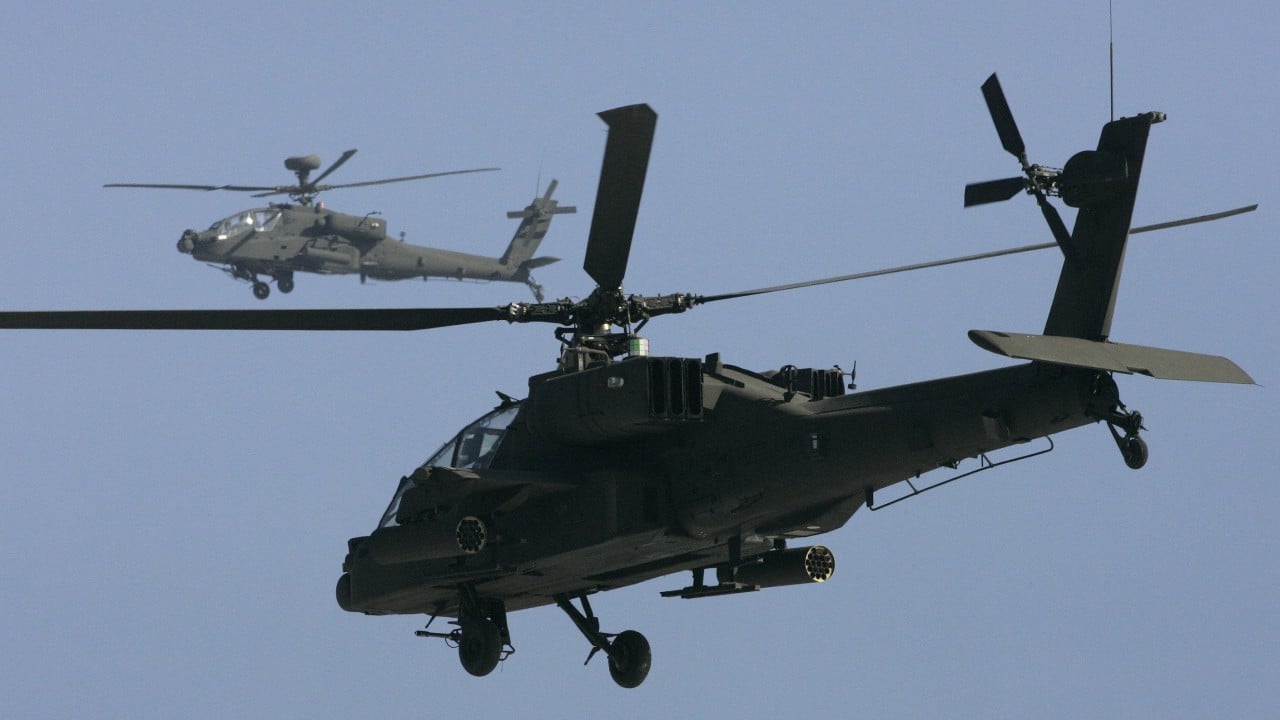
The downing of a United States Army AH-64 Apache helicopter over the Strait of Hormuz exposes the fragile equilibrium between military escalation and diplomatic settlement. While political rhetoric demands immediate retaliation, an objective strategic audit reveals that the event alters the tactical landscape far less than it tests the structural limits of asymmetric deterrence. The preservation of the two-pilot crew, executed via an unprecedented autonomous maritime recovery, underscores a critical divergence: while Iran can occasionally disrupt low-altitude tactical patrols, the United States maintains operational continuity through superior technology.
The incident highlights a fundamental structural tension within contemporary maritime conflict. Air assets enforce a counter-blockade to secure global energy transit, yet they must operate within the engagement envelopes of low-cost anti-air systems and autonomous aerial vectors. To understand the strategic trajectory following this engagement, the situation must be disassembled into its component logistical, kinetic, and diplomatic frameworks. Discover more on a similar topic: this related article.
The Operational Mechanics of the Low-Altitude Friction Point
The deployment of attack helicopters for maritime patrol functions as a direct counter-blockade mechanism. While fixed-wing carrier aircraft provide high-altitude surveillance and deep-strike capabilities, rotary-wing assets like the AH-64 Apache operate at lower altitudes to identify, track, and deter fast-attack craft and minelaying vessels. This specific operational posture introduces a severe vulnerability profile.
By operating closer to the surface, these assets enter the effective range of shoulder-fired man-portable air-defense systems (MANPADS), loitering munitions, and uncrewed aerial vehicles (UAVs). Preliminary reports indicating that an Iranian drone precipitated the crash point to an evolution in regional denial tactics: the utilization of low-cost, slow-moving autonomous platforms to disrupt sophisticated aviation assets through deliberate or circumstantial collision. Further journalism by Associated Press highlights related views on this issue.
The physical loss of the airframe represents a minor capital depreciation relative to the preservation of human capital. The survival of the two pilots directly determines the scope of the political response function. In asymmetric maritime warfare, the capture or death of military personnel serves as a force multiplier for domestic political pressure. Because the crew was recovered unharmed, the escalatory pressure on the executive branch changes from a mandatory retaliatory strike to a discretionary calculation of signaling.
Autonomous Resilience: The Task Force 59 Rescue Framework
The critical breakthrough of the engagement was not the kinetic loss, but the recovery mechanism. The extraction of the downed crew within a two-hour window by a Corsair unmanned surface vessel (USV)—operated by the U.S. Fifth Fleet’s Task Force 59—demonstrates a measurable reduction in combat search and rescue (CSAR) risk profiles.
Standard CSAR doctrine requires the deployment of secondary rotary-wing assets, escorted by fixed-wing close air support, to extract personnel from hostile environments. This traditional approach introduces a compounding risk loop, wherein the rescue force faces the identical threat vector that downed the original aircraft. Replacing the human crew of the primary rescue vehicle with an autonomous surface vessel alters the cost-benefit equation of force preservation in three distinct ways:
- Risk Abatement: The deployment of a surface drone eliminates the risk of secondary human casualties during the initial extraction phase.
- Response Velocity: Operating pre-staged autonomous surface units within high-threat corridors reduces the geographical baseline to the incident site, compressing the extraction window to under 120 minutes.
- Operational Signature Reduction: A low-profile surface drone presents a significantly smaller radar and visual cross-section than a standard rescue helicopter, mitigating the likelihood of a secondary engagement by adversarial coastal batteries.
This operational success proves that autonomous systems have transitioned from passive surveillance tools to active, mission-critical nodes in live combat environments.
The Strategic Trilemma: Sanctions, Strikes, and Ceasefires
The executive declaration that the United States must respond creates a policy bottleneck, occurring precisely as delicate bilateral negotiations approach an expected resolution. Executive leadership faces three conflicting objectives that cannot be achieved simultaneously:
                  [Preserve Strained Ceasefire]
                              /\
                             /  \
                            /    \
                           /      \
                          /        \
 [Enforce Deterrence] <--------------> [Reopen Maritime Transit]
Executing a high-intensity kinetic strike on Iranian drone manufacturing facilities or coastal radar sites would satisfy the requirement for deterrence. However, it would simultaneously dissolve the fragile ceasefire negotiated alongside regional mediators like Pakistan. Conversely, a purely economic or rhetorical response preserves the diplomatic track but risks signaling to the Islamic Revolutionary Guard Corps (IRGC) that low-level attrition against American assets carries no immediate military consequence.
This bottleneck is further complicated by the economic reality of the Strait of Hormuz. Because approximately 20% of global petroleum liquids pass through this choke point, any sustained kinetic exchange that triggers a complete closure of the strait creates immediate inflationary pressure on global commodity markets. The executive branch's calculus must therefore balance the political necessity of projecting strength against the economic vulnerability of Western energy supply chains.
The Limits of Signaling in Fragile Peace Negotiations
The immediate rhetorical posture adopted by leadership—telegraphing a mandatory response while emphasizing the safety of the pilots—functions as a deliberate exercise in strategic ambiguity. By announcing an intention to respond without specifying the vector, timing, or scale, the administration attempts to satisfy domestic political demands for action while maintaining the baseline stability required to finalize the pending diplomatic accord.
This strategy faces a severe structural limitation: adversarial actors interpret public hesitation or delayed responses as a systemic lack of resolve. Statements from internal Iranian leadership, such as those from the IRGC Aerospace Force emphasizing resistance to external pressure, indicate that Tehran views its anti-access/area-denial (A2/AD) capabilities as a legitimate source of leverage in the final phases of negotiation.
The escalation curve since the outbreak of hostiles on February 28 demonstrates that neither side desires an unconstrained conventional war, yet both sides remain trapped in a cycle of tactical friction. The loss of a single Apache helicopter does not tip the balance of power, but it illustrates that the cost of maintaining a naval counter-blockade increases the longer a comprehensive diplomatic settlement is delayed.
The optimal tactical play for the United States is to decouple the incident from the broader geopolitical theater by framing the response through a technological lens rather than a purely destructive one. Instead of launching visible, escalatory cruise missile strikes that would terminate the peace talks, the military apparatus will likely deploy targeted cyber disruptions against the command-and-control networks responsible for regional drone operations, alongside an accelerated deployment of Task Force 59 surface drones to permanently close the low-altitude operational vulnerability. This approach satisfies the strategic requirement for a technical cost imposition while preserving the diplomatic runway needed to secure the broader geopolitical objective of reopening the strait.