When thousands of teenagers chant slogans outside their high schools from eight in the morning until six at night, you know the system is breaking down. France isn't just dealing with routine civil disobedience right now. The country is staring down a deep structural crisis that has turned its classrooms into flashpoints and its streets into battlegrounds.
If you look past the burning bins and the police tear gas, you will find a generation of students who feel entirely abandoned by the state. They are angry, and frankly, they have every right to be.
What Sparked the Anger
The unrest didn't appear out of thin air. It started in mid-September with high school students demanding basic dignity. We are talking about overcrowded classrooms packed with 32 to 35 students, chronic teacher shortages, and exhausting daily schedules that leave young people with more hours of lessons than sleep.
When teenagers hold up banners reading "More hours of lessons than sleep," they aren't just complaining about homework. They are exposing a crumbling public education system that has been starved of resources.
Add to this the heavy pressure of Parcoursup—the centralized university admissions platform—and a worsening cost-of-living crisis, and you have a recipe for disaster. Prime Minister Sébastien Lecornu's government faced severe fiscal constraints and proposed major budget cuts, including public spending reductions that hit education hard. Students watched their futures get traded off for fiscal balance sheets. They decided to fight back by blockading school gates.
How Peaceful Demonstrations Escalated into Riots
Blockading lycées quickly spiraled out of control. As protests spread from Paris to cities like Lyon, Bordeaux, Nantes, and Marseille, opportunistic actors hijacked the movement.
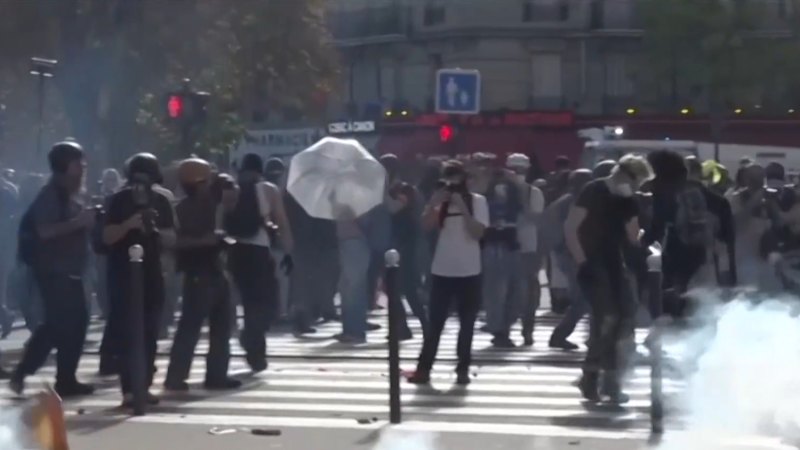
What began as legitimate student anger over school conditions mutated into urban violence. Masked agitators and ultra-left groups joined the crowds, throwing projectiles, setting fires, and clashing directly with law enforcement. In some extreme cases, police reported rioters throwing hydrochloric acid and petrol bombs at officers.
The government responded with overwhelming force. Interior Minister Laurent Nuñez deployed tens of thousands of security personnel, leading to widespread arrests, tear gas barrages, and hundreds of detentions. Critics, including United Nations human rights experts, quickly sounded the alarm over the excessive use of force by police against minors.
President Emmanuel Macron condemned the violence sharply, drawing a hard line between genuine student grievances and the rioters seeking to bring down republican institutions. Yet, ordinary citizens largely blamed the government for failing to de-escalate the tension before it boiled over. Polling showed that an overwhelming majority of the public held the state responsible for the explosive escalation.
The Political Fallout
This crisis reaches far beyond schoolyards. It serves as a stark symptom of le mal français—the persistent French malaise characterized by a profound lack of trust between citizens and state institutions.
Political extremes are capitalizing on the chaos. Hard-left politicians like Jean-Luc Mélenchon have rallied behind the youth, accusing the government of authoritarian crackdowns, while right-wing figures point to the unrest to push for stricter law-and-order policies. With the 2027 presidential elections looming, this generation of angry students represents a volatile bloc of voters. If the state continues to meet social grievances with baton charges rather than structural reform, it risks alienating an entire generation permanently.
The path forward requires more than temporary curfews and police cordons. Fixing French public education and addressing systemic inequality require genuine financial investment and political will. Until the government tackles the root causes of this anger, the tension on the streets will only simmer beneath the surface, waiting for the next spark.