Arrest tallies measure police throughput, not political stability or economic recovery. When nearly 2,400 people were detained during the mid-October 2026 unrest across France, raw headline figures treated mass street disorder as a simple clash between rioters and the state. Standard breaking-news reports compress complex multi-actor dynamics into dramatic quotes about "war" and vows of firm executive action.
To understand what actually broke—and why executive pledges rarely restore equilibrium on their own—this analysis decomposes the October 2026 crisis into four operational layers: the fiscal-social trigger, crowd-to-actor divergence, state intelligence and spatial control limits, and commercial damage propagation. Known facts come from official statements, local officials, and retail reports; any causal links beyond confirmed reports are explicitly marked as analytical hypotheses.
Deconstructing Competitor Logic
Conventional event coverage follows a predictable narrative arc: an alarming arrest count, vivid street imagery, condemnation from the president, and a binary split between peaceful demonstrators and violent actors. That framing is useful for rapid orientation, yet it leaves three analytical blind spots.
First, it treats street violence as an isolated law-and-order failure rather than a stress test of fiscal policy under political constraint. The unrest unfolded alongside cost-of-living frustration and government efforts to narrow the public deficit toward 5% of GDP in 2027 from a projected 5.4% in 2026. Second, it conflates arrest volume with strategic containment. Detaining nearly 2,400 individuals while nearly 1,000 police officers and gendarmes suffered injuries shows high operational friction, not necessarily a decisive drop in disruption capacity. Third, it under-specifies how localized assaults on municipal buildings and retail outlets compound into broader economic and electoral risk ahead of the 2027 presidential cycle.
The Four Drivers of the Unrest
Fiscal Squeeze and Grievance Mobilization
Known fact: Cost-of-living pressures and public service grievances fueled large demonstrations, coinciding with a deficit-reduction trajectory targeting 5% of GDP in 2027. Analytical hypothesis: When household purchasing power feels squeezed at the same time fiscal consolidation signals tighter budgets, grievances convert more readily into high-turnout street mobilization because citizens anticipate fewer near-term state cushions.
Crowd Composition and Opportunistic Escalation
Street protests rarely move as a single coherent unit. Officials, retail executives, and local witnesses distinguished broad cost-of-living demonstrations from masked groups attacking public structures and looting commercial premises across cities including Paris, Marseille, Lyon, Bordeaux, Lille, and Limoges.
- Grievance demonstrators: Mobilize around household expenses, public services, and economic strain.
- Violent and looting actors: Exploit crowd cover and stretched perimeters to damage municipal sites, set fires, or strip retail inventory.
- Bystanders and frontline staff: Face immediate physical risk, property loss, or evacuation disruption, as seen among shopkeepers, municipal workers, and visiting families.
The operational mechanism is cover-and-dispersion: large legitimate crowds draw police attention and create dense urban bottlenecks, lowering the immediate detection probability for smaller cohorts targeting specific storefronts or civic buildings.
Intelligence Gaps and Spatial Control Limits
Reports indicate President Emmanuel Macron acknowledged intelligence shortcomings while ruling out an immediate nationwide state of emergency and authorizing local officials to ban demonstrations where needed. In multi-city flare-ups, spatial control faces a resource allocation trade-off: concentrating personnel around high-symbol civic sites in one district can leave commercial corridors or secondary municipal offices exposed elsewhere.
When nearly 1,000 officers and gendarmes are injured over days of clashes, cumulative fatigue degrades reaction speed and perimeter integrity. Administrative bans on demonstrations can give prefects a legal lever to restrict flashpoints, yet enforcement depends on real-time situational awareness and sufficient deployable reserves.
Direct and Indirect Economic Cost Function
Measuring the economic toll of civil unrest requires separating immediate physical loss from second-order business drag. Known fact: Retail trade estimates cited by Le Monde warned that total damage could reach hundreds of millions of euros across more than 1,500 affected shops, while Carrefour's leadership reported 50 stores damaged—including 20 looted—with losses in the tens of millions of euros. Major chains and local merchants across multiple cities also faced ransacking, fire damage, and operational closures. Analytical hypothesis: Beyond physical repair and stolen stock, prolonged or recurring unrest imposes an "uncertainty tax" through shortened operating hours, higher security and insurance costs, and reduced foot traffic in central commercial districts.
Operational Playbook for Stabilizing Multi-City Unrest
Restoring order without inflaming broader grievance mobilization requires sequenced execution rather than single-lever responses.
- Separate crowd management from targeted interdiction. Use clear perimeter separation and pre-planned de-escalation zones for peaceful assemblies while directing specialized arrest teams at identifiable property-damage and looting actors.
- Pair local bans with transparent criteria. Where regional authorities prohibit demonstrations to protect buildings and commerce, publish objective spatial and time bounds so lawful dissent is not reflexively conflated with criminal destruction.
- Prioritize high-impact infrastructure and commercial nodes. Map municipal buildings, transit links, and high-density retail clusters by vulnerability and recovery lead time rather than spreading patrols evenly.
- Streamline post-incident business relief. Establish rapid loss-verification and working-capital bridges for affected independent shops and major employers so temporary closures do not become permanent exits.
- Address core economic grievances through credible policy trade-offs. Pair security measures with concrete discussions among unions, businesses, and local leaders that acknowledge real household pressures while stating fiscal constraints candidly.
Structural Limits and Trade-Offs
No tactical playbook eliminates the underlying tension in managing mass unrest. Aggressive crowd control risks injuring bystanders or protesters, hardening resentment and expanding recruitment into street mobilization. Conversely, overly permissive perimeters invite escalating property destruction and erode public confidence in state competence.
Economic relief carries its own trade-off: broad compensation or spending concessions can ease immediate social pressure, yet they collide directly with deficit-reduction targets. Fast-tracked prosecutions can project rapid accountability, though they face procedural and due-process scrutiny if evidentiary standards are strained.
Strategic Recommendation for Crisis Containment
Treat arrest counts and executive rhetoric as lagging indicators, and orient operational command around two leading metrics over the next 30 days: incident dispersion across secondary cities and commercial reopening continuity in affected retail corridors. Anchor public messaging on a strict operational boundary—protecting the right to lawful economic protest while executing rapid, intelligence-led interdiction against targeted arson, assaults on public property, and looting—backed by verifiable municipal and retail recovery milestones.
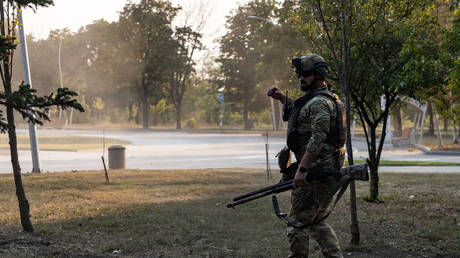
France engulfed in violent protests, nearly 2,400 arrested, President Macron vows "firm response"
This video report provides visual context on the scale of the October 2026 unrest, the arrest figures, and the official response examined in the analysis.