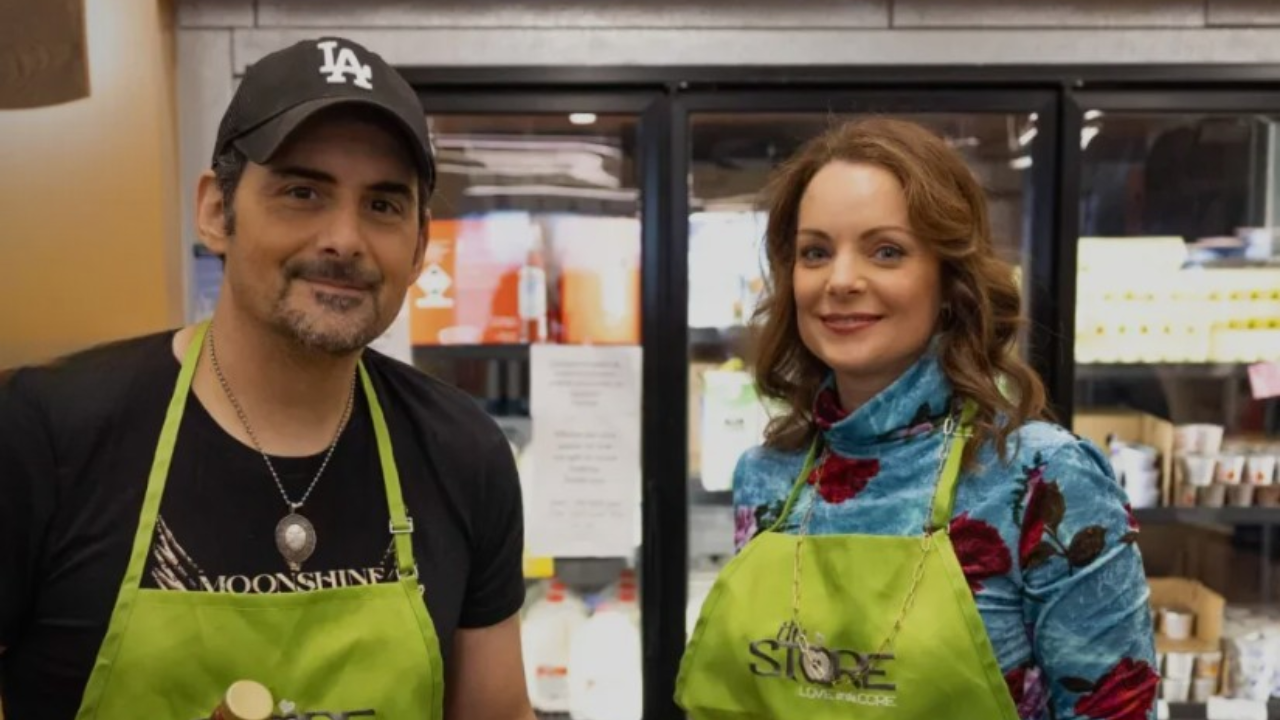
Celebrity-backed free grocery stores win headlines easily, yet a $1 million pledge in 2024 followed by a 2026 opening exposes a structural reality that feel-good coverage skips: retail-style food aid runs on high-friction unit economics where space, cold-chain labor, and referral bottlenecks limit scale far more than celebrity visibility. In August 2024, Brad Paisley and Kimberly Williams-Paisley pledged the first $1 million toward a $5 million campaign to expand The Store in Nashville, opening the second location on the campus of TriStar Centennial Medical Center in January 2026.
Standard coverage treats that timeline as a simple story of generosity meeting need. An operational analysis treats it as a case study in nonprofit retail engineering. When an organization moves from a single site to a multi-site footprint while facing a waitlist of more than 2,000 families and referrals from over 60 partner agencies, capital pledges only cover part of the problem. The real test is whether the operating model can clear demand without sacrificing perishable quality, volunteer reliability, or household budget relief.
Deconstructing Standard Coverage and Its Blind Spots
Typical human-interest reporting on The Store organizes around four familiar beats: founder inspiration, the choice-based shopping experience, wrap-around support services, and the multi-year fundraising arc from pledge to ribbon cutting. Those beats explain why the model feels distinct from a conventional food box distribution, yet they leave critical cause-and-effect links unexamined.
The first blind spot is capital versus operating permanence. A $1 million anchor pledge inside a $5 million campaign establishes build-out momentum and donor confidence, but brick-and-mortar grocery operations incur recurring expenses: refrigerated storage, restocking, utility loads, site administration, and wrap-around programming. Opening in January 2026 resolves the launch milestone, not the multi-year operating budget required to keep shelves stocked year-round.
The second blind spot is the gap between shopper preference and supply chain throughput. Public data from The Store indicates that 98% of regular shoppers choose fresh produce, 100% select foods or non-food items not typically available at traditional food pantries—such as refrigerated goods, frozen items, and household goods—and 97% redirect money saved on groceries toward other essentials like medicine, rent, or car repairs. Those figures prove strong demand-side utility, yet high selection rates on perishables increase shrinkage risk and inventory turnover pressure if procurement or volunteer shifts lag.
The third blind spot is referral capacity versus unmet demand. Because access runs through referrals from partner nonprofits and agencies—and hospital staff at TriStar Centennial previously spent their own money helping food-insecure patients—the store acts as a downstream fulfillment node for institutions already seeing distress. Even with a second site open in 2026, a waitlist exceeding 2,000 families shows that physical capacity expands in discrete steps while household food insecurity in Nashville remains widespread.
The Operating Architecture of a Referral Grocery Model
To evaluate a free grocery store rigorously, strip away the retail illusion and examine the four operational pillars that govern performance.
- Demand Gating and Referral Routing: Eligibility is routed through partner agencies rather than walk-up anonymity. This mechanism targets households navigating temporary or acute financial strain and ties food access to broader social services, though it introduces administrative coordination between referring organizations, shoppers, and store staff.
- Assortment and Cold-Chain Engineering: Stocking fresh produce, meat, dairy, frozen goods, and household staples requires temperature control, shelf-life rotation, and balanced purchasing. Unlike shelf-stable dry goods, fresh inventory degrades quickly if foot traffic dips or deliveries bunch up.
- Labor Mix and Shift Reliability: Operating a store across set weekly shopping windows—such as Wednesday through Saturday hours at The Store's Centennial location—depends on a small core staff paired with large numbers of volunteers who assist with shopping, bagging, child engagement, and resource referrals. Volunteer labor lowers payroll cost per shopper hour, but high reliance on unpaid shifts creates scheduling variance during peak seasons or weather disruptions.
- Co-Located Wrap-Around Services: Pairing groceries with budgeting, nutrition education, counseling, or healthcare-adjacent referrals turns a single transaction into a multi-touch intervention. Co-location reduces travel friction for families, yet every added service competes for floor space, staff bandwidth, and shopper time.
Why Hospital Co-Location Changes the Economics
Placing the second site on the campus of TriStar Centennial Medical Center alters both the cost structure and the referral pipeline. Reportedly located on the ground level of the hospital's B Garage at 23rd Avenue North, the space leverages an existing institutional footprint rather than requiring a standalone ground-up commercial parcel.
Hospital leadership noted that staff members had previously paid out of pocket to help patients get food and clothing. Connecting clinical settings with a structured grocery site addresses a practical cause-and-effect problem in household budgets: when families face medical bills, reduced work hours, or recovery costs, food is often the flexible line item they cut first. Still, hospital proximity does not automatically solve transportation for households living far from midtown Nashville, nor does it guarantee that clinical referrals align cleanly with store operating hours.
Economic Trade-Offs and Causal Chains in Free Retail Aid
A common assumption in philanthropy is that giving shoppers grocery-aisle choice automatically makes aid more efficient. In practice, choice-based free retail introduces specific trade-offs that operators must manage deliberately.
Choice lowers stigma, which can raise repeat engagement and retention. When households browse shelves instead of receiving a pre-packed box, the interaction resembles normal commerce. That dignity effect matters clinically and socially: households are more likely to use food that fits cultural habits, cooking skills, and dietary needs rather than discarding unfamiliar items.
Higher item-level choice increases inventory complexity. A pre-packed box standardizes unit costs and simplifies forecasting. An open-aisle model exposes every SKU to uneven draw—popular proteins, dairy, and fresh produce clear fast while slower-moving items linger. Without disciplined inventory tracking and donor/purchasing alignment, popular categories run out early in a shopping window, forcing late-session shoppers into narrower options.
Household budget substitution works in two directions. When 97% of regular shoppers report using grocery savings to cover medicine, rent, car repairs, or other essentials, the subsidy functions as indirect income support. That relief stabilizes households—keeping a car running preserves commute access to work, and paying prescriptions prevents acute health flare-ups. At the same time, it means grocery aid alone cannot resolve structural housing or wage deficits once temporary support ends.
Visible milestones create a fundraising halo, not an automatic operating surplus. Launching a second site in January 2026 after a 2024 pledge gives donors a concrete physical asset to rally around. Subsequent benefit events, such as spring 2026 fundraisers raising hundreds of thousands of dollars, show how celebrity events keep cash flowing. Yet event-driven revenue is episodic, whereas cold storage, staffing, and food replenishment are continuous.
Known Facts Versus Educated Hypotheses
Separating verified facts from analytical hypotheses keeps any evaluation of this model grounded:
- Known Facts: Brad Paisley and Kimberly Williams-Paisley co-founded The Store in Nashville, pledged $1 million in August 2024 toward a $5 million campaign for a second site, and opened the location on the TriStar Centennial Medical Center campus in January 2026. The organization operates through agency referrals, offers choice-based shopping with fresh and household items, provides wrap-around supports, reports high rates of fresh-produce selection and household budget relief among regular shoppers, and faces a waitlist exceeding 2,000 families. Exact per-square-foot build-out costs, average basket dollar values, and exact annual operating budgets for the new site are not publicly broken down in available reporting.
- Educated Hypotheses: Co-locating at a major medical center likely lowers real estate acquisition friction compared with greenfield retail development and strengthens warm referrals for patients facing acute financial shocks, though parking, transit access, and fixed shopping hours will still cap throughput for some households. Furthermore, as total capacity grows across two locations, SKU-level forecasting and recurring monthly giving will likely matter more to shelf consistency than one-time capital pledges.
Step-by-Step Diagnostic for Evaluating Free Grocery Expansion
Leaders, funders, or municipal planners assessing a choice-based free grocery model can apply a five-step diagnostic before committing capital:
- Audit Unmet Referral Velocity: Measure active referrals per week, average time spent on the waitlist, and reasons applicants drop off before their first shop. A large waitlist signals capacity constraints, but drop-off rates reveal whether scheduling or transit barriers are blocking access.
- Map Perishable Shrinkage Against Shopper Mix: Track how quickly fresh produce, refrigerated proteins, and dairy turn over across shopping days and hours. Compare item availability at the start and end of each session to see whether stockouts force suboptimal substitutions.
- Stress-Test the Labor Ratio: Pair paid staff hours with scheduled and actual volunteer attendance across a full quarter. Identify which tasks—such as cold-chain receiving, intake screening, or resource navigation—break down when volunteer turnout drops by 20%.
- Separate Capital Build-Out From Recurring OpEx: Model the three-to-five-year cost of utilities, refrigeration maintenance, replenishment purchases, and wrap-around staff separately from initial construction or fit-out pledges. Verify what share of recurring costs is covered by predictable monthly donors versus one-off galas.
- Define Graduation and Overflow Pathways: Establish clear criteria for how long households shop, how they transition to self-sufficiency or public benefits, and where overflow demand routes when slots are full. Without clear exit and overflow pathways, waitlists compound indefinitely.
Limitations and Strategic Play
No single nonprofit grocery store—even with high-profile founders and hospital backing—can eliminate regional food insecurity on its own. Space constraints in urban corridors, perishable waste risks, volunteer burnout, and broader housing or wage pressures set hard ceilings on what a retail-style pantry can absorb. Models built around dignity and choice excel at restoring household agency and freeing up tight family budgets in the short-to-medium term, provided they do not confuse retail aesthetics with unlimited scalability.
Strategic Play: Treat the new hospital-campus location as an operational proving ground to standardize repeatable replication rather than a standalone trophy site. Pair every future capital pledge with a dedicated three-year operating reserve for perishable procurement and core staffing, publish transparent throughput metrics—such as active households served per month, waitlist movement, and perishable fill rates at closing time—and build formal referral-and-overflow agreements with regional food banks and clinics so families on the waitlist receive immediate interim support while awaiting a full shopping slot.