Geopolitics rarely features remote, windswept fishing islands, but Saint Pierre and Miquelon recently found itself shoved into the center of a transatlantic storm. When a published map from Washington slapped an American flag over the tiny French archipelago just off the coast of Newfoundland, it wasn't just a cartographic error. It was a wakeup call.
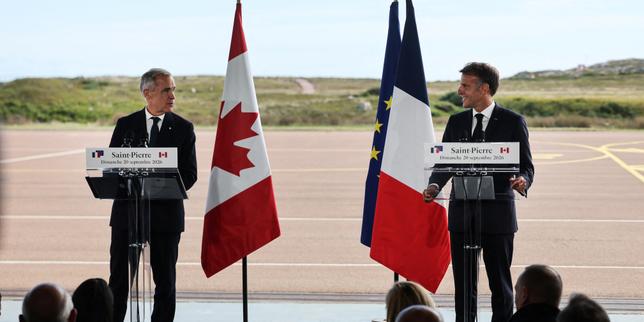
French President Emmanuel Macron and Canadian Prime Minister Mark Carney didn't issue standard diplomatic memos. Instead, they flew straight to the rocky outcrop for a high-profile summit. The message was blunt. Borders on America's doorstep aren't up for reinterpretation, and middle powers are done tiptoeing around sudden territorial posturing from the White House.
Geography as a Political Weapon
Saint Pierre and Miquelon spans roughly 242 square kilometers and houses fewer than 6,000 residents. Historically, it survives as the last surviving fragment of New France in North America. For decades, it functioned as a quiet fishing community living peacefully in the shadow of its massive neighbors.
Then came the map changes and escalating tariff disputes pushed by Donald Trump’s administration. By treating a European overseas collectivity as an expendable asset, Washington crossed a line that forced Paris and Ottawa into an immediate alliance of convenience and necessity.
Macron’s response was direct. Standing on the island's tarmac, he made it clear that French sovereignty isn't a negotiating chip. You don't redraw international boundaries on a whim, and treating European territories like real estate acquisitions triggers instant pushback.
Why Canada and France Need Each Other Right Now
Canada faces relentless pressure from southern trade policies and unpredictable shifts in American foreign policy. Prime Minister Carney has used the moment to rally European allies, arguing that middle powers must band together to defend established international norms.
When France and Canada stand shoulder-to-shoulder on a windy rock in the North Atlantic, they are doing more than protecting local fishing rights. They are signaling that North American geography doesn't belong exclusively to Washington's sphere of unilateral control.
Ottawa understands that standing alone against economic coercion is a losing battle. Paris wants to prove that the European Union maintains strategic reach well beyond its immediate continental borders.
The Broader Fallout for Transatlantic Relations
This isn't just about a minor archipelago. It highlights a growing fracture in how modern superpowers interact with smaller sovereign entities. When sovereignty gets treated casually, alliances fray.
The summit on Saint Pierre and Miquelon proves that secondary powers are finding new ways to project unity. Expect more bilateral alignments that bypass traditional Washington-centric channels as nations seek stability in an increasingly volatile trade and security climate.
Watch how Ottawa and Paris formalize their joint maritime and economic frameworks in the coming months. The era of quiet diplomacy is over.


