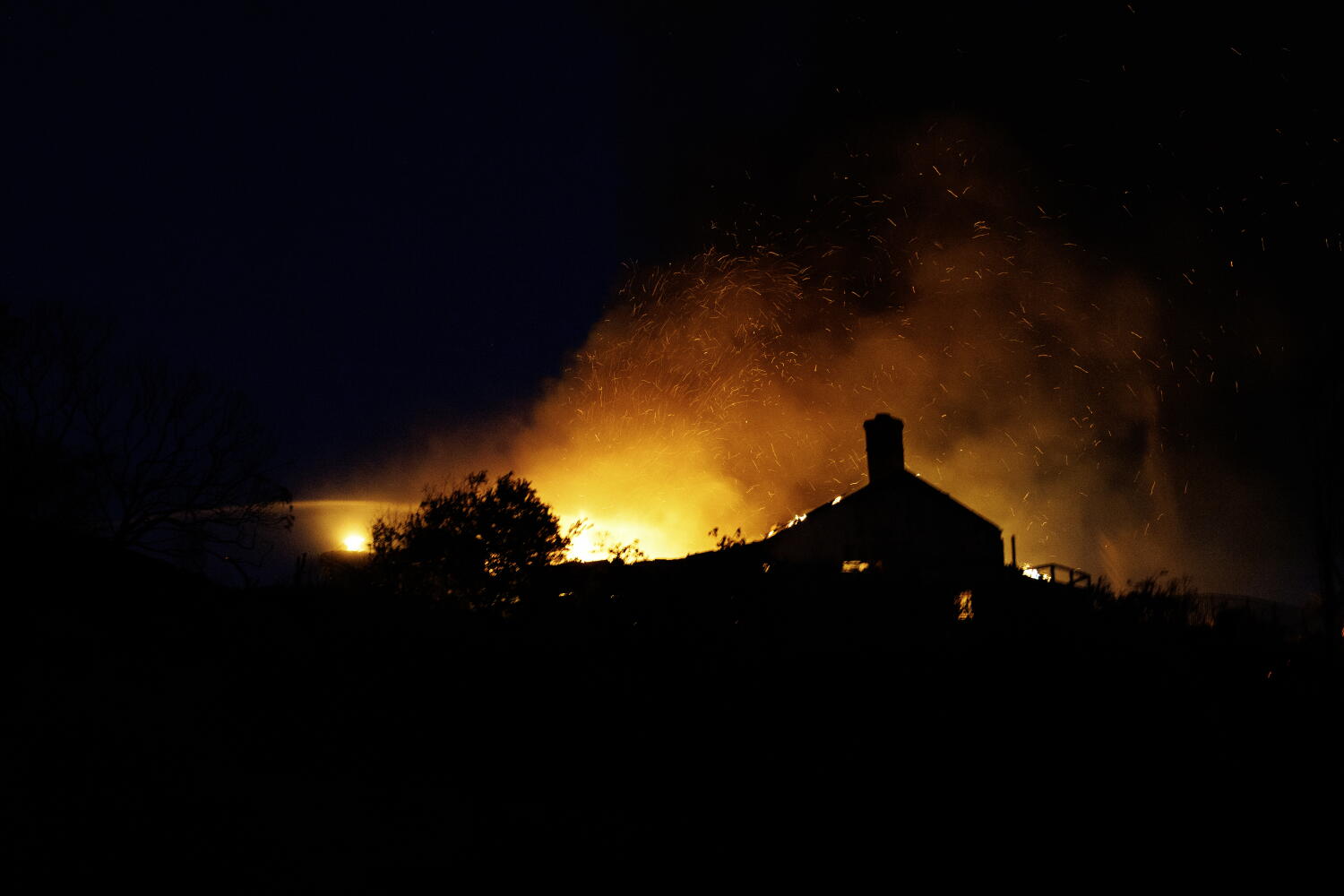
Dawn arrives in Yemen with the dry scrape of wind across basalt stone and the metallic clatter of a diesel generator coughing back to life. It is a sound that has accompanied a decade of fractured hope, shifting front lines, and promises made in distant capitals that rarely survive contact with high-altitude dust.
Ask a military analyst whether Yemen’s government forces can sustain an offensive against the Houthis, and the answer usually arrives as a ledger of equipment, troop counts, and diplomatic backing. Tanks. Drones. Coalition air cover. Rations. On paper, a push forward looks like geometry on a map.
On the ground, it feels like carrying water in a woven basket.
I have stood along dusty ridges in the southern highlands where the air smells of cordite, cumin, and dry scrub, watching young men check magazines with fingers calloused from farm tools rather than parade drills. You do not need a briefing book to feel the strain in a place like that. You feel it in how quietly people speak when a pickup truck rolls past at night, and in the way every shopkeeper keeps one eye on the road and one eye on the price of flour.
Let’s be honest about what makes this conflict so exhausting to follow from afar. Even people who care deeply often throw their hands up and ask how a country with so many factions, truces, and foreign sponsors can possibly move forward without collapsing again. That confusion is real. The alliances shift like desert sand, and the names of provinces and commanders blur together until the whole war starts to sound like a loop with no exit.
Yet behind every stalled advance or sudden push are ordinary people trying to figure out whether tomorrow will bring bread or shelling.
Why Front Lines Rarely Hold Without Roots
To understand whether Yemen’s government forces can push back against the Houthis and actually hold ground, you have to look past the headlines about fresh offensives and ask a harder question. Who pays the soldier when the cameras leave?
(Note: The following portrait of a frontline soldier and his family is a composite hypothetical scenario built to illustrate verified conditions faced by troops and households across Yemen’s contested front lines.)
Picture Tariq, a thirty-two-year-old infantryman stationed near a contested valley edge outside Taiz. His boots are held together with stitched leather and grit, and his phone only catches a weak signal when he climbs halfway up a rocky outcrop before sunrise. Tariq wants the Houthis pushed back from the roads that choke his home district. He wants his younger brother to finish school without fear of a stray mortar shell.
What Tariq does not have is certainty. Over the years of Yemen’s civil war, government-aligned forces have repeatedly suffered from irregular pay, rival chains of command, and supply lines stretched thin across rugged terrain. When a paycheck arrives three months late, or when one brigade answers to a local patron while another answers to a presidential council or a regional partner, courage alone cannot carry a campaign indefinitely.
Think of an offensive like lighting a match in a gusty canyon. A sudden flare can illuminate the rocks and drive back shadows for a few minutes. Sustaining the flame requires dry wood, shelter from the wind, and someone tending it at three in the morning when everyone else is asleep.
In military terms, sustainment is the unglamorous twin of momentum. It means fuel tankers reaching mountain passes without ambush, field medics having bandages and antibiotics when shrapnel flies, and commanders sharing intelligence rather than guarding turf. Without those pieces locked together, an advance can stall just a few miles past its starting line, leaving exhausted troops exposed in unfamiliar territory.
The Houthis, by contrast, have long relied on disciplined ideological mobilization, tight internal security, and hardened supply networks—including external support—that allow them to absorb heavy losses and strike back asymmetrically. Pushing them out of strongholds is not a matter of a single weekend push. It is a grinding test of endurance across mountains, wadis, and urban fringes where every ridge has been fought over before.
The Invisible Stakes Behind Every Map Shift
When outside observers talk about Yemen’s government forces going on the offensive, the conversation often pivots quickly to regional security. Shipping lanes in the Red Sea and the Gulf of Aden matter to global trade, and missile or drone threats reverberate far beyond the Arabian Peninsula.
Those stakes are real. Nobody who has watched freighters reroute or heard sirens echo across ports can pretend this war stays neatly inside Yemen’s borders.
Still, there is a quieter stake that rarely makes the opening paragraph of a foreign policy memo. It is the cost paid inside kitchens, clinics, and crowded rooms where families stretch a single sack of grain across weeks.
Consider what happens when a front line shifts near a market town. Even a successful push by government forces can bring immediate disruption. Roads close for clearing or fortification. Prices jump overnight. Families pack children and rolled mattresses into the back of a truck, hoping a relative in another town has room for five more people on a tile floor.
For more than ten years, Yemen has endured one of the world’s worst humanitarian crises, marked by severe food insecurity, damaged water and health infrastructure, and millions of displaced people. Even during calmer stretches or fragile truces, the economy has remained battered by currency divisions, revenue disputes, and fractured state institutions.
So when a new offensive is rumored or launched, civilians do not simply cheer or despair in the abstract. They calculate. If fighting flares along this corridor, will the water truck still come on Thursday? If a checkpoint changes hands, will the tax or tariff at the next junction double the price of cooking oil?
A sustainable military push cannot ignore that civilian ledger. An offensive that leaves behind lawlessness, unpaid local police, or broken markets breeds resentment faster than it builds legitimacy. Liberation—or recapture—only lasts if residents feel safer six months later than they did the week before.
Fragmentation Inside the Anti-Houthi Camp
One of the hardest truths about Yemen’s government side is that "government forces" is rarely a single, seamless machine. It is a coalition of necessity.
Over the course of the war, anti-Houthi forces have included regular army units aligned with the internationally recognized government, tribal levies, resistance fighters from Taiz and Marib, and distinct regional formations such as forces backed by the United Arab Emirates along the coast and in the south, including groups tied to the Southern Transitional Council. Each faction has its own history, grievances, and political vision for Yemen’s future.
Imagine trying to row a heavy wooden dhow across a choppy strait when half the crew wants to head north toward Sanaa and the other half wants to steer south toward Aden. Even if everyone pulls hard at the same time, the boat spins if the oars aren't synced.
Political unity at the top—such as the formation of the Presidential Leadership Council—has tried to pull those oars into rhythm. Yet political agreements in Riyadh or Aden do not automatically erase years of distrust on the ground. Competing priorities over territory, port revenues, and post-war authority can slow down joint operations right when speed matters most.
At the same time, external backers have their own calculations. Saudi Arabia and the UAE have played major roles in shaping the conflict through air power, funding, training, and diplomatic maneuvering, while their own regional interests and risk tolerances have evolved over the years. When foreign support waxes or wanes, local commanders feel the tremor immediately in fuel allocations, ammunition stocks, and diplomatic cover.
Can a fractured coalition sustain a major offensive against a cohesive opponent? Only if shared survival outweighs rival ambition—and only if logistics, intelligence, and command stay aligned long enough to turn tactical gains into strategic leverage.
What Sustainment Actually Looks Like on the Ground
Suppose you strip away the slogans and look at what it takes for Yemen’s government forces to maintain pressure on the Houthis without burning themselves out.
First comes predictability. Soldiers fight better—and desert less—when they know their families are eating and their own pay isn't vanishing into bureaucratic black holes. Regular salaries, transparent payrolls, and dependable food and medical supplies turn a collection of armed men into a durable force.
Second comes integration. Coordination between regular military units, local resistance fighters, and southern or coastal forces has historically been uneven. Real sustainability means clear lines of command, shared communications, and agreed-upon roles once a town or mountain pass is secured, so allies don't turn their rifles toward one another after the front moves on.
Third comes governance. A military advance that isn't followed by basic administration is just a raid. Restoring local courts, protecting markets, repairing power or water lines, and offering amnesty or reintegration pathways where appropriate help turn reluctant locals into stakeholders rather than hostages.
None of this is easy. None of it happens overnight. Anyone who claims there is a quick military shortcut in Yemen is selling an illusion. The terrain alone—jagged peaks, narrow valleys, scorching plains—favors defenders who know every goat path and ambush point.
Yet history also shows that stalemates in Yemen are rarely permanent. Shifts in regional diplomacy, economic pressure, internal Houthi strains, or sudden tactical openings can change the equation faster than analysts expect. When an opportunity opens, the side that has done the quiet homework of logistics, discipline, and local trust is the one positioned to hold what it takes.
Out on that high ridge at dusk, the wind drops and the rocks hold the day’s heat for just a little longer. A lantern flickers inside a stone shelter, throwing a warm, trembling square of light against rough masonry while distant hills fade into slate blue. Tariq sits with his back to the wall, sharing sweet black tea from a chipped glass, listening to the quiet and wondering which road will open—or close—by morning.