The jungle does not yell. It whispers.
When you step off the marked trail in the Malaysian rainforest, the silence changes first. The chatter of fellow hikers fades into a thick, heavy dampness. Then the panic sets in. It starts as a flutter in the chest, a sudden realization that every direction looks identical. Trees bleed into trees. Ferns swallow footsteps. Within minutes, the modern world—with its GPS, clean water, and predictable schedules—completely evaporates. For an alternative perspective, check out: this related article.
Most people look at a headline about a missing hiker and see a statistic. Two weeks. Fourteen days. It sounds like a finite, manageable block of time when you are reading it from a screen in a brightly lit room. But time in the deep bush stretches. It distorts.
To survive fourteen days alone in the dense tropical terrain of Malaysia is not just a feat of physical endurance. It is a psychological war against total isolation, dehydration, and the overwhelming urge to give up. Related analysis on the subject has been published by National Geographic Travel.
The Trap of the Canopy
Imagine the heat. It is not a dry, baking desert heat, but a suffocating moisture that clings to your skin like a wet blanket. The humidity rarely drops below eighty percent. Your clothes are constantly soaked, not from rain, but from your own sweat, which refuses to evaporate.
In this environment, water is your first and most brutal enemy.
Statistically, a human being can survive for about three days without water. In the intense heat of the Malaysian jungle, that window shrinks drastically. Dehydration sets in with terrifying speed. First comes the dry mouth, then the pounding headache, followed closely by confusion. When a hiker goes missing, the search and rescue teams know they are racing against a biological clock that ticks loudest in the kidneys.
But finding water in a rainforest is paradoxically difficult. While it rains frequently, drinking stagnant pool water can be a death sentence. Parasites and bacteria thrive in the warm mud. To drink from the wrong puddle is to invite severe dysentery, which accelerates dehydration and saps the last remnants of physical strength.
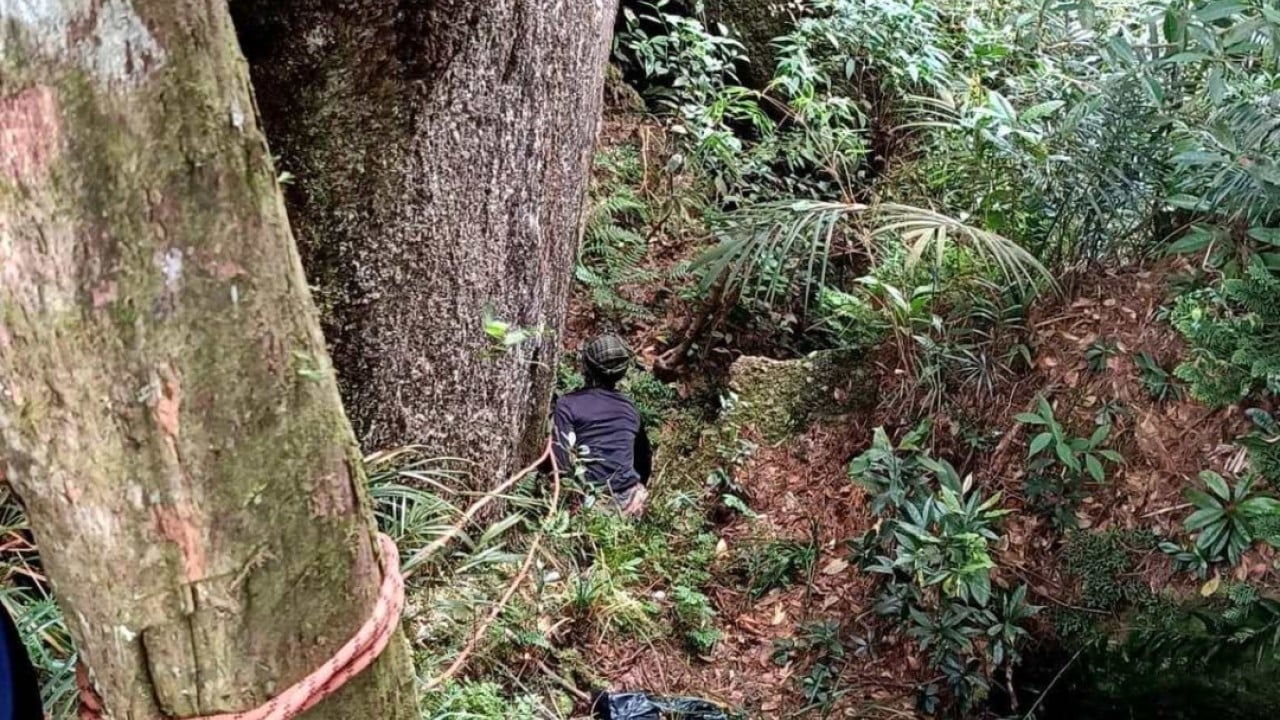
Consider the sheer geography of the search area. The dense canopy blocks out the sun, making it impossible to navigate by the sky. Aerial search teams using helicopters or drones struggle to see through the thick layers of leaves. A person standing on the forest floor is entirely invisible from fifty feet above.
You are completely on your own.
The Chemistry of the Forest Floor
When the initial water crisis is managed—perhaps by catching rainfall on broad leaves or finding a fast-moving stream—the next enemy is caloric depletion. The human body is a furnace. Without fuel, it begins to consume itself.
This is where the wild berries enter the story.
To the untrained eye, the jungle looks like a buffet. To a survivalist, it is a minefield. The Malaysian rainforest is home to thousands of plant species, many of which carry toxic alkaloids designed to deter animals from eating them. A single handful of the wrong fruit can cause violent vomiting, blindness, or cardiac arrest.
Survival in this scenario requires a brutal form of dietary triage.
Jungle Foraging Risk Matrix
+-------------------+-------------------------+------------------------+
| Plant Type        | Visual Indicators       | Risk Level             |
+-------------------+-------------------------+------------------------+
| Bright Red/Yellow | High Visibility         | Extreme (Often Toxic)  |
| Milky Sap         | White sticky fluid      | High (Skin/Gut Irritant)|
| Aggregated Berries| Blackberry-like clusters| Moderate (Contextual)  |
+-------------------+-------------------------+------------------------+
Hypothetically, let us assume a lost hiker encounters a bush of wild, unfamiliar berries. The internal debate is agonizing. Eating them might provide life-saving glucose. It might also kill you by morning.
True survival often relies on the universal edibility test, a slow, painstaking process. You rub the fruit on your wrist to check for a rash. You touch it to your lips to check for burning. You taste a tiny portion and wait hours to see if your stomach rebels. When you are starving, this level of discipline feels almost impossible to maintain. Every instinct screams at you to swallow everything you can find.
The hiker who survived two weeks on berries mastered this discipline. They traded the risk of acute poisoning for the slow, agonizing drip of minimal caloric intake. It was enough to keep the brain functioning, enough to keep the heart beating, but barely enough to move.
The Mental Collapse
The physical toll is only half the battle. The real rot happens in the mind.
Human beings are intensely social creatures. Take away all human contact, submerge a person in an environment where everything—from the leeches underfoot to the mosquitoes in the air—is trying to consume them, and the mind begins to fracture.
By day four, auditory hallucinations are common. The rustle of a wild boar in the brush sounds like a rescue team calling your name. You run toward the sound, tripping over exposed roots, wasting precious energy, only to find more green silence. The disappointment is crushing. It breaks people more effectively than hunger ever could.
Sleep is elusive. The jungle at night is louder than it is during the day. Insects buzz in a deafening chorus. Larger predators, like sun bears or leopards, are rare but ever-present in the back of the mind. The ground is hard, wet, and crawling with life. Sleep deprivation compounds the confusion caused by dehydration.
At this stage, the biggest hurdle is not finding food. It is staying still.
The natural impulse when lost is to keep moving, to walk until you find a road or a village. But in a dense forest, moving without a compass almost always results in walking in massive, futile circles. It wastes energy and moves you further away from the last known location where search parties are looking.
The miracle of this fourteen-day survival story lies in the decision to stop. To find a water source, to establish a basic shelter from the torrential afternoon downpours, and to wait. It requires a terrifying level of acceptance. You must accept that you are lost, accept that help may not come today, and focus entirely on the next hour.
The Return to the Light
When the rescue team finally breaks through the brush, the transition is jarring.
A body that has spent two weeks in survival mode does not immediately recover. The skin is typically covered in insect bites, infected scratches, and trench foot from the constant moisture. The digestive system, accustomed to nothing but water and wild fruit, cannot handle solid, complex food. The recovery process in a hospital ward is slow, requiring intravenous fluids and careful refeeding protocols to prevent metabolic shock.
But the physical wounds heal much faster than the psychological ones.
Long after the mud is washed away and the weight is regained, the jungle stays with you. A sudden power outage, the sound of heavy rain on a tin roof, or the sight of a dense wall of trees on the side of a highway can bring the green darkness rushing back.
We read these survival stories because they offer a glimpse into the raw boundaries of human capability. They remind us that beneath our layers of technology, concrete, and convenience, there remains an ancient, stubborn will to live. A will that can look at a wall of hostile, impenetrable green for fourteen days, pick a handful of bitter berries, and choose to survive.
The forest floor is quiet again. The leaves have closed up where the hiker once lay. But the damp earth remembers the weight of a person who refused to become part of the scenery.