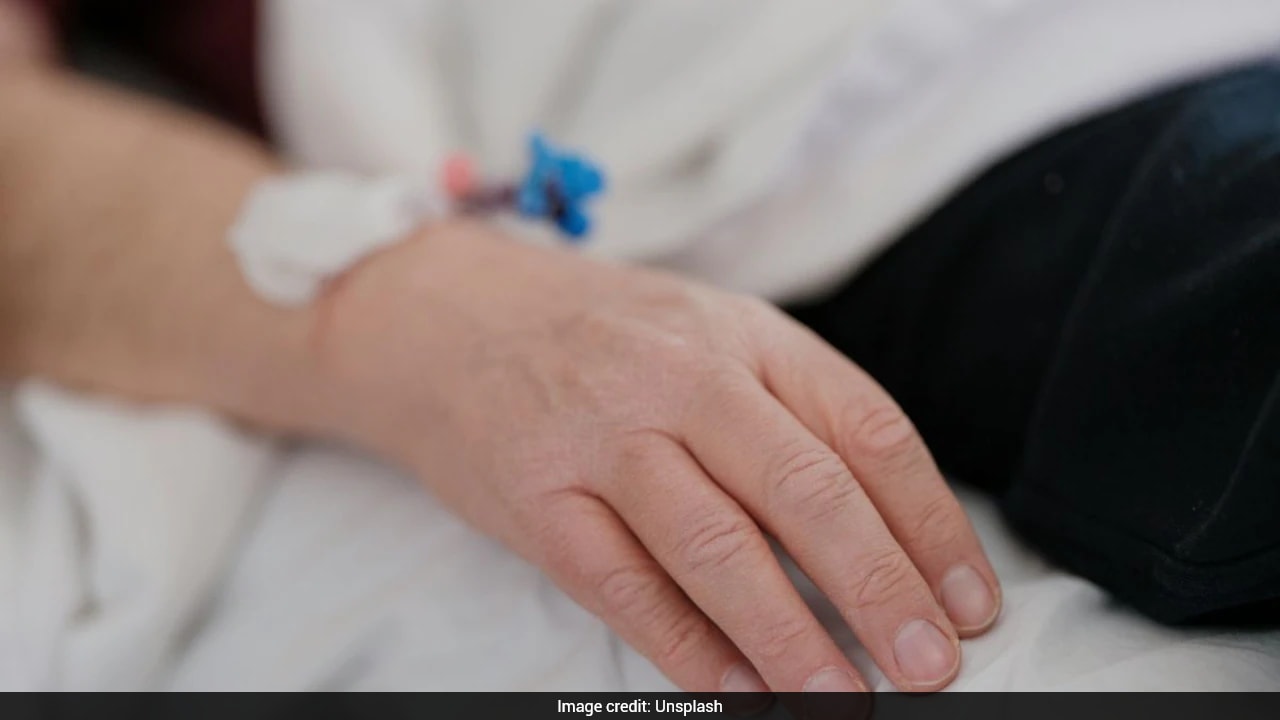
The hospital gown did not fit. It was too small for his frame, the thin fabric rustling like dry leaves every time he shifted on the plastic-covered mattress. But on a humid morning in Kampala, that cheap piece of blue cotton was the most valuable garment in East Africa.
For weeks, the Congolese national had been a number. He was the "last confirmed case," a designation that stripped him of his name but laden him with the weight of an entire nation’s economy. When the pen finally scratched across the official discharge certificate at the Mulago National Referral Hospital, the silence in the isolation ward seemed to fracture.
He was free. But his country was still locked inside a cage of warnings, advisories, and cancelled flights.
To understand the quiet anger vibrating through the halls of Uganda’s Ministry of Health, you have to look at the scoreboard of global panic. When a highly infectious pathogen crosses a border, a predictable sequence of gears begins to turn in western capitals. Satellites don’t blink, but bureaucracies do. Swiftly, almost automatically, the red lines are drawn on maps.
This time, the red line was a Level 4 travel advisory from the United States, placing Uganda in the same category as war-torn Somalia, isolated North Korea, and active combat zones in Ukraine.
To the business owner in Entebbe whose safari vehicles are currently gathering dust under acacia trees, that classification is not just cautious. It is devastating. It equates a highly localized, aggressively managed health crisis with systemic state collapse.
The math of the outbreak tells a story that the travel bans completely ignore.
The Bundibugyo strain of the Ebola virus is a brutal enemy. It does not compromise. Yet, when the final tallies were audited, Uganda’s containment strategy yielded a case fatality rate of less than ten percent. In the dark history of filoviruses, where mortality rates routinely climb past fifty percent, a single-digit death toll is not a stroke of luck. It is a masterclass in clinical discipline.
Consider the mechanics of how this happened. Long before the first patient crossed from the Democratic Republic of the Congo, Ugandan medical teams had already pre-positioned isolation tents, stockpiled protective gear, and run drills in border communities. They did not wait for the fire to start before looking for the hose. When the spark arrived, they smothered it.
Twenty cases. Two deaths.
In any other context, these numbers would be celebrated as an extraordinary triumph of public health infrastructure. Instead, fifteen countries responded by shutting their virtual borders.
The irony is thick enough to choke on. By punishing transparency with economic isolation, the international community incentivizes the very thing it fears most: silence. If a nation knows that declaring an outbreak will immediately result in empty hotels, stranded cargo, and a ruined currency, the temptation to look the other way becomes immense.
Dr. Chris Baryomunsi, Uganda’s health minister, stood near the exit of the isolation ward, his face a mix of exhaustion and resolve. He was not merely celebrating a recovery; he was launching a diplomatic offensive.
"As we make progress in managing this disease, we are engaging and asking those countries with a view to opening up so that the economy does not get injured," he remarked, choosing his words with the careful precision of a man trying to negotiate a hostage release.
But the real problem lies elsewhere. The virus does not respect borders, even if politicians do. Just across the frontier, in the dense forests of the eastern DRC, the outbreak continues to simmer. The numbers there are not single digits; they are a grim, rising ledger of lives lost.
Because of this, the discharge of the last patient in Kampala does not trigger a victory lap. It triggers a clock.
Forty-two days.
That is the magic number decreed by the World Health Organization. Two full incubation periods of twenty-one days. Every single day must pass without a new cough, a sudden fever, or an unexplained drop in platelets anywhere within the country’s borders.
If a single case appears on day forty-one, the clock is smashed, and the countdown resets to zero.
Imagine the tension of that wait. Every health worker in the country is now an sentry. Every border post is a potential tripwire. In the villages along the western frontier, community health teams are watching for the subtle signs: a traveler with a dry throat, a child who seems unusually lethargic.
The state of high alert is exhausting. It is expensive. And it is made infinitely harder when the resources needed to sustain it are being choked off by travel bans designed to protect people thousands of miles away who face zero actual risk.
The discharged patient walked out of the Mulago clinic into the bright mid-morning sun. He held his certificate of discharge tightly, the paper slightly crumpled in his hand. To his neighbors, that paper is his shield against stigma, a formal declaration that he is no longer a vessel of dread.
But as he stepped into the vehicle waiting to take him home, the skies above Entebbe Airport remained largely empty of the international travelers whose dollars keep the country's conservation efforts and clinics funded.
The patient is cured. The country, however, remains in quarantine.