International football is no stranger to backdoor politics, but the latest drama surrounding FIFA President Gianni Infantino has crossed a line that European lawmakers can't ignore. What started as a standard disciplinary red card on the pitch has exploded into a geopolitical standoff involving the White House, the European Parliament, and the fundamental rules of the sport.
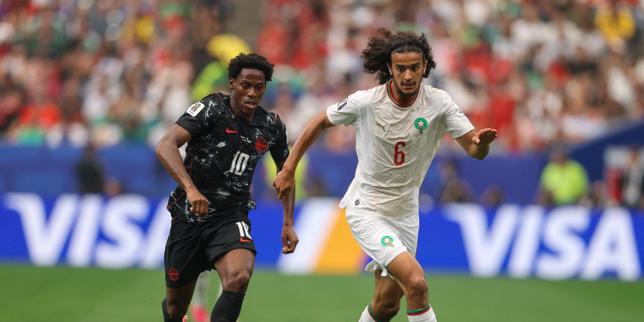
At the center of the storm is US national team striker Folarin Balogun. He was sent off with a straight red card during a tense match against Bosnia and Herzegovina. Under standard global football rules, a red card triggers an automatic one-match ban. It is non-negotiable. Yet, days later, Balogun was running out onto the pitch to face Belgium in the round of 16. Discover more on a related issue: this related article.
How did a mandatory suspension vanish into thin air right before a knockout match? The answer involves a direct phone call from US President Donald Trump to Gianni Infantino.
The Phone Call That Broke Football Rules
Shortly after the red card, Donald Trump personally contacted Infantino to complain about the decision. Following that conversation, FIFA took the unprecedented step of suspending Balogun's automatic ban. Trump later publicly thanked FIFA on social media, praising the organization for what he described as the "reversal of an injustice." Further reporting by NBC Sports highlights comparable views on the subject.
Football fans and officials are used to weird decisions, but this shocked everyone. You don't just call up the head of FIFA to get your star player back on the field. UEFA, the governing body of European football, didn't hold back. They called the decision completely unprecedented, incomprehensible, and entirely unjustifiable. The Belgian Football Federation was furious, immediately challenging Balogun's eligibility to play in the match.
The backlash didn't stop with sports officials. Now, a growing coalition of European Parliament members is turning up the heat. Led by lawmakers Barry Andrews, Lara Wolters, and Niels Fuglsang, dozens of politicians have signed a joint letter demanding a full investigation into Infantino's conduct.
They are calling on the national football associations of all 27 EU member states to force the FIFA Ethics Committee to act. The core question is simple: Did political pressure from the US administration destroy the game's sporting neutrality?
A Troubling Pattern of Political Favors
FIFA claims that the decision wasn't made by Infantino himself. They insist that an independent disciplinary committee handled the review and that Infantino explicitly told Trump that the body operates on its own.
European lawmakers aren't buying it. The timing is too perfect, and the political ties run too deep. This isn't an isolated incident; it's part of a broader pattern of cozy behavior between the head of world football and the US administration.
Just recently, Infantino faced intense criticism from human rights groups and politicians for his involvement in awarding a custom "FIFA Peace Prize" to Donald Trump. That move triggered a separate wave of complaints from over 50 European Parliament members, who argued the prize breached FIFA's own strict codes on political neutrality. Human rights group FairSquare even filed a complaint with the International Olympic Committee ethics investigators, since Infantino is also an IOC member.
When you look at the timeline, it looks bad:
- Infantino pushes the boundaries to honor a sitting US president.
- That same president calls Infantino when his soccer team faces a massive sporting disadvantage.
- FIFA magically breaks its own historical precedent to lift a mandatory red card ban.
If any other nation had tried this, the player would have stayed on the bench. Imagine the chaos if a European or African head of state called FIFA to erase a red card before a crucial knockout game. The integrity of the tournament would look like a joke.
Why European Lawmakers are Stepping In
You might wonder why politicians in Brussels care about a football suspension. They care because football is massive business, and European national teams are the backbone of FIFA's revenue. European football associations hold tremendous sway, and if they lose faith in the fairness of the competition, the entire structure of the global game fractures.
By targeting the national football associations within the EU, lawmakers are trying to squeeze FIFA where it hurts. They want European associations to use their official voting power and institutional weight to trigger a formal internal probe. They want to see the emails, the phone logs, and the internal memos that flew around after Trump made that call.
The Swiss government has also been dragged into the conversation by critics who believe an outside legal authority needs to look at the digital trail between Washington and Zurich. Since FIFA is headquartered in Switzerland, Swiss regulators have the unique power to investigate corporate governance failures within the organization.
What Happens Next
The pressure on Infantino isn't going away, but expecting him to resign tomorrow is unrealistic. FIFA presidents historically don't step down just because European politicians get angry. Sepp Blatter survived decades of scandals before the walls finally closed in. Infantino knows how to manage internal votes among smaller football nations to keep his grip on power.
However, this situation creates a real roadmap for change if European football wants to protect itself:
- Pressure Local FAs: Fans and local clubs need to pressure their own national football associations (like the DFB in Germany, the FIGC in Italy, or the RFEF in Spain) to formally back the EU Parliament's letter.
- Demand Rule Transparency: UEFA needs to demand a formal rule change that prevents any executive interference in disciplinary matters, making automatic match bans truly untouchable regardless of political status.
- Support the IOC Investigation: The ethics complaint submitted to the Olympic committee puts pressure on Infantino’s broader sports legacy. Keeping that case active prevents FIFA from sweeping the matter under the rug.
The World Cup relies on the simple belief that the rules are the same for everyone once the whistle blows. The moment a phone call from a world leader can rewrite tournament rules, it stops being a sport and becomes a political circus. European lawmakers have fired the first shot, but it's up to the national associations to decide if they're willing to fight for the integrity of the game.