Headline hunger forecasts routinely treat a geopolitical shock as a uniform supply drop, yet a maritime chokepoint crisis hits household balance sheets along strictly gendered fault lines. Under UN Women's October 2026 moderate scenario across 28 analyzed countries, an estimated 11.7 million additional women and girls could experience food insecurity by the end of December 2026. That number represents roughly 53% of the projected 22 million newly food-insecure people across those markets, and reaches an estimated 60% in Afghanistan. Standard coverage of the headline statistic tends to stop at the macro alert: conflict escalates, shipping narrows, prices rise, and vulnerable groups suffer. That framing mistakes a symptom for the transmission architecture. To see why an identical macro price or supply shock produces unequal nutritional outcomes within the same household, analysts need a structural model that separates physical chokepoint mechanics from intrahousehold resource allocation.
Deconstructing the Headline Narrative
Typical news reporting around the 11.7 million projection relies on three habits that obscure cause and effect:
- Treating food insecurity as a single binary state. Headline summaries often flatten distinct baselines—such as chronic undernourishment and acute food insecurity—into one uniform warning, while risking confusion between acute food insecurity and clinical famine thresholds.
- Assuming household shocks land evenly. Aggregate market data tracks national import bills or average retail baskets, leaving unobserved how caloric intake, meal frequency, and dietary diversity shift across members of the same household.
- Conflating short-term price spikes with multi-season capacity loss. A spike in freight rates or cooking fuel changes today's meal choices, whereas a spike in fertilizer prices or forced asset sales alters agricultural output and earning power across subsequent planting cycles.
A stronger analytical approach maps the causal chain from maritime disruption to physical inputs, from market prices to household budgets, and from household budgets to individual nutrition and time allocation.
The Chokepoint and Input Cost Function
Geopolitical escalation in the Middle East affects global food systems primarily through energy, fertilizer, and maritime transit. These channels do not move in isolation; they compound one another across time.
Maritime Friction and Freight Economics
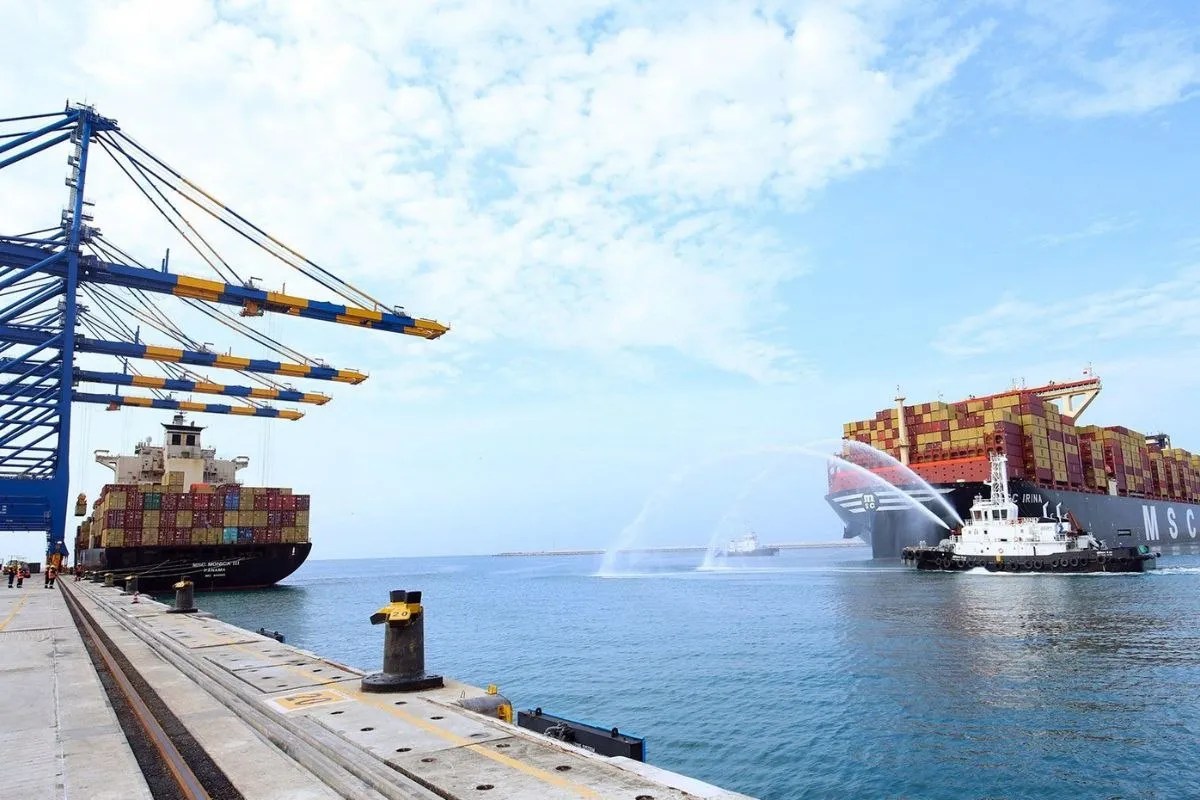
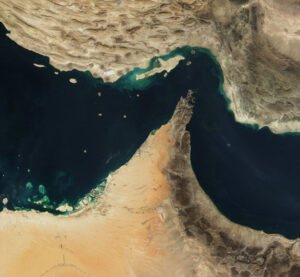
When conflict threatens key waterways such as the Strait of Hormuz and the Red Sea corridor through Bab el-Mandeb, shipping economics shift abruptly. Vessels rerouted away from threatened corridors face longer transit times, higher fuel burn, canal tolls where applicable, and sharply higher war-risk insurance premiums. War-risk insurance on exposed Gulf transit has surged from pre-escalation levels around 0.25% to as much as 10%, while rerouting around longer sea lanes adds weeks of transit and millions of dollars in voyage costs.
For import-dependent economies, higher freight and insurance act as an immediate tax on landed cost. Humanitarian logistics absorb the same friction: higher freight charges on relief shipments—such as specialized nutritional supplies—mean fixed donor budgets buy fewer metric tons of food and therapeutic inputs.
The Fertilizer and Planting Lag
Energy and chemical supply chains create a lagged supply shock that outlasts immediate shipping headlines. The Middle East is a major supplier of nitrogen fertilizer inputs such as urea and ammonia, and disruptions to Gulf production or transit drive sharp price increases and affordability squeezes for farmers.
Consider a smallholder wheat or maize grower facing an 80% jump in urea prices right ahead of planting. If credit is tight or cash reserves are thin, the farmer either cuts application rates—lowering yield potential per hectare—or scales back planted area. The harvest loss does not show up at the market gate the next morning; it materializes months later when output falls short. Higher diesel and transport costs compound the lag by raising the cost of plowing, pumping irrigation water, and moving crops to wholesale markets.
Exchange Rates and Import Pass-Through
In countries heavily reliant on imported food and fuel, external price shocks interact with domestic currency pressure. When import bills rise while export earnings or foreign reserves face strain, currency depreciation amplifies local pass-through. Even when international benchmark prices stabilize, a weaker domestic currency or elevated retail margins can keep local staple and cooking-fuel prices elevated for households that spend a high share of income on food.
How Macro Shocks Become Gendered Deprivation
Economic theory often models the household as a unitary actor maximizing a single utility function. Empirical evidence from food crises shows that unitary models miss critical internal trade-offs, especially when income falls and prices rise simultaneously.
Engel's Law and Household Buffer Exhaustion
Under Engel's law, as household income falls or food prices rise, the share of total expenditure devoted to food increases. Low-income households already allocate a large fraction of income to basic calories, leaving minimal discretionary room to absorb price shocks. Where high baseline food insecurity already exists, households enter the shock with depleted savings, fewer credit options, and thinner margins to cut non-essential spending.
Intrahousehold Allocation and Nutritional Buffers
When a household must ration food, adjustments rarely happen symmetrically. Households typically shift first from diverse, micronutrient-rich foods—such as pulses, dairy, eggs, vegetables, and animal proteins—toward cheaper, energy-dense staples. Where social norms or unequal bargaining power shape food distribution, women and adolescent girls frequently act as shock absorbers by reducing meal sizes, skipping meals, or eating last.
That buffer carries high biological and economic costs. Pregnant and breastfeeding women and adolescent girls face heightened iron and micronutrient demands; prolonged dietary compression increases risks of anemia, maternal depletion, and adverse birth outcomes. Economically, chronic calorie or micronutrient deficits erode physical stamina and cognitive focus, reducing labor productivity precisely when households need income most.
The Time Tax of Fuel and Care
Price and displacement shocks also alter the allocation of unpaid labor. If liquefied petroleum gas or kerosene becomes unaffordable or scarce, households may substitute firewood, crop residue, or dung for cooking. Gathering biomass takes hours that could otherwise go to wage work, small-scale trading, rest, or schooling for girls, while indoor smoke exposes cooks and children to respiratory hazards.
Internal displacement compounds this time tax. Displaced families lose familiar market access, face higher transport and shelter costs, and experience disruptions to water, sanitation, and health services. Care responsibilities expand—looking after injured relatives, managing children out of school, and navigating unfamiliar aid queues—while safe mobility and formal job opportunities contract.
Asset Liquidation and Productive Capacity
Faced with acute food gaps, households sometimes sell productive assets—such as livestock, tools, jewelry, or small plots—or take high-interest informal loans. Women often hold fewer titled assets and less independent cash savings than men, meaning they have fewer cushions to start with and face steeper long-term penalties when forced to liquidate what little capital they control. Selling a goat or depleting seed or working capital may buy food this week while permanently lowering next year's earning capacity.
Addressing Common Analytical Questions
Why does a Middle East escalation affect food security far outside the conflict zone?
Modern agrifood systems are linked through global trade in crude oil, natural gas, fertilizers, and shipping capacity. Disruptions in one region transmit across borders via commodity benchmarks, marine insurance markets, and rerouted vessels. A country with no direct military involvement can still face higher fertilizer import bills, pricier freight, and currency stress that push domestic food prices higher.
Why do women and girls face higher risk even when food is physically available in local markets?
Physical availability on a market stall does not guarantee economic or social access at the household level. Food security depends on purchasing power, control over household income, mobility to reach markets or distribution points, time available for food preparation, and intrahousehold distribution norms. When real wages fall and unpaid care work rises, women with limited financial autonomy face sharper trade-offs between feeding children, buying fuel, and preserving productive assets.
Why are headline projections like 11.7 million sensitive to scenario assumptions?
A figure such as 11.7 million is a conditional model output across a specific set of countries—here 28 countries under a moderate stress scenario—rather than a fixed headcount. Outcomes shift depending on how long shipping bottlenecks persist, how much of international price movement passes into domestic retail markets, how fast central banks and governments respond, and how well humanitarian programs are funded. Moreover, because standard household surveys often measure food security at the household rather than individual level, projections rely on structural risk indicators rather than direct observation of every individual plate.
Operationalizing Risk Assessment and Response
Turning a macro warning into effective action requires matching interventions to the specific transmission bottleneck operating in each location.
- Screen countries by compound exposure rather than single indicators. Combine baseline food insecurity rates, import dependence for food and fuel, fertilizer reliance in domestic agriculture, displacement levels, and humanitarian funding gaps to rank where shocks will hit hardest.
- Separate immediate consumption support from input and asset protection. Use targeted cash or food assistance where purchasing power is collapsing right now, while pairing agricultural input vouchers or credit support with seasonal planting calendars so farmers do not under-invest for the next harvest.
- Design delivery around women's real constraints. Verify whether cash transfers, nutrition services, or food distributions are accessible without unsafe travel, prohibitive transport costs, or rigid collection hours that clash with care duties.
- Track individual dietary quality and asset depletion alongside aggregate prices. Monitor micronutrient intake among women and adolescent girls, cooking fuel choices, and distress asset sales so early warning systems catch erosion before it becomes entrenched deprivation.
Limits of Intervention and Strategic Play
No humanitarian program or policy package can fully insulate vulnerable populations from a prolonged war or severe maritime blockade. Funding shortfalls frequently force agencies to ration assistance or cut benefit sizes just as needs climb. Cash transfers lose real value rapidly when local food inflation accelerates or currency markets destabilize, and input subsidies cannot overcome physical blockades or active combat zones. Furthermore, shifting deeply entrenched norms around unpaid care work or household decision-making takes years, whereas food shocks strike in weeks.
Given those constraints, the highest-leverage strategic play for decision-makers is to pre-position flexible, nutrition-sensitive cash and agricultural input buffers in high-exposure, import-dependent countries before planting and lean seasons converge, while indexing assistance values to local food-basket inflation. Waiting for confirmed nutritional deterioration at scale guarantees higher human cost and higher program expense per person reached; acting on leading indicators of freight, fertilizer, and household purchasing power preserves both lives and productive capacity before assets are lost.