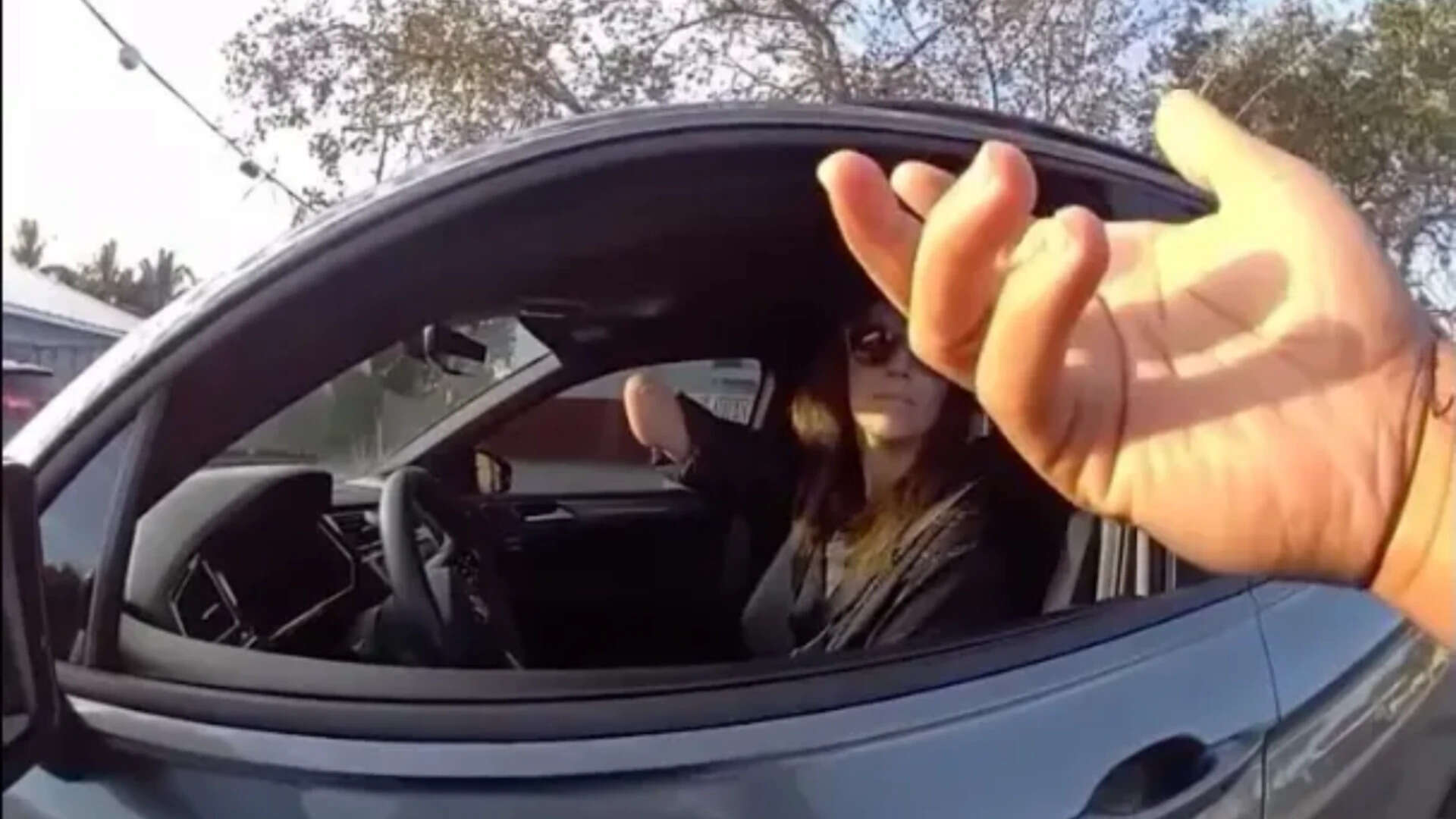
You cannot make this up. A Florida law enforcement officer pulled over a woman and wrote her a traffic citation for holding a mobile device with her right hand while operating a motor vehicle.
The driver was Tatiyana Culliver. She is a popular digital creator. She was also born without a right hand.
Yes, you read that correctly. A cop in the Sunshine State used his eyes, looked at a driver who physically lacks a right extremity, and officially documented that she was texting with that non-existent body part. It is a staggering example of bureaucratic autopilot overriding basic human observation.
This bizarre traffic stop highlights a massive flaw in how traffic laws are enforced. It shows what happens when writing tickets becomes a robotic exercise instead of a common-sense assessment of road safety.
The Viral Traffic Stop That Defied Anatomy
Tatiyana Culliver routinely shares her daily life, fashion, and experiences as an amputee with her massive social media audience. She is used to navigating a world built for two-handed people. She did not expect to navigate a traffic stop that challenged the laws of biology.
The incident unfolded on a standard Florida roadway. A police officer pulled Culliver over, claiming he witnessed her distracted driving. Specifically, the officer insisted she was actively typing or holding her phone in her right hand while her vehicle was in motion.
Culliver was stunned. She literally could not comply with the premise of the violation. She holds up her right arm. It ends just below the elbow.
Instead of laughing off an obvious mistake, admitting the error, and sending her on her way, the officer doubled down. He filled out the paperwork. He handed her the citation. The official document clearly alleged the violation involved her right hand.
Culliver did what any modern creator would do. She recorded the immediate aftermath and shared the paperwork online. The video exploded. Viewers were trapped between utter disbelief and hysterical laughter. It is funny because it is ridiculous, but it is infuriating because it is real.
Florida Strict Wireless Communications Law and Where It Fails
Florida takes distracted driving seriously. Under Florida Statutes Section 316.305, known as the Wireless Communications Driving Safety Act, motorists are prohibited from operating a motor vehicle while manually typing or entering multiple letters, numbers, symbols, or other characters into a wireless communications device.
The law allows officers to pull drivers over solely for texting while driving. It is a primary offense. The state wants to curb accidents. That is a noble goal. Distracted driving kills people every day.
The problem is the execution. The law requires visual proof.
Officers must see the driver actively manipulating a device. In Culliver’s case, the officer’s brain seemingly filled in the blanks. He saw a car. He thought he saw a phone. He assumed a hand was holding it. He wrote the ticket based on a mental script rather than reality.
This happens way more often than police departments like to admit. Officers are human. They suffer from confirmation bias. If they are hunting for texting drivers, every scratch of a chin or adjust of a collar can look like an iPhone from thirty feet away. But usually, when an officer approaches a window and sees a physical impossibility, they apologize. They do not hand over a court date.
The Financial and Legal Reality of Fighting a Bad Ticket
Getting a bogus ticket isn't just an annoyance. It is a financial burden.
When an officer hands you a citation in Florida, you have three options. You pay it, you go to traffic school, or you fight it in court.
Paying the ticket is an admission of guilt. If Culliver simply paid the fine, she would be legally agreeing that she used her missing right hand to text while driving. That is absurd.
Fighting a ticket takes time. You have to take a day off work. You have to drive down to the county courthouse. You have to sit in a room full of strangers waiting for a traffic hearing officer to call your name. If you want to guarantee a win, you hire a traffic attorney. That costs money. Often, hiring a lawyer costs more than the ticket itself.
This is the hidden tax of poor policing. The citizen bears the cost of proving the state wrong, even when the state's accusation is physically impossible.
What You Should Do If You Get a Misidentified Traffic Citation
If a law enforcement officer writes you a ticket that contains completely inaccurate or physically impossible details, you cannot argue your way out of it on the side of the highway. Do not scream. Do not get combative. That turns a silly ticket into a resisting arrest charge.
Follow these steps instead.
- Document everything immediately: Take photos of the scene, your vehicle setup, and your physical state at the exact moment of the stop.
- Keep your mouth shut: Do not argue with the officer on camera or try to mock them. State your piece calmly. Let their bad decisions stand on the official record.
- Plead not guilty: File for a hearing within the required 30-day window.
- Bring physical evidence to court: In Culliver’s case, showing up to court and showing the judge her right arm is all the defense she needs. The case will be dismissed instantly.
The viral nature of Culliver's video practically guarantees the local police department will dismiss the ticket before it ever reaches a courtroom. Public embarrassment is a powerful motivator for administrative cleanup.
But everyday citizens do not have millions of followers to amplify their stories. They face these administrative errors alone. Check your tickets carefully before signing them. If the details do not match reality, fight it every single time. Let the record show the mistake, not your compliance.