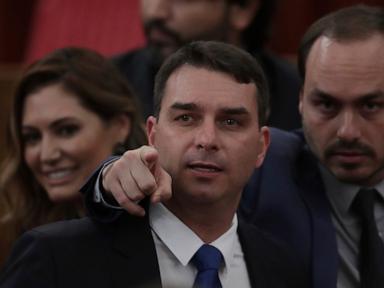
When Brazilian Senator Flávio Bolsonaro boarded a flight to the United States amid escalating political and legal pressures in Brazil, the reaction on Brazilian social media was instantaneous and relentless. According to political analysts, media observers, and widespread coverage across Brazilian news outlets, the trip triggered a massive wave of viral memes comparing his departure to historical exiles, tourist vacations, and family political retreats. While casual observers saw only digital humor, veteran political analysts point out that Brazilian internet culture routinely uses satire as a real-time barometer of public sentiment, political accountability, and institutional tension.
The jokes spread fast. Within hours of reports confirming his travel, platforms like X, Instagram, and TikTok filled with edited images showing the senator in tourist gear, alongside captions questioning the timing of the trip. To understand why a routine international flight by a sitting lawmaker sparked such intense digital mockery, you have to look beyond the punchlines and examine the mechanics of modern Brazilian political communication, the legal backdrop surrounding the Bolsonaro family, and the unique role of meme culture in Latin America's largest democracy.
The Anatomy of a Brazilian Political Meme Wave
In Brazil, memes are rarely just entertainment. Media researchers and digital sociologists who study Latin American politics have long documented that humor functions as an informal public square. When major political figures make sudden moves—especially moves involving international travel during sensitive domestic moments—online communities react by translating complex legal and political anxieties into easily shareable visual shorthand.
According to reports from major Brazilian press outlets, the memes surrounding Flávio Bolsonaro focused on several recurring themes. Many posts juxtaposed his trip with the broader legal and political challenges facing allies of former President Jair Bolsonaro, including ongoing Supreme Federal Court investigations and debates over political accountability following the events of January 8, 2023. Other posts leaned into classic Brazilian tropes about politicians heading to Florida or other US destinations whenever domestic scrutiny intensifies.
The pattern is familiar. Over the past decade, whenever high-profile Brazilian figures—across the political spectrum—have traveled abroad during moments of legislative gridlock, judicial inquiry, or electoral fallout, social media users have immediately framed those trips as strategic retreats. What made this particular episode stand out was the speed and coordination of the response, driven by a combination of organic user creativity and partisan digital networks.
How Partisan Networks Amplify Satire
Digital political communication in Brazil operates through highly organized ecosystems on both the left and the right. According to studies by Brazilian digital media observatories, viral political content rarely achieves nationwide reach by accident. Instead, it follows a predictable trajectory:
- Initial Spark: A news report or flight-tracking rumor surfaces on X or in mainstream outlets.
- Rapid Remixing: Independent creators and political meme accounts produce image macros, short video edits, and sarcastic commentary within minutes.
- Cross-Platform Migration: The highest-performing jokes move from X to Instagram Reels, TikTok, and closed WhatsApp or Telegram groups.
- Mainstream Coverage: Traditional news organizations report on the viral reaction itself, giving the memes a second life and validating them as a political story.
Critics of Bolsonaro's political movement used the memes to portray the trip as an evasion of domestic responsibility. Conversely, supporters and allies pushed back online, arguing that international travel by senators is routine, often tied to diplomatic meetings, conservative conferences, or personal family business, and that opposition accounts were manufacturing outrage over a normal schedule. Both sides used humor and irony to frame the narrative for undecided or casual voters scrolling through their feeds.
The Historical Backdrop of US Travel in Brazilian Politics
To grasp why the United States features so prominently in these viral jokes, it helps to examine the specific relationship between Brazilian conservative politicians and the US over recent years. Following the 2022 presidential election, former President Jair Bolsonaro spent several months in Orlando, Florida, a stay that itself generated immense media coverage and thousands of memes. Since then, any US travel by members of the Bolsonaro family or their close political circle carries immediate symbolic weight in the Brazilian imagination.
Political commentators note that Florida, in particular, has become a recurring setting in Brazilian political folklore. For critics, it symbolizes a comfortable safe haven away from Brasilia's courts and congressional committees. For supporters, the US represents an ideological ally and a hub for international conservative networking, including events like CPAC and meetings with American lawmakers.
Because of this established symbolism, audiences did not need lengthy explanations to get the joke. A simple photoshopped image of luggage, a boarding pass, or a theme park background was enough to communicate an entire political critique. At the same time, political analysts warn that reducing every international trip to a caricature obscures the legitimate functions of legislative travel, such as diaspora outreach, trade discussions, and parliamentary diplomacy.
Why Satire Hits Harder Than Traditional Commentary
Traditional political journalism relies on official statements, legislative records, and legal filings. That process takes time. Social media users operate on a completely different clock, and satire bypasses the formal barriers of political discourse.
According to communication scholars who study political humor, memes achieve high engagement because they compress complex arguments into an emotional reaction. Explaining the nuances of Senate recess schedules, parliamentary immunity, or ongoing judicial investigations requires paragraphs of context. A meme comparing a senator's flight to a vacation getaway takes two seconds to read and triggers an immediate laugh or groan.
However, this dynamic comes with significant trade-offs for public understanding:
- Loss of Nuance: Viral jokes rarely distinguish between official diplomatic missions, personal vacations, and legally significant departures.
- Confirmation Bias: Users share memes that reinforce what they already believe about a politician, deepening polarization rather than encouraging informed debate.
- Agenda Distraction: Intense focus on viral jokes can pull media attention away from concrete legislative votes, economic policy, or substantive legal developments happening in Brasilia.
Seasoned observers of Brazilian politics point out that politicians themselves are acutely aware of this dynamic. Some public figures ignore the mockery, treating it as inevitable background noise in a hyper-connected society. Others actively lean into the humor, reposting selected jokes or crafting counter-memes to project confidence and show they are unbothered by online criticism.
The Media Feedback Loop
The competitor's coverage—and dozens of similar stories across entertainment and news portals—illustrates another critical factor in modern journalism: the feedback loop between social media trends and newsroom reporting. When a political topic generates massive engagement online, news outlets cover the viral reaction as a proxy for public opinion.
There is a legitimate journalistic reason for doing this. In a country where tens of millions of citizens use social media daily to discuss politics, tracking viral trends offers insight into how voters are processing current events. When a hashtag trends nationwide, it signals that a specific narrative has broken out of niche political circles and entered mainstream conversation.
Yet veteran editors caution against confusing viral volume with universal consensus. Social media platforms reward outrage, mockery, and tribal loyalty. The loudest voices online do not always reflect the broader electorate, many of whom may be far more concerned with inflation, employment, public security, or healthcare than with a senator's travel itinerary.
Navigating the Noise Around Political Travel
For readers trying to separate genuine political news from partisan theater, international trips by lawmakers require a clear-eyed checklist. Analysts who track congressional activity in Brasilia suggest looking at concrete indicators rather than social media reactions:
- Official Senate Agendas: Checking whether the travel is registered as an official mission, funded by public resources, or undertaken as personal leave during a legislative break.
- Timing Relative to Votes and Hearings: Examining whether the departure coincides with major floor votes, committee inquiries, or judicial deadlines.
- Public Statements and Transparency: Evaluating whether the lawmaker's office clearly communicates the purpose, duration, and funding of the trip.
- Concrete Outcomes: Assessing whether the visit produces documented diplomatic meetings, policy proposals, or legislative initiatives upon return.
Without those verifiable details, public debate defaults to speculation—and in Brazil, speculation almost always turns into a meme contest.
The viral reaction to Flávio Bolsonaro's trip to the United States ultimately reveals less about a single flight than it does about the state of Brazilian political culture. In an environment marked by deep polarization, high-stakes legal battles, and hyper-active digital networks, every public move is instantly scrutinized, remixed, and weaponized for laughs or political points. For politicians, the reality is straightforward: in Brasilia's modern media environment, you never just board a plane—you board a feed that never stops scrolling.