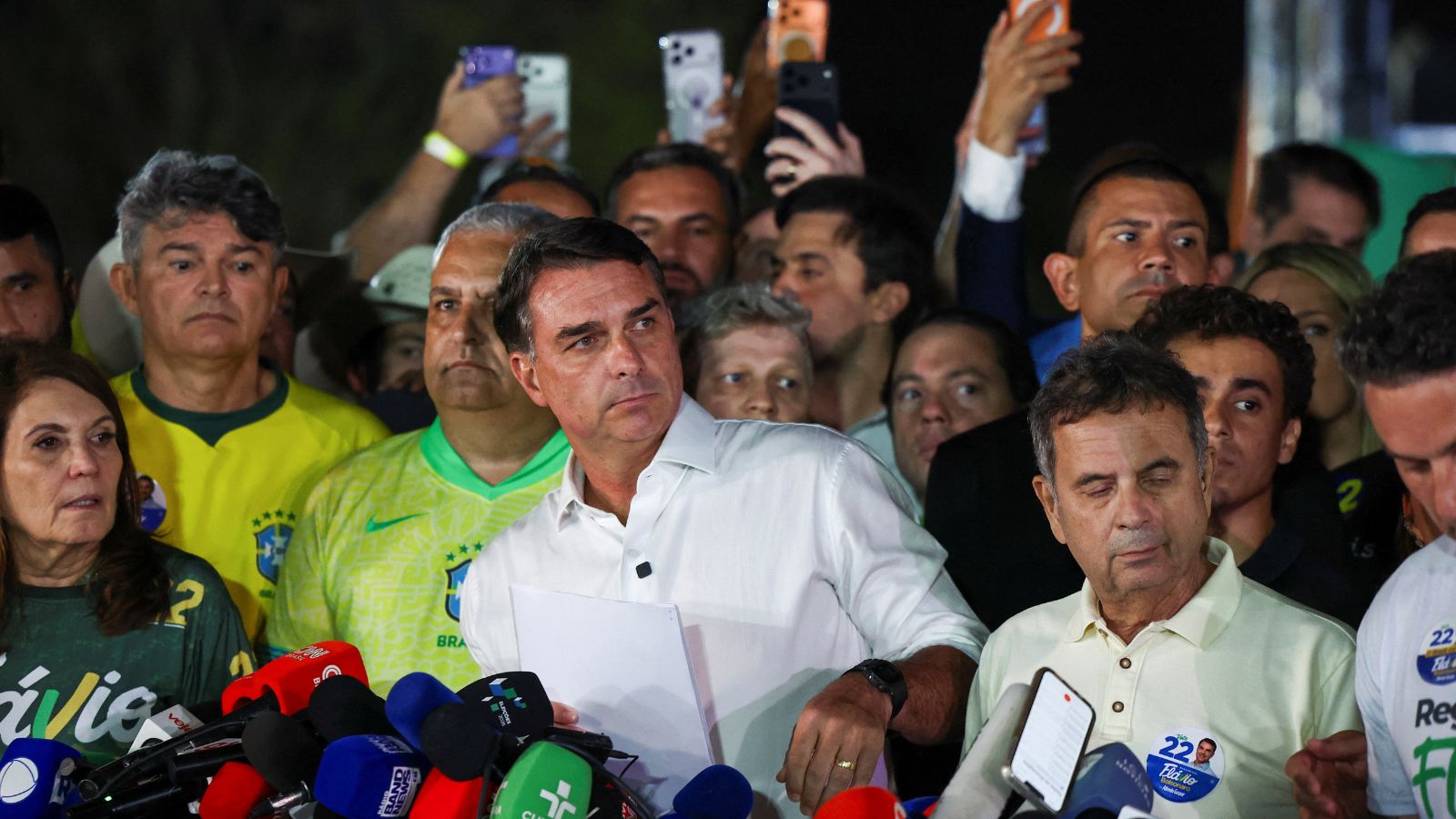
Mainstream commentary frames Brazilian Senator Flavio Bolsonaro’s travel to the United States as a chaotic spectacle, a defensive scramble, or a vanity tour for an international audience. According to political analysts who focus on surface-level optics, trips by prominent figures from Brazil’s conservative movement are often reduced to simple narratives of political escape or theatrical posturing.
That framing misses the structural mechanics of modern hemispheric politics.
When observers fixate on airport arrivals, social media clips, or the dramatic phrasing of a "wild journey," they overlook how transnational political networks actually operate. In contemporary politics across the Americas, travel between Brasilia, Miami, and Washington is rarely an improvised detour. It is a deliberate exercise in coalition maintenance, narrative laundering, and institutional signaling.
The Myth of the Improvised Political Tour
Conventional reporting treats international travel by opposition lawmakers as a series of disconnected events—a speech at a conservative conference here, a photo opportunity with U.S. lawmakers there, a media appearance on a sympathetic network in between. Journalists covering Latin American politics frequently catalog these stops as a chronological curiosity, emphasizing the spectacle over the strategy.
In reality, political operatives who have worked across Washington and Latin American capitals recognize a standard playbook. Domestic political pressure in Brazil—whether stemming from Supreme Federal Court (STF) inquiries, legislative gridlock, or shifting party alliances—creates an immediate incentive to internationalize domestic disputes.
By taking an argument outside Brazil’s borders, a senator changes the venue and the audience:
- Domestic scrutiny becomes international debate: Legal and institutional conflicts inside Brazil are reframed for U.S. audiences through the familiar vocabulary of free speech, judicial overreach, and ideological alignment.
- Foreign validation feeds domestic media: A brief meeting with members of the U.S. Congress or appearances at American policy forums generates headlines back home, projecting influence regardless of whether any concrete policy outcome occurs.
- Diaspora mobilization: South Florida, home to one of the largest Brazilian expatriate communities in the United States, functions as both a fundraising base and a media echo chamber that feeds directly into Brazilian digital networks.
Critics of the Bolsonaro family, including Brazilian legal scholars and opposition lawmakers, argue that these trips are designed to bypass domestic accountability and manufacture external pressure on Brazilian institutions. Supporters and allied commentators in both countries counter that international outreach is a legitimate and necessary response to what they describe as asymmetric judicial actions and media bias at home. Both perspectives point to the same underlying reality: the trip is functional, not accidental.
What Chronologies Miss About Asymmetric Diplomacy
A timeline tells you when a plane landed and who stood next to whom at a podium. It tells you almost nothing about why those specific intersections matter.
In traditional diplomacy, foreign travel is conducted through the Ministry of Foreign Affairs (Itamaraty) and the U.S. Department of State, bound by protocol, bilateral treaties, and executive-branch negotiations. What Flavio Bolsonaro and other opposition figures practice is paradiplomacy—the conduct of international relations by sub-national or non-executive political actors to advance specific ideological or domestic goals.
According to international relations scholars who study Latin America, paradiplomacy has become a primary tool for political movements out of executive power. When the administration of President Luiz Inacio Lula da Silva controls official diplomatic channels with the White House and the State Department, opposition senators turn to alternative power centers in the United States:
- The Legislative Branch: Individual members of the U.S. House of Representatives and Senate hold committee seats, issue public letters, and hold hearings that carry symbolic weight in Brazilian news cycles without requiring executive branch approval.
- Ideological Think Tanks and Conferences: Events organized by groups such as the Conservative Political Action Conference (CPAC) provide ready-made infrastructure, media access, and ideological alignment.
- Independent Digital Media: Long-form podcasts, streaming shows, and partisan outlets allow visiting politicians to speak uninterrupted to millions of viewers, bypassing traditional press filters in both countries.
To call this "wild" is to mistake an unfamiliar political mechanism for chaos. The itinerary may look erratic to reporters accustomed to state visits, yet every stop serves a distinct communications function.
Misconceptions Around U.S. Political Leverage
A persistent misunderstanding in Brazilian political commentary—shared by both critics who fear foreign interference and supporters who hope for it—is the belief that Washington can or will directly intervene in Brazil’s domestic institutional disputes.
People frequently ask whether meetings on Capitol Hill can overturn Brazilian judicial decisions, lift political disqualifications, or alter electoral outcomes in Brasilia. The premise of that question misunderstands how the U.S. government operates.
- Separation of powers limits legislative impact: Statements, letters, or resolutions from individual U.S. lawmakers express political solidarity, not binding U.S. foreign policy.
- Bilateral priorities favor institutional stability: Historically, across both Democratic and Republican administrations, U.S. strategic interests in South America—trade, supply chains, regional security, and energy cooperation—depend on working with Brazil’s sitting government and established institutions.
- Symbolic capital is the real currency: Visiting politicians rarely return from Washington with enforceable policy shifts. Instead, they return with video clips, endorsements, and proof of international relevance that can be deployed in municipal, legislative, and presidential campaigns back home.
Political scientists who track U.S.-Brazil relations note that overestimating Washington's direct leverage leads commentators to misjudge the true audience of these trips. The primary target is almost never the U.S. voter or the U.S. bureaucracy; it is the Brazilian electorate consuming the trip through smartphones in Sao Paulo, Rio de Janeiro, and Brasilia.
The Structural Trade-Offs of Internationalizing Domestic Politics
While transnational campaigning offers clear short-term visibility, seasoned political strategists recognize that it carries significant risks—a nuance rarely explored in breathless travelogues.
First, nationalist backlash cuts both ways. Brazil has a deeply rooted diplomatic tradition of non-intervention and national sovereignty. When domestic political actors appear to invite foreign scrutiny of Brazilian courts or electoral authorities, moderate and undecided voters often react negatively, viewing the move as an appeal to outside pressure rather than a solution to local economic and security concerns.
Second, U.S. political polarization creates rigid alignments. Aligning closely with a specific faction in Washington locks a foreign politician into America’s domestic partisan divide. That alignment yields enthusiastic support from one side of the U.S. political spectrum while simultaneously alienating potential allies on the other side, narrowing future diplomatic flexibility if political winds shift in either capital.
Third, optics can overshadow substance. High-profile international travel during periods of domestic economic debate or legislative negotiation allows political opponents at home to frame the traveler as disconnected from everyday constituent issues—cost of living, public security, and local infrastructure.
Reading Political Travel Through Strategy Instead of Spectacle
Understanding why high-profile Brazilian figures repeatedly make the circuit through Florida and Washington requires looking past the sensationalism of travel timelines.
Journalists, analysts, and voters get a clearer picture when they evaluate three concrete indicators rather than chasing daily itinerary updates:
- Audience targeting: Look at who is amplifying the trip. If the messaging is produced primarily in Portuguese for WhatsApp, Instagram, and YouTube audiences in Brazil, the trip is a domestic campaign operation using a U.S. backdrop.
- Institutional deliverables: Separate ceremonial photo opportunities from formal legislative actions, such as committee testimony or official bilateral caucus briefings.
- Domestic timing: Map international travel against the legislative calendar in Brasilia, court dockets, and upcoming election cycles. External visibility almost always spikes when domestic leverage is constrained.
The narrative of a chaotic, unpredictable journey makes for engaging headlines, yet it obscures a disciplined political reality. Across the Americas, borders no longer contain domestic political campaigns—and treating modern transnational strategy as mere spectacle guarantees misreading the next move before the plane even lands.


