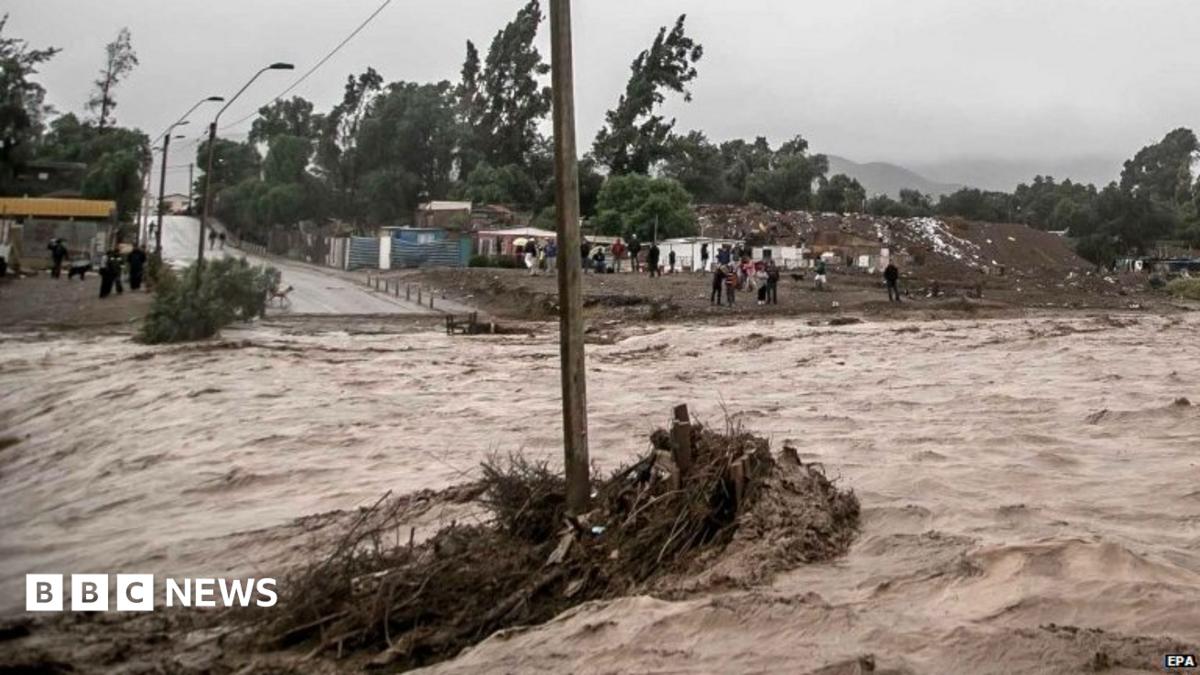
Every single time a desert washes away, the mainstream media rolls out the exact same exhausted script. Cameras zoom in on cars tumbling down muddy slopes in the Atacama, anchors shake their heads at the sheer fury of nature, and experts utter the magic words: unprecedented, freak weather, climate anomaly.
Stop buying the excuse.
These events are not surprises. They are design failures masquerading as acts of God. When vehicles sweep downhill in northern Chile, the problem is not that the sky opened up. The problem is that human beings refuse to build for the geography they inhabit, opting instead for cheap concrete, lazy zoning, and a willful blindness toward arid hydrology.
I have walked these dry riverbeds, known locally as quebradas, right after a downpour. I have watched millions of dollars in municipal infrastructure wash out to sea because planners treated dry ground as permanent real estate. We treat extreme arid rainfall as a statistical outlier when it is an inevitability of the geography.
The Myth of the Unprepared Desert
The lazy consensus goes something like this: deserts are dry, rain is rare, therefore when it pours, chaos is guaranteed.
That logic belongs in the trash. The Atacama Desert is the driest non-polar desert on Earth, yes, but it is also defined by extreme meteorological events. Rain does not happen often, but when it hits, it drops a year is worth of water in hours. Water does not care about your historical averages. Water follows gravity, and gravity does not negotiate.
When urban planners zone commercial districts and parking lots directly in the natural drainage paths of coastal mountain runoffs, they are playing Russian roulette with municipal budgets. Then, when the inevitable flash floods hit, turning sedans into floating coffins, everyone points upward and blames the clouds.
This is a failure of imagination and engineering. Engineers love the hundred-year flood metric because it gives them an excuse to build cheap structures that fail precisely when the century rolls over.
What Actually Happens When the Atacama Floods
Let us look at the mechanics. Arid soils develop a thin, crusty seal under prolonged sun exposure, baking clay and silt into a surface roughly as permeable as an asphalt parking lot.
When torrential rain hits this crust, infiltration is near zero. Instead of soaking into the ground, every single drop transforms instantly into surface runoff. It gathers speed down the steep western slopes of the Andes, funneled entirely through narrow canyons and dry river channels that bisect desert towns.
By the time that wall of water hits populated areas, it is carrying tons of sediment, boulders, and debris. It acts less like a river and more like a moving wall of wet concrete.
Parking a car in a dry quebrada in northern Chile is functionally identical to parking on active train tracks and wondering why Amtrak keeps smashing your bumper. Yet municipalities issue permits for roads and housing developments right in these high-risk zones.
Imagine a scenario where a city council treated a dry desert wash with the same defensive respect a Dutch municipality treats the North Sea. You would see elevated roadways, deep diversion channels, porous retention basins, and strict zero-tolerance zoning. Instead, we get reactive disaster relief funds and tearful press conferences.
Dismantling the Adaptation Narrative
Politicians love to talk about climate adaptation strategies. They love committees, white papers, and cross-border panels on disaster risk reduction.
It is all theater.
True adaptation means telling developers they cannot build on alluvial fans. It means tearing up asphalt and installing bioswales and retention walls that can handle catastrophic pulses. It means accepting that an empty desert floor is not a blank canvas for cheap urban expansion; it is a dynamic hydrologic system that will occasionally reclaim its territory.
When cars sweep downhill in northern Chile, those images are broadcasted as proof of our vulnerability to nature. They are actually proof of our arrogance. Nature is behaving precisely as it has for millions of years. We are the ones refusing to adapt our stupidity.
Stop calling them natural disasters. They are human-made catastrophes of geography and hubris.
Get out of the way of the water or build systems that respect it. Everything else is just noise designed to keep incompetent planners employed.