The envelope does not exist yet.
Right now, it is just an idea floating through campaign speeches, cable news chyrons, and whispered conversations at grocery store checkout lines across America. Yet, if you close your eyes for a second, you can almost feel the heavy cardstock between your thumb and forefinger. You can see the perforated edges waiting to be torn off. Inside is a number with three zeros after a five.
Five thousand dollars.
For millions of households, that number is not an abstract macroeconomic policy debate. It is a new transmission for a 2014 sedan that shudders every time it shifts into third gear. It is the wiped-out balance on a high-interest credit card that has been accumulating dread since last winter. It is breathing room.
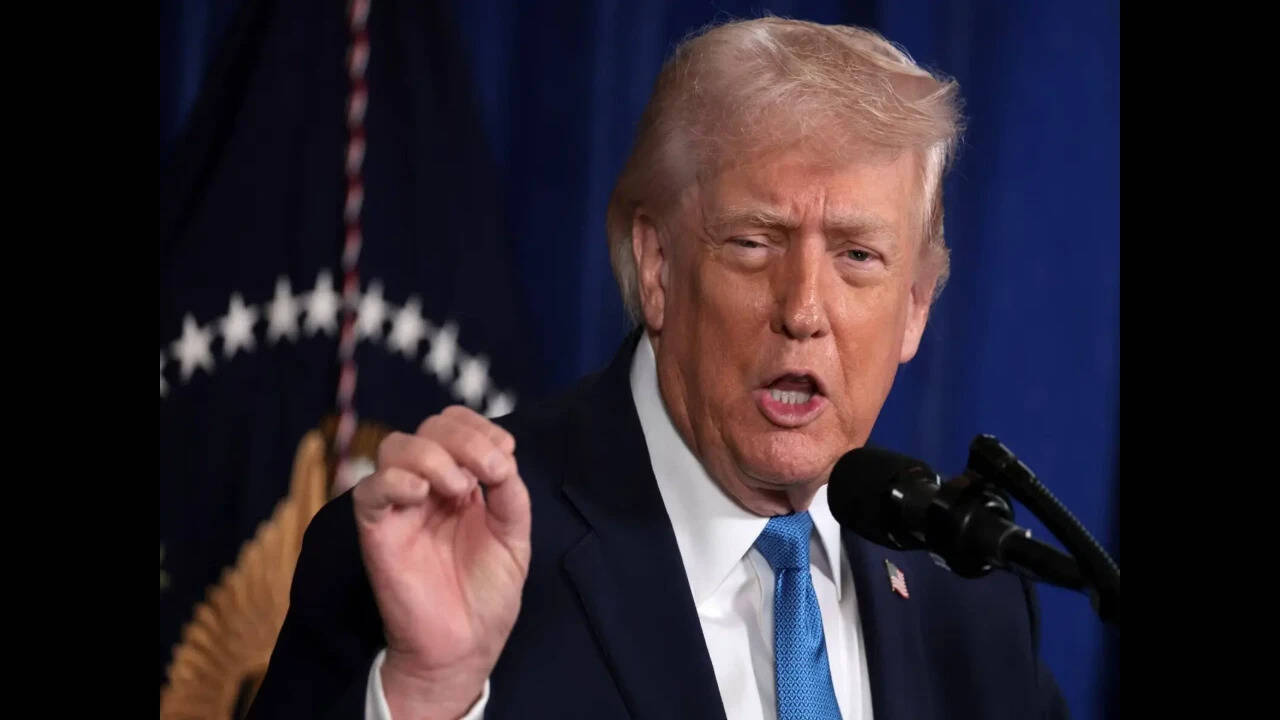
During the run-up to the 2026 midterm elections, President Donald Trump repeatedly put that exact figure back into the national bloodstream, telling voters at rallies and in interviews that he "will sign those checks" to American adults if Republicans hold and expand their power in Congress. The pitch, rooted in the concept of returning savings generated by the Department of Government Efficiency—widely known as DOGE—and tariff revenues directly to taxpayers, is disarmingly simple. Cut the waste, collect the duties, and send the surplus home.
On paper, it sounds like the cleanest transaction in modern political history. In reality, it is a high-stakes tug-of-war between immediate human relief and the cold, unforgiving math of the federal balance sheet.
The Kitchen Table Calculus
To understand why a five-thousand-dollar promise carries such electric charge, you have to step away from Washington, D.C., and sit down at a hypothetical kitchen table in Ohio, Pennsylvania, or Nevada.
Meet Marcus and Elena. They are a fictional composite, though their bank statement is painfully real to millions of dual-income families. Marcus works logistics at a regional distribution hub; Elena manages scheduling for a dental practice. Together, they earn roughly $88,000 a year—too much to qualify for most traditional safety-net programs, yet somehow never quite enough to outrun the quiet creep of everyday costs.
When Elena hears a headline about a $5,000 check per adult, her brain does not immediately jump to M2 money supply or bond yields. She does instant, involuntary arithmetic. Two adults in the house. Ten thousand dollars.
She looks at the stack of mail by the toaster. The property tax escrow adjustment. The notice that their auto insurance premium jumped eighteen percent despite zero accidents. The quote for their youngest daughter’s orthodontics. For Elena, politics usually feels like a distant storm—loud, dramatic, and entirely disconnected from whether she buys the store-brand cereal or the name brand. A direct check changes the weather inside her own house.
That is the emotional core of direct-to-citizen fiscal policy. Historically, government spending happens around people—in highway contracts, defense appropriations, or tax credits buried on Schedule 3 of a Form 1040 that you only notice if you squint at your refund in April. A physical check with a signature on it is visceral. We saw this during the pandemic stimulus distributions of 2020 and 2021, when direct payments became the most immediately legible government action in a generation.
Where the Money Supposedly Lives
When you strip away the applause lines from rally stages, however, you run straight into a fundamental question that economists, budget hawks, and skeptical voters alike have been asking: where does the cash actually come from?
According to public statements from President Trump and allies championing the DOGE dividend concept—originally popularized in public discourse by investment figures like James Fishback and amplified by Elon Musk—the funding mechanism relies on two pillars. First, massive reductions in federal spending through the elimination of bureaucratic waste, fraud, and redundant agencies. Second, revenue generated from broad tariffs on foreign imports.
Let’s look at the math the way a household budgeter would look at a checkbook.
There are roughly 260 million adults living in the United States. Even if eligibility were restricted to tax-paying households or capped at certain income thresholds—say, covering 150 million to 200 million adults—writing a $5,000 check to each qualifying person requires between $750 billion and $1 trillion.
Think of the federal budget like an enormous, overflowing bathtub. Every year, water pours in through tax receipts—roughly $4.9 trillion in recent fiscal cycles—while water drains out through mandatory spending like Social Security and Medicare, interest on the national debt, and discretionary programs, totaling closer to $6.8 trillion. That gap of nearly two trillion dollars is the annual deficit.
Proponents of the $5,000 payout argue that if DOGE manages to plug $2 trillion worth of leaks in that bathtub—a target Musk initially floated before later acknowledging the immense structural difficulty of reaching that ceiling—a portion of those recovered funds, perhaps twenty percent, could be returned directly to the American public, while the rest goes toward paying down the national debt.
Skeptical economists, including analysts at nonpartisan budget watchdogs like the Committee for a Responsible Federal Budget, point out a glaring catch. You cannot easily hand out a "surplus" when the bathtub is still draining faster than it is filling. If the federal government cuts $500 billion in spending while simultaneously running a $1.8 trillion deficit, sending $800 billion back out the door in checks does not reduce the national debt; it widens the hole.
The Ghost of 2021
There is another memory lurking beneath the surface of this debate, one that makes financial planners nervous every time politicians talk about printing or distributing large sums of cash.
Remember the spring of 2021.
I remember standing in a home improvement store that April, staring at a single sheet of standard plywood priced at nearly seventy dollars. Around me, contractors were shaking their heads, and homeowners were quietly putting items back on the shelves. Americans had stimulus money in their checking accounts, supply chains were snarled, and suddenly, too many dollars were chasing too few goods.
Inflation is an invisible tax that collects itself every time you swipe your debit card.
When mainstream economists across the political spectrum evaluate the prospect of injecting hundreds of billions of dollars directly into consumer bank accounts, they inevitably bring up the demand shock. If Marcus and Elena suddenly have $10,000—and fifty million other households have it on the exact same Tuesday—what happens to the price of used cars? What happens to local contractors’ rates, grocery margins, and airline tickets?
Supporters of the Trump proposal counter that unlike the pandemic-era stimulus, which was funded entirely through borrowed money and Federal Reserve expansion, a DOGE-funded dividend would represent a transfer of existing capital—taking money away from Washington bureaucrats and contractors and handing it to private citizens. In theory, shifting spending from the public sector to the private sector is less inflationary than creating new money out of thin air.
Yet the friction remains. Government spending on long-term infrastructure or administrative salaries trickles into the economy slowly. Five thousand dollars deposited into a checking account moves at the speed of a one-click checkout button. It hits retail shelves immediately.
The Political Reality of a Promise
Even if the economic debate were settled tomorrow, a massive structural hurdle stands between a campaign promise and a cleared check: Article I of the United States Constitution.
A president cannot unilaterally open the Treasury vault and mail out five-thousand-dollar checks, regardless of how bold the signature is. Under federal law, Congress holds the power of the purse. Every dollar distributed to citizens must be authorized by legislation passed through both the House of Representatives and the Senate.
That is precisely why President Trump’s phrasing—"if Republicans win" in the 2026 midterms—carries such specific weight. Historically, midterm elections are brutal for the party holding the White House. For a president to push a massive, unconventional fiscal distribution through Capitol Hill in 2027, he would not only need Republican majorities in both chambers; he would need near-unanimous discipline from a GOP conference that has long been divided between populist spenders and traditional fiscal conservatives.
Consider the Senate floor dynamics. Even with a majority, passing a reconciliation bill requires keeping every single deficit hawk in line. Lawmakers who spent years campaigning against Democratic spending bills face a difficult mirror when asked to vote for a trillion-dollar payout while the national debt sits above $36 trillion.
What Happens When Hope Becomes a Bargaining Chip
There is a quiet vulnerability in admitting how hard it is to know what to root for here.
If you are struggling to pay down debt, telling you to worry about the long-term bond market feels insulting. It is like lecturing someone who is drowning about the proper technique for treading water. You want the lifeline. You earned the tax dollars in the first place, and watching billions flow to opaque federal programs while your own savings account stagnates breeds a deep, entirely rational cynicism.
At the same time, we have lived through the hangover of fast cash. We know what it feels like when a sudden windfall evaporates within six months because the cost of everything around us quietly adjusted upward to absorb it.
That tension is the true story behind the $5,000 pledge. It is not merely a campaign tactic or a budget line item. It is a stress test of what Americans believe the government owes them—and whether a nation deep in debt can truly refund its way back to prosperity.
Back at that hypothetical kitchen table, Elena folds the utility bill in half and sets it under a ceramic mug. She does not factor a phantom check into next month’s budget. She knows better than to spend money that still has to survive a midterm election, a congressional committee, and the ruthless arithmetic of Washington.
Still, before she turns off the kitchen light and heads down the hall, she leaves the pen sitting right next to the checkbook.