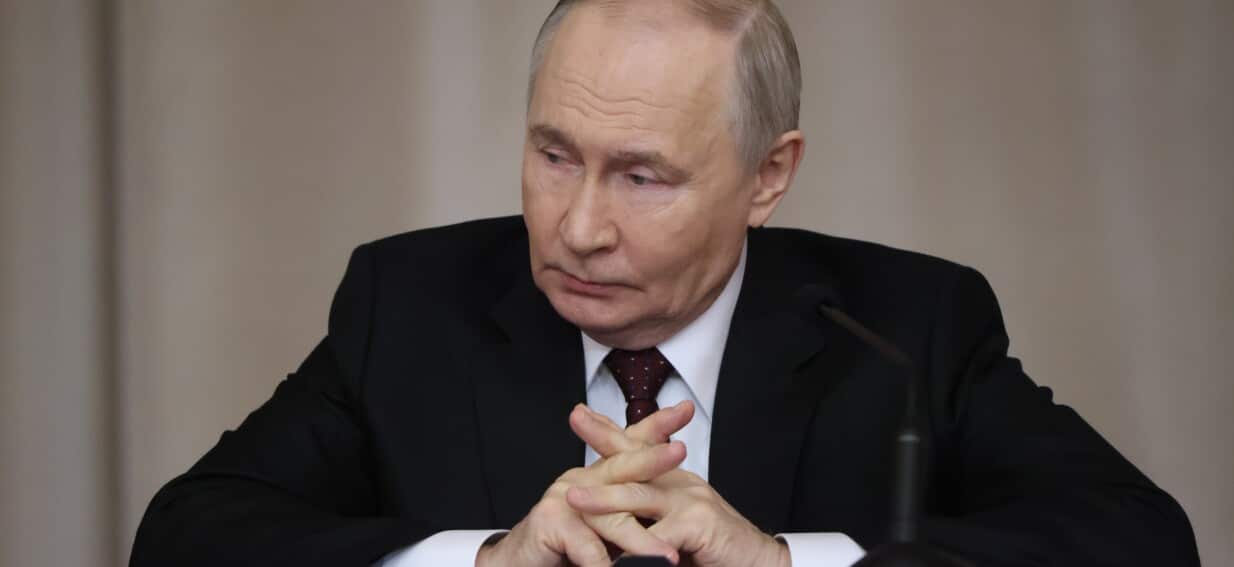
The internet spent the last forty-eight hours counting Benjamin Netanyahu’s fingers.
The "lazy consensus" among pundits and social media sleuths is that if a world leader appears in a low-resolution video looking slightly too smooth or holding up five digits like a kindergarten student, we are witnessing a glitch in the Matrix. They claim the video was staged to quash death rumors. They claim the "AI artifacts" are the smoking gun.
They are wrong. Not because the video is necessarily "real" in the classical sense, but because the entire premise of "identifying a deepfake" via digital forensics has become an exercise in vanity. While you are busy zooming in on 144p pixels to see if a hand looks like a lobster claw, you are missing the actual mechanics of modern information warfare.
The Forensic Fallacy
Digital forensics is a lagging indicator. By the time a "fact-checker" or a Twitter hobbyist points out a flickering earlobe, the political objective has already been achieved.
The Netanyahu video—where he counts to five to prove he is alive—is a masterclass in Strategic Ambiguity. Most observers assume the goal of a deepfake is to be a perfect replica. It isn't. In many cases, the goal is to create just enough doubt to paralyze the opposition or just enough "truth" to satisfy the base.
If the video looks slightly "off," the conspiracy theorists win by claiming it’s a fake. If the video is authenticated, the government wins by claiming the theorists are insane. Either way, the actual message—the physical survival of the leader—becomes secondary to the debate over the medium.
We have entered an era where Plausible Deniability is more valuable than truth. If a leader says something inconvenient, they can simply claim it was a deepfake. If they look weak, they can blame the compression algorithm. By focusing on the "five fingers," the public is playing exactly the game the propagandists designed.
Why Your "AI Detection" Logic is Broken
Let’s talk about the technical side. Most people think AI fails at hands because "it doesn't understand anatomy."
That is an outdated 2023-era misunderstanding. Modern generative models use advanced diffusion techniques and latent space mapping that handle skeletal structures remarkably well. When you see a "glitch" in a high-stakes political video, it is rarely a failure of the AI. It is almost always one of three things:
- Bitrate Starvation: High compression on social media platforms (X, Telegram, WhatsApp) destroys fine detail. This creates "mosquito noise" around moving edges—like fingers.
- Intentional Degradation: If you want to hide the seams of a fake, you don't release it in 4K. You release it in 480p. It provides a built-in excuse for every visual anomaly.
- The Liar’s Dividend: Coined by legal scholars Danielle Citron and Robert Chesney, this is the most dangerous byproduct of the AI boom. When the public knows AI can fake anything, they begin to believe everything is a fake.
The Netanyahu finger-counting video isn't a test of AI capability; it’s a test of public gullibility. If he held up a newspaper with today's date, you'd say the text was "hallucinated." If he stood next to a live clock, you'd say the hands were "rendered."
The truth is dead because the evidence is now infinitely reproducible.
The Death of the "Smoking Gun"
I have spent years watching tech companies try to build "detectors" for synthetic media. They fail. Every. Single. Time.
Why? Because detection is a reactive science. For every new watermark or metadata tag (like C2PA), there is a workaround involving a simple screen recording or a re-encode. If you are looking for a technical solution to a trust problem, you are bringing a calculator to a knife fight.
The Netanyahu video sparked "AI claims" because the audience wanted it to be fake. This is Confirmation Bias 2.0. In a polarized conflict, the veracity of a video is determined by your zip code and your political affiliation before the first frame even plays.
Stop Counting Fingers
If you want to survive the next decade of digital noise, you need to stop looking at the screen and start looking at the incentives.
Ask yourself:
- Who benefits from this video existing?
- Who benefits from the doubt surrounding this video?
- Is the "glitch" I see a technical error, or is it the result of a video being downloaded and re-uploaded six times through a Telegram bot?
When a leader has to count to five to prove they aren't a ghost, the state is already in a crisis of legitimacy. Whether the pixels were generated by a GPU or a CMOS sensor is irrelevant. The fact that the debate shifted from "What is the policy?" to "Is that a thumb?" means the distraction worked perfectly.
The obsession with "AI artifacts" is the new phrenology. It’s a pseudo-science used by people who want to feel smart while they’re being manipulated. You aren't a forensic expert; you're a consumer in a flooded market where the currency of truth has been hyper-inflated into worthlessness.
Put down the magnifying glass. The finger isn't the point. The fact that you're staring at it is.
Go check the source of the file, track the chain of custody, and look for corroborating physical evidence from independent journalists on the ground. Or, better yet, accept that in 2026, you will never truly "know" if a video is real again.
Adjust your worldview accordingly.