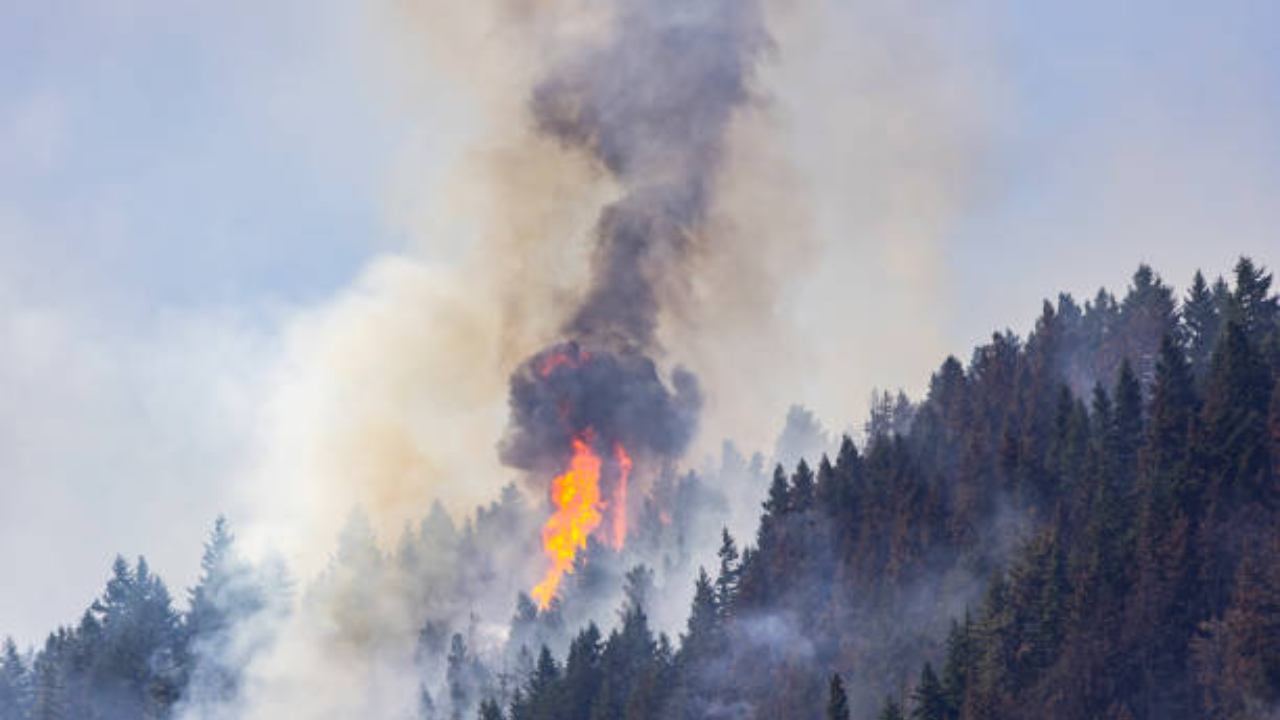
Roslyn, Washington, sits tucked against the eastern slopes of the Cascade Mountains, an old coal-mining town made famous by television and preserved by isolation. In late summer 2017, that isolation felt like a trap. The Jolly Mountain Fire, chewed through miles of drought-stressed timber and marched steadily toward the municipality. When the incident commander stood before local officials, there was no sugarcoating the tactical reality. If the flames entered the densely packed conifer stands immediately bordering the town limits, large sections of Roslyn would be written off as entirely indefensible. It was a stark, unfiltered assessment that forced a sleepy mountain community to confront a century of ecological avoidance.
Nine years after that near-disaster, the approach to survival in Upper Kittitas County has fundamentally inverted. Instead of waiting for the next lightning strike or wind-driven ember storm to dictate terms, local coordinators, municipal firefighters, and conservation groups have deliberately put fire back on the ground. Across more than five hundred acres of forested ridges and municipal parcels, crews have systematically burned away the accumulated understory, deadfall, and pine needle mats that act as natural gunpowder. This is not a reactive scramble during red-flag warnings. It is a slow, calculated, off-season campaign to starve future wildfires of the exact fuel packages they require to turn into crown-scorching monsters.
To understand why a mountain town has to set itself on fire to stay alive, one has to look past the modern bureaucratic perimeter and examine the legacy of total suppression. Before the arrival of Euro-American settlers in the late nineteenth century, low-severity fires moved through these ponderosa pine ecosystems every decade or so. Lightning ignitions and intentional burning practices by Indigenous tribes cleared out competing brush, recycled nutrients into the soil, and left towering, thick-barked mature trees largely unscathed. These were frequent, low-intensity events that maintained an open, park-like understory where light penetrated and root systems did not have to wage a desperate, subterranean war for dwindling moisture.
Decades of federal and state policy codified under the banner of absolute protection changed that rhythm completely. The institutional fear of timber loss created a century-long vacuum where natural fire cycles were arrested. Millions of acres across the American West were locked into a stasis of artificial preservation. Without fire to thin them out, forests grew hyper-dense. Saplings crammed into every square yard, creating vertical ladder fuels that could easily carry a ground fire straight up into the canopy. When extended droughts and rising regional temperatures arrived, those crowded, thirsty trees became sitting ducks for bark beetles and fungal pathogens. The resulting standing dead timber and deep organic carpets transformed fire-dependent landscapes into volatile tinderboxes.
When the 2017 wake-up call forced Roslyn to reckon with its vulnerability, local leadership did not stop at sighs of relief once the Jolly Mountain smoke cleared. Chris Martin, a local volunteer firefighter who stepped into the role of emergency management coordinator, began tracking a growing mosaic of treated ground on a physical map. The resulting strategy combined heavy mechanical thinning with controlled fire. Heavy logging machinery entered the forested buffer zones to haul out commercial-grade timber and clear dense thickets, while interagency burn crews followed up with drip torches to consume the remaining debris under tight meteorological control.
The resulting semicircle of treated terrain serves as an operational break. When an unmanaged wildfire eventually hits this perimeter, the fuel loading drops off a cliff. Flames transitioning from dense, unmanaged timber into a recently treated ridge lose their vertical momentum. The fire drops from the crowns to the forest floor, where incoming suppression forces actually have a fighting chance to anchor lines, deploy water tenders, and protect residential structures.
Yet executing this defense requires navigating a labyrinth of regulatory constraints and logistical friction that often threatens to paralyze progress. Prescribed burning is not a casual weekend undertaking. To treat even a modest block of fifty or sixty acres requires months of interagency planning, the coordination of multiple municipal fire districts, the mobilization of specialized nonprofit and state crews, and days of intensive on-site monitoring.
Air quality regulations present an unyielding bottleneck. Clean air statutes, designed to protect public health from toxic particulate matter, apply strict limits on smoke dispersion. A shift in regional wind patterns or an unexpected atmospheric inversion can cancel a meticulously planned burn window in a heartbeat. Fire practitioners face a frustrating paradox. By refusing to permit controlled, low-volume smoke during cool off-seasons, regulatory frameworks inadvertently guarantee months of choking, apocalyptic smoke when unmanaged mega-fires inevitably ignite during the peak of summer. Local residents must choose between planned, manageable smoke managed by experienced hands or catastrophic emissions that darken regional skies for weeks on end.
The economic realities of forest management further complicate the equation. State agencies like the Washington Department of Natural Resources oversee vast stretches of timberland, yet state-level prescribed burn quotas represent only a fraction of the actual acreage that requires ecological restoration. Bridging that gap demands active collaboration between state entities, federal land managers, conservation nonprofits like The Nature Conservancy, and private landowners. Programs that pool resources, train local volunteer burn associations, and secure interagency grants are essential to scale these efforts beyond isolated municipal projects. Without continuous capital infusion and streamlined permitting, community-led protection models remain vulnerable to funding cliffs and administrative burnout.
The transformation visible on the ridges above Roslyn demonstrates that living alongside fire-adapted ecosystems requires a profound shift in cultural tolerance. For generations, public messaging ingrained the absolute horror of smoke and flame, creating an instinctive public panic whenever gray plumes rise near residential areas. Overcoming that institutionalized fear requires aggressive public outreach, transparent communication with vulnerable neighbors, and visible proof that deliberate fire is a restorative tool rather than an existential enemy.
As regional temperatures continue to climb and the historical fire deficit widens across the Western United States, small towns can no longer rely on structural suppression alone. The physical reality of the landscape dictates that the vegetation surrounding these mountain communities will burn. The only variable remaining under human control is whether that fire arrives on terms dictated by chance, or through a deliberate strategy written in ash and smoke before the flames ever start


