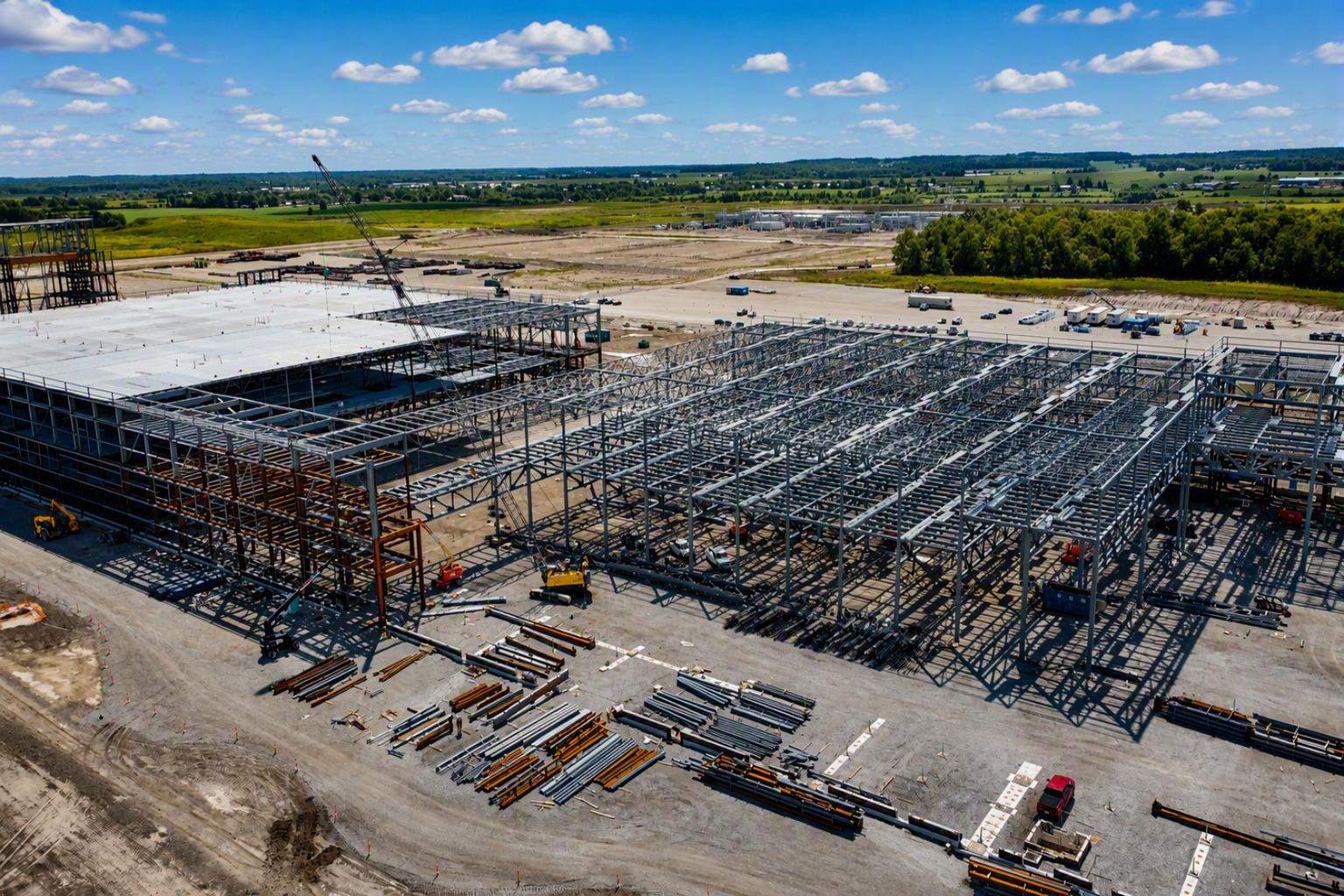
When a multi-billion-dollar industrial project defers its operational timeline by twenty-four months, political rhetoric frequently bifurcates into defensive optimism or systemic alarm. The recent announcement by Volkswagen subsidiary PowerCo Canada regarding a two-year construction delay at its seven-billion-dollar factory in St. Thomas, Ontario, triggered precisely this dichotomy. Provincial leadership characterized the schedule shift as an indicator of structural stability, pointing to active capital expenditure and physical infrastructure milestones as proof of long-term commitment. Beneath political framing, however, lies a complex economic reality governed by capital cost functions, supply-demand elasticity, and public risk exposure. Deconstructing this delay requires examining the underlying economic levers rather than accepting surface-level political interpretations.
The Capital Cost Function of Megaproject Shifting
Capital allocation for industrial manufacturing facilities is determined by net present value calculations and hurdle rates that respond dynamically to macroeconomic conditions. When a corporate entity like Volkswagen adjusts a multi-year construction schedule, the underlying financial calculus involves balancing immediate carrying costs against anticipated market absorption capacity.
The automotive manufacturing sector faces severe cyclical pressures driven by shifting consumer adoption rates for battery electric vehicles, elevated borrowing costs, and volatile supply chains. In standard project management theory, schedule slippage introduces two countervailing financial forces. First, extended timelines increase capitalized interest and overhead costs associated with prolonged construction management. Second, deferring asset completion prevents premature entry into a sluggish commercial market where production volume would outpace immediate consumer demand.
Characterizing a two-year postponement as unequivocally positive ignores the opportunity cost of delayed revenue realization and the depreciation of initial capital outlays before commercial generation begins. Conversely, rushing capital deployment into an oversupplied or cooling market risks severe operational losses that dwarf the carrying costs of a managed pause. The rational economic actor weighs these two risks, choosing schedule optimization over arbitrary calendar adherence.
Supply Chain Interdependence and Structural Bottlenecks
An electric vehicle assembly and battery ecosystem relies on multi-tiered supply chains characterized by high fixed investments and precise sequencing. Upstream raw material processing, chemical refining, and component manufacturing must synchronize with downstream final assembly plants.
When a core anchor facility like the St. Thomas plant moves its operational window from the mid-2020s to 2029, the shock wave reverberates across regional suppliers. Local component makers, machine tooling shops, and logistics providers must recalibrate their own capacity utilization rates and working capital requirements. If suppliers ramp up production capacity prematurely to meet an aggressive original timeline, they face catastrophic cash flow freezes during a two-year hiatus.
Therefore, the operational pause acts as a synchronization mechanism for the broader industrial cluster. It protects tier-two and tier-three suppliers from premature capital expenditure, aligning component readiness with actual vehicle demand rather than speculative projections. However, this synchronization creates a prolonged holding pattern that strains smaller enterprises lacking the balance sheet resilience of multinational conglomerates.
The Subsidy Structure and Public Exposure Risk
Public sector financial participation in industrial megaprojects introduces distinct risk profiles. Governments in Canada have committed significant fiscal resources, combining direct capital contributions, loans, and production-tied subsidies that scale with manufacturing output.
When facility timelines extend, the temporal distribution of public financial exposure shifts. Production-linked incentives minimize immediate fiscal liability because payouts depend on units manufactured. However, upfront infrastructure investments, municipal servicing, and road and utility expansions funded by taxpayers incur immediate capital costs without immediate economic return.
Evaluating whether a delay is advantageous depends heavily on contract terms. If public infrastructure is completed years ahead of factory activation, municipalities face debt-servicing burdens while waiting for the promised municipal tax base and employment multiplier effects to materialize. The strategic vulnerability lies in asymmetric risk: private corporations preserve liquidity by slowing deployment, while public entities absorb the fixed costs of delivered infrastructure sitting idle.
Operational Adaptation and Market Realities
The broader macroeconomic environment features intense international competition, trade policy friction, and shifting regulatory frameworks. Automakers are currently navigating a transition phase where internal combustion engine profitability must fund electric vehicle development while consumer adoption curves flatten temporarily.
Adapting to these market signals requires institutional flexibility. Rather than viewing timeline adjustments as operational failure, strategic analysis dictates assessing whether the revised schedule aligns with battery technology evolution, such as solid-state developments or supply chain localization mandates. A delayed facility can incorporate next-generation manufacturing efficiencies that would have been locked out under an accelerated engineering timeline.
To explore the political reactions and local stakeholder perspectives surrounding the facility timeline adjustment, you can watch this Premier Ford on battery plant delay video.