The mountains do not care about your ambition. They do not whisper warnings to the overconfident or adjust their steepness for the exhausted. They simply exist, vast ridges of slate, ice, and ancient stone, indifferent to the fragile human heart beating frantically inside a Gore-Tex shell.
To stand at the base of a giant peak is to experience a strange psychological split. Part of you recognizes the sheer, statistical lethality of the environment—the thin air, the unpredictable weather, the invisible crevasses. Another part, the stubborn human part, convinces you that grace, determination, and a good pair of boots will be enough to negotiate safe passage. Don't miss our previous article on this related article.
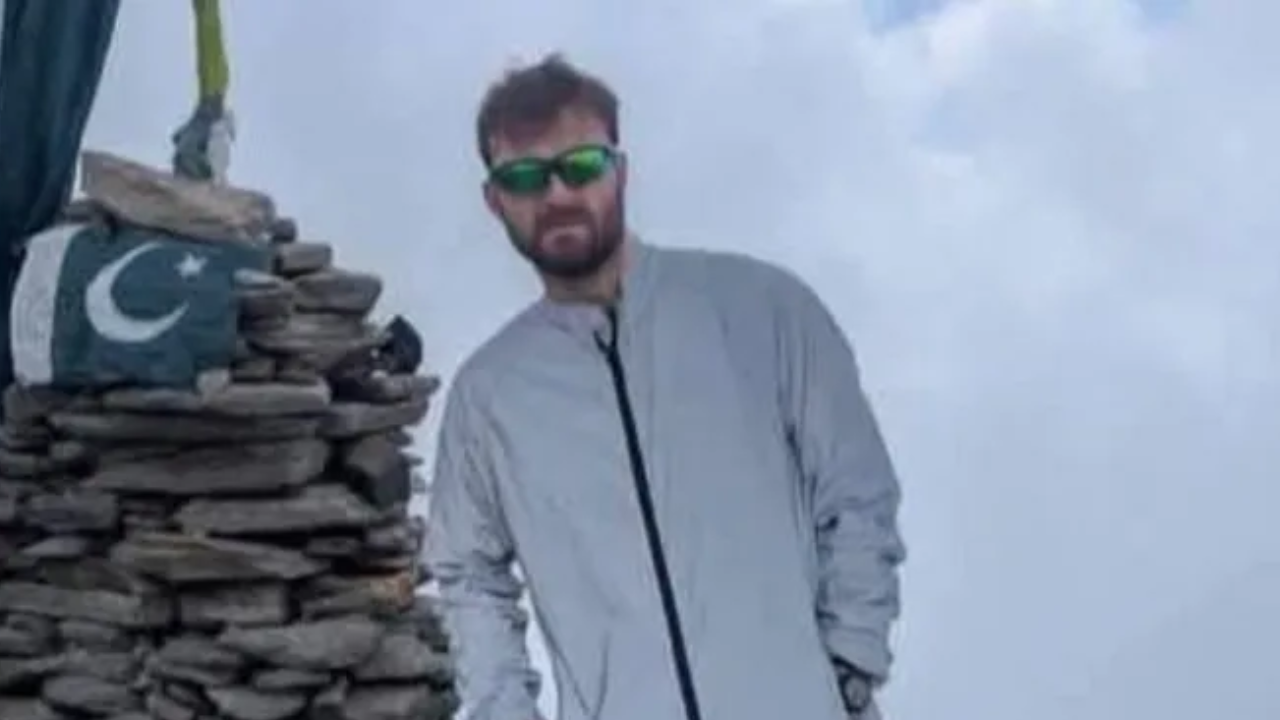
That illusion shattered completely for one British trekker whose journey ended on the treacherous slopes of a Pakistani mountain. The bare facts of the incident are stark. A descent gone wrong. A disappearance swallowed by distance and vertical drop. A search party scouring ridges that refuse to give up their secrets easily. Finally, the grim discovery.
News reports compress these tragedies into neat, bloodless paragraphs. They tell us where, when, and who. They use words like recovered, expedition, and fatality. But numbers and logistical updates strip away the raw truth of what it means to be out there on the edge of the world, where every breath burns your throat and every step is a negotiation with gravity. If you want more about the background of this, National Geographic Travel offers an in-depth summary.
To understand why someone goes, you have to look past the tragic end and remember the pull.
Imagine standing on a high-altitude pass at dawn. The air is so cold it hurts to pull it into your lungs. Below you, a sea of clouds stretches across valleys like frozen wool. The silence is absolute, heavier than any physical weight you carry in your pack. In that specific moment, the noise of ordinary life—the bills, the digital notifications, the small compromises—evaporates. You feel, quite acutely, alive. That clarity is intoxicating. It is the reason people pack their lives into nylon rucksacks and board flights to Islamabad, heading toward the Karakoram or the Himalayas. The mountains offer a rare, unfiltered confrontation with existence.
Yet that same purity makes them unforgiving.
When a descent goes sideways, the margin for error shrinks to zero. A sudden shift in weather can turn a manageable track into a frozen slide. Fatigue dulls the reflexes just when alertness is most critical. One misjudged placement of a crampon, one slight slip on scree, and the mathematics of the environment take over.
Search and rescue operations in these remote regions are exercises in quiet heroism. Local porters, seasoned alpine guides, and rescue teams risk their own lives navigating unstable terrain to find those who did not return. They do not operate under the blinding lights of urban emergency services. They work against the fading light, howling winds, and the immense, crushing scale of the landscape. When they locate a fallen climber, it is rarely a moment of cinematic triumph. It is a somber, grueling extraction carried out in haunting quiet.
The family left behind receives a phone call that irrevocably fractures the timeline of their lives. Before that call, the mountains were an exotic destination on a postcard or a glowing screen. After that call, the mountains become a physical monument to absence.
We search for meaning in these losses. We ask why anyone would court such danger. We want safety guaranteed, risk rationalized, adventure sanitized. But the wild places of the earth refuse to be sanitized. They remain raw, untamed, and entirely indifferent to our desire for secure narratives.
The British trekker who set out on that Pakistani descent likely felt the same surge of wonder that draws thousands to the high ranges every year. They sought the sublime. They found the severe.
As the wind continues to scour those high, lonely ridges, blowing snow across the rocks where human footprints momentarily rested, the mountain remains unchanged. It waits for the next dreamer, the next seeker of horizons, carrying the silent memory of all those who came to gaze upon its majesty and stayed forever.